Founder-Led Outbound Sales: 2026 Guide for B2B SaaS
Master Founder-Led Outbound Sales in 2026: define ICPs, craft messages, build multichannel sequences, and track KPIs for a predictable B2B pipeline. Start now.
When you’re building a business to business startup, especially in tech, nothing feels more crucial than landing those first key customers. This is where founder-led outbound sales comes in. It’s the powerful, authentic approach where the founder rolls up their sleeves and drives the sales process directly. It’s not just about sending emails; it’s about building a predictable engine for growth.
Quick Take: What is Founder-Led Outbound Sales?
Founder-led outbound sales is the process where a startup founder personally initiates the sales cycle by identifying prospects and conducting outreach. In 2026, this remains the most effective way to achieve Product-Market Fit (PMF) because it combines high-level strategic authority with direct market feedback.
The 3 Pillars of Success:
Authority: CXOs are 3x more likely to respond to a fellow founder.
Feedback Loop: Real-time discovery allows for instant product pivoting.
The Playbook: Founders must document their "winning" flow before hiring the first Sales Development Representative (SDR).
This guide walks you through every critical concept, from defining your perfect customer to measuring your success. We’ll turn the art of founder-led outbound sales into a science, giving you a repeatable playbook for a predictable pipeline.
Nailing Your Targeting: The Bedrock of Outbound Sales
Before you write a single email, you need to know exactly who you’re talking to. Get this part wrong, and even the best message will fall flat.
What is an Ideal Customer Profile (ICP)?
Your Ideal Customer Profile, or ICP, describes the perfect company for your product. It’s not just any company that could buy, but the one that gets the most value from your solution, sticks around the longest, and is the most profitable. Think in terms of company size, industry, location, budget, and specific pain points. A sharp ICP is your north star for all prospecting.
Focusing on your ICP makes your entire sales motion more efficient. After all, why waste time on leads that will never convert. Learn how to qualify B2B leads effectively.
What is a Buyer Persona?
If the ICP is the ideal company, the Buyer Persona is the ideal person inside that company. It’s a semi fictional sketch of your target buyer, including their job title, goals, challenges, and what motivates them. You might have a “CTO Cindy” who cares about integration and security, or a “Procurement Peter” who is focused on ROI.
Creating personas helps you write messages that truly resonate. Companies that get this right see incredible results. In fact, 71% of businesses that beat their revenue and lead goals have documented buyer personas.
What is a Persona Problem Impact Table?
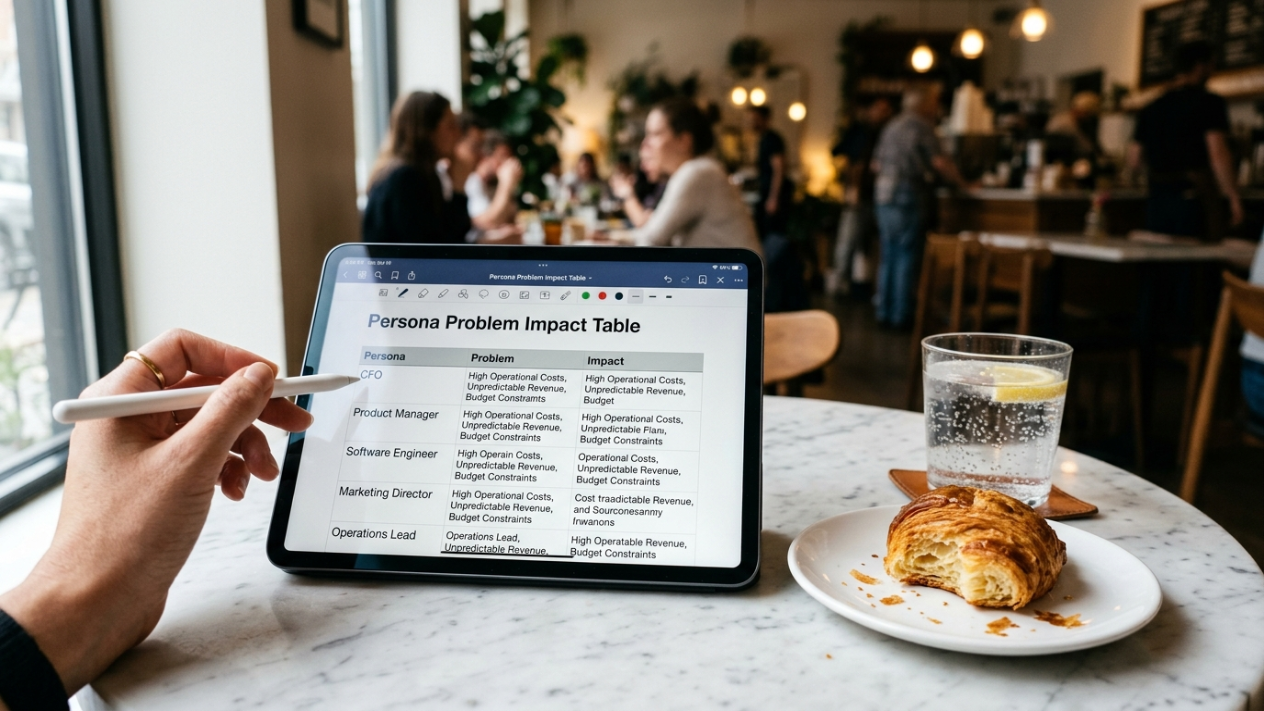
This is a simple but powerful tool for your founder-led outbound sales strategy. It’s a table that connects each buyer persona to their specific problems and the business impact of those problems. For example:
Persona: CFO
Problem: High customer acquisition cost
Impact: Reduced profit margins and slower growth
This framework forces you to think from your prospect’s perspective. It ensures your outreach focuses on solving their pain, not just listing your features. Since buyers are 48% more likely to consider vendors who address their specific business issues, this table becomes your messaging cheat sheet.
How Do You Define Your Target Market (TAM, SAM, SOM)?
Understanding your market size helps you strategize and communicate your vision to investors.
TAM (Total Addressable Market): The entire global demand for a product like yours. It’s the biggest possible pie.
SAM (Serviceable Available Market): The part of the TAM you can realistically serve with your current business model and geographic reach.
SOM (Serviceable Obtainable Market): The piece of the SAM you can realistically capture in the near term, considering your competition and resources. This is your beachhead.
For a startup, a believable SOM is far more important than a massive TAM. Investors want to see a focused plan to win a specific niche, not a vague claim to capture 1% of a trillion dollar market. A strong founder-led outbound sales motion often starts by dominating a well defined SOM.
Crafting a Message That Cuts Through the Noise
Once you know who you’re targeting, you need to craft a message that grabs their attention and makes them want to listen.
What is a Unique Selling Point (USP)?
Your Unique Selling Point, or USP, is the clear, compelling answer to the question: “Why should I choose you over anyone else?” It’s what makes you different and better for your ideal customer. In a world where around 70% of business to business buyers see no real difference between vendors, a strong USP is your ticket to standing out. It should be the core of all your messaging.
What is a Cold Email Template?
A cold email template is a pre written structure for your outreach emails. A good template isn’t a generic script you copy and paste. Instead, it’s a framework that ensures you cover the key points concisely: a personalized hook, a clear value proposition, social proof, and a low friction call to action. Use this cold email structure as your starting point. For a step-by-step breakdown, see our guide on how to write a cold email.
Personalization is everything. Your template should be built to allow for easy customization for each prospect, making them feel like the email was written just for them.
What is a Cold Calling Script?
A cold calling script is your roadmap for a live phone conversation. If you’re considering outsourcing parts of this motion, here’s what cold calling as a service entails. It’s not about sounding like a robot; it’s about having a plan. A solid script helps you nail the first few seconds, state your reason for calling clearly, handle common objections gracefully, and guide the conversation toward a specific next step. With cold call success rates hovering around 2%, you can’t afford to just wing it. A script gives you the confidence and consistency to make every call count.
Building a Repeatable Engine for Growth
Great targeting and messaging are just the start. The real power of founder-led outbound sales comes from building a structured, repeatable process.
What is a Sales Process or Playbook?
A sales process is the step by step journey you guide prospects on, from initial contact to a closed deal. A sales playbook is the document that outlines that process, including scripts, templates, strategies, and best practices for each stage.
Having a defined process makes a huge difference. Companies that lack one often lose revenue. A playbook makes your sales efforts predictable, scalable, and easier to train new hires on.
Non Scalable vs. Scalable Outbound
Your outbound efforts will fall into two buckets:
Non Scalable Outbound: This is outreach that relies on personal connections, like tapping your alumni network, asking investors for introductions, or reaching out to former colleagues. You can’t do it at a massive volume, but the response rates are often incredibly high because of the existing trust.
Scalable Outbound: This includes cold email, cold calling, and LinkedIn outreach. These are the channels you use to reach thousands of prospects you don’t know. The per touch success rate is lower, but you make up for it with volume and systemization.
An effective founder-led outbound sales strategy uses both. Start with non scalable methods to get early wins and learnings, then build scalable systems to create a predictable flow of leads.
Choosing Your Approach: Non-Scalable vs. Scalable
| Feature | Non-Scalable (The "Hustle") | Scalable (The "Engine") |
| Primary Channel | Personal LinkedIn, Referrals, Events | Cold Email, Automated LinkedIn, Cold Call |
| Targeting | Ultra-specific (Top 50 accounts) | Broad ICP (500+ accounts) |
| Conversion Rate | High (10–20% meeting rate) | Lower (1–3% meeting rate) |
| Best Used For | Finding Product-Market Fit | Scaling Revenue & Filling Pipeline |
| Founder Role | 100% Execution | Strategy & Performance Oversight |
What is a Multichannel Outreach Sequence?
A multichannel outreach sequence involves contacting prospects across several channels (email, phone, LinkedIn) in a coordinated way. If you’re new to sequences, start with this explainer on what an email sequence is. Instead of sending five emails in a row, your sequence might be: Email on Day 1, LinkedIn connection on Day 3, and a phone call on Day 5. This approach respects that different people prefer different channels and significantly boosts your chances of getting a response.
What is a Follow Up Cadence?
Most deals are won in the follow up. Yet most reps give up after just one or two. A follow up cadence is your predefined schedule for how and when you’ll follow up with unresponsive prospects. It brings discipline and persistence to your outreach, ensuring no lead falls through the cracks. The fortune truly is in the follow up.
What is A/B Testing Messaging?
A/B testing means creating two versions of a message (like an email subject line or a call script opener) and sending them to different segments of your audience to see which one performs better. This practice replaces guesswork with data. By constantly testing and iterating, you can systematically improve your open rates, reply rates, and meeting booked rates. It’s how you turn a good founder-led outbound sales motion into a great one.
A Proven 12-Day Multichannel Sequence
Use this "Founder-to-Founder" cadence to break through the noise:
Day 1: Personalized LinkedIn Connection Request (No pitch).
Day 2: Email #1 - The "Problem/Impact" hook (Reference the Persona Table).
Day 4: LinkedIn Message - Share a relevant case study or "Point of View" (POV).
Day 7: Email #2 - The "Low Friction" Ask (e.g., "Worth a 5-min chat?").
Day 12: The "Break-up" Email - A polite note to stop outreach.
The Essential Toolkit for Modern Outbound
To execute your strategy efficiently, you need the right set of tools and resources.
The 2026 Founder-Led Sales Stack (Essential Only)
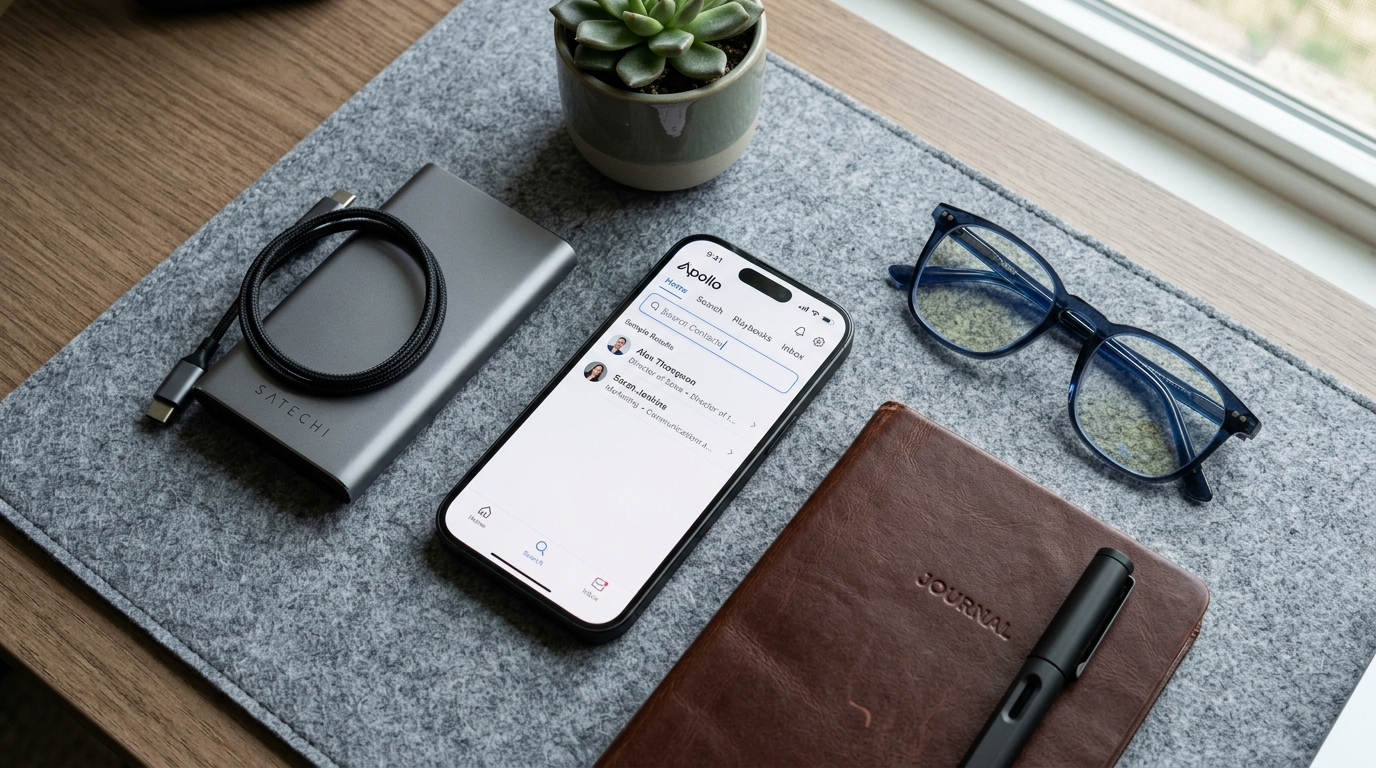
Don't overcomplicate your "stack" early on. Stick to these three categories:
Intelligence & Data: Apollo.io or Lusha (For verified emails/direct dials).
Sales Engagement: Instantly.ai or Salesloft (To automate multichannel sequences).
CRM: HubSpot (Free/Starter tier is usually enough for founders).
AI Personalization: Clay (To pull "signals" like recent news or hiring trends into your emails).
The right stack automates manual work and provides the data you need to optimize your process. If building and managing this sounds daunting, an experienced partner can help you implement a proven stack. SalesPipe offers a founder-led outbound service that brings an optimized tech stack to the table.
What are Sales Enablement Materials?
These are the resources your sales team uses to educate prospects and move deals forward. This includes case studies, pitch decks, product one pagers, and ROI calculators. With today’s buyers doing so much independent research, high quality enablement content can build trust and answer questions long before you ever speak to them.
What is a Contact Data Source?
This is where you get the names, titles, and email addresses for your prospect lists. The quality of your data is everything. Using a reliable source and keeping your lists clean is foundational to a successful campaign. If you need help, consider specialized B2B list building services. Bad data leads to bounced emails, wasted time, and poor results. Your outbound results can only be as good as your contact data.
The Founder’s Edge and Measuring What Matters
Finally, let’s talk about why founders are so good at this, and how you measure success to create a predictable pipeline.
Why Outbound Prospecting by a Founder Works
A founder’s outreach has a special kind of power. Your deep passion, product knowledge, and credibility as the company leader make your messages stand out. A C level executive is far more likely to open an email from a fellow founder than from a junior sales rep. This is the unique advantage of founder-led outbound sales. You can leverage your authority and authenticity to open doors that would otherwise remain closed.
If you’re a founder who’s too busy to handle all the execution, you can still get the benefits of this approach. Working with a senior, hands on outbound partner can replicate that founder level touch in your outreach.
What are Predictable Pipeline Metrics and KPIs?
To make your pipeline predictable, you have to measure it. Key Performance Indicators (KPIs) give you a dashboard for your sales engine. You should track metrics like:
Email open and reply rates
Number of meetings booked
Lead to opportunity conversion rate
Win rate
Average deal size
Sales cycle length
By understanding these numbers, you can reverse engineer your goals. You’ll know exactly how much activity is needed at the top of the funnel to hit your revenue targets at the bottom. This is how you transform founder-led outbound sales from an unpredictable art into a reliable growth machine.
Frequently Asked Questions about Founder-Led Outbound Sales
1. What is founder-led outbound sales?
It’s a sales strategy, common in early stage startups, where the founder or CEO directly leads and executes the process of prospecting, reaching out to potential customers, and securing initial sales meetings.
2. Why is founder-led sales so effective?
It works because founders bring unmatched passion, deep product knowledge, and credibility. Prospects, especially senior decision makers, are more likely to respond to an outreach from a founder than from a typical sales representative.
3. When should a founder stop doing all the selling?
A founder should start building a sales team when the sales process becomes proven and repeatable. Once you have a playbook that works, you can hire reps to run that playbook and scale the efforts beyond what you can do alone.
4. Can you scale founder-led outbound sales?
Direct founder involvement doesn’t scale infinitely because a founder’s time is limited. However, you can scale the principles of founder-led outbound sales by creating a strong playbook, hiring the right team, and using services that provide a senior, strategic approach to outbound execution.
5. Is this approach only for B2B tech startups?
While it’s most common in business to business tech and SaaS, any company with a high value, complex sale can benefit from a founder leading the initial charge to establish market validation and a repeatable sales motion.
6. How do I start if I have no sales background?
Start with your network (non scalable outreach) to build confidence and gather feedback. Focus on solving problems for your ICP, not just selling a product. Be curious, listen more than you talk, and create a structured process you can follow and improve over time.
7. What if I’m a founder but don’t have time for outbound?
This is a common challenge. If you’re stretched too thin, consider partnering with an expert who can act as an extension of you. A service that provides senior level, hands on execution can deliver the impact of founder-led outreach without consuming all of your time. Learn more about how SalesPipe can help.
8. What are the most important metrics to track?
In the beginning, focus on activity and engagement metrics like emails sent, conversations had, and meetings booked. As you progress, shift your focus to pipeline metrics like opportunity conversion rates and win rates to build a predictable revenue forecast.
Related articles
How To Choose a Founder-Led Outbound Partner (2026)
Increase B2B leads with inside sales outsourcing. Get expert support, simplify operations, and growth while saving time and resources.
Founder-Led Outbound for SaaS: 2026 Step-by-Step Guide
Increase B2B leads with inside sales outsourcing. Get expert support, simplify operations, and growth while saving time and resources.
The Founder-Led Outbound Operator: (Ultimate Guide 2026)
Master the Founder-Led Outbound Operator playbook: ICP, data, personalization, 30-day sprints, and KPIs. Read now to build a predictable pipeline today.
Want pipeline instead of theory? SalesPipe is founder-led outbound run by Rob Whitley. Targeting, messaging, and execution are handled directly, with no junior SDRs in between. Tell us what you're building and we'll map out the outbound motion that fits.