Founder-Led Outbound vs In-House SDR: 2026 Startup Guide
See how Founder-Led Outbound vs In-House SDR compares in 2026—when to switch, costs, ramp time, and KPIs to track. Get a clear, step-by-step plan to scale.
For early B2B startups, the journey from zero to a scalable sales machine is a big one. The classic dilemma is whether to stick with founder-led outbound vs in-house SDR teams. The answer is sequential: startups must begin with the founder leading sales to establish a repeatable process, only transitioning to an in-house team when the founder becomes a bottleneck to growth. This guide explores everything from the founder’s initial hustle to the nitty-gritty of building a real outbound pipeline.
Table of Contents
- What founder-led sales is and where it breaks
- When to move on from founder-led outbound
- Should you hire an AE before a Head of Sales?
- Should founders stay involved in big deals?
- How long it takes to build an outbound engine
- Sales operating model and funnel math
- Key metrics for an early sales team
- Advantages of an in-house SDR team
- Challenges of an in-house SDR team
- Should you build an in-house SDR team?
- Final verdict
- Frequently asked questions
Who This Guide Is For
This guide is best for B2B SaaS founders, technical founders handling early pipeline, GTM leads deciding on the first sales hire, and startup teams comparing founder-led outbound against building an internal SDR motion. It is especially useful if you are still validating your ICP, offer, sales cycle, or funnel math.
The Quick Verdict: Founder-Led vs. In-House SDR
Founder-Led Outbound: Essential for the 0 to $1M ARR stage. It allows for rapid feedback loops and establishes the sales playbook.
In-House SDR Team: Recommended for the $1M to $5M+ ARR stage. Transition here only once you have a repeatable sales motion where $X$ input equals $Y$ meetings.
2026 Shift: Many startups now use "Hybrid Outbound" (Founder + Fractional SDR) to bridge the gap without the $100k+ overhead of a full-time hire.
What is Founder Led Sales (and What Are Its Limits)?
Founder led sales is exactly what it sounds like: the startup’s founder is the one driving revenue. In the beginning, nobody sells better. It’s not always about having slick sales skills; it’s about knowing the product and the customer’s problem inside and out. Founders often hustle their way to the first 10 to 20 deals using passion and personal credibility. Customers buy in because the founder feels accountable and is reachable if something goes wrong, a level of trust a new sales rep can’t match.
This approach works wonders for a while. In the under $1M group, 94% of deals were closed by the founder.
However, founder led sales is a temporary phase, not a permanent strategy. Eventually, the founder becomes a bottleneck. Every new dollar of revenue depends entirely on their time and energy. The model often breaks when a founder tries to scale sales too soon or hires someone without first figuring out a repeatable process. The transition from founder led outbound vs in house SDR teams needs to happen before the founder burns out and stalls company growth.
When Should You Move On From Founder Led Outbound?
Knowing when to pass the sales torch is tricky. Move too late, and you’re the bottleneck. Move too early, and your new hires might fail because the process isn’t proven. Here are the key signals that it’s time to scale beyond your own efforts.
You Have a Repeatable Sales Pattern: Your deals are no longer one off art projects. You can confidently say, “for every X demos, we close Y deals”. When you know that a certain amount of outbound effort produces a predictable result, you’re ready to bring in help.
Your Bandwidth is Maxed Out: Are sales calls and demos eating up your entire day? If you’re putting product development or fundraising on the back burner to chase prospects, sales has become a time sink you need to delegate. Another red flag is slow follow up. Waiting 48 hours to respond to a lead kills your odds, while a reply within 5 minutes can boost conversion up to 8 times.
Demand is Outpacing Your Capacity: If qualified leads are piling up faster than you can handle them, you’re leaving revenue on the table. This ceiling often appears around $1M to $2M ARR, where one person simply can’t close any more business. If your revenue has plateaued despite strong demand, it’s time to build a team.
Before stepping back, you should have your pitch, target customer, and sales stages clearly defined. Companies with a formal, documented sales process ( including a repeatable cold email structure) close deals at much higher rates.
Should You Hire an AE Before a Head of Sales?
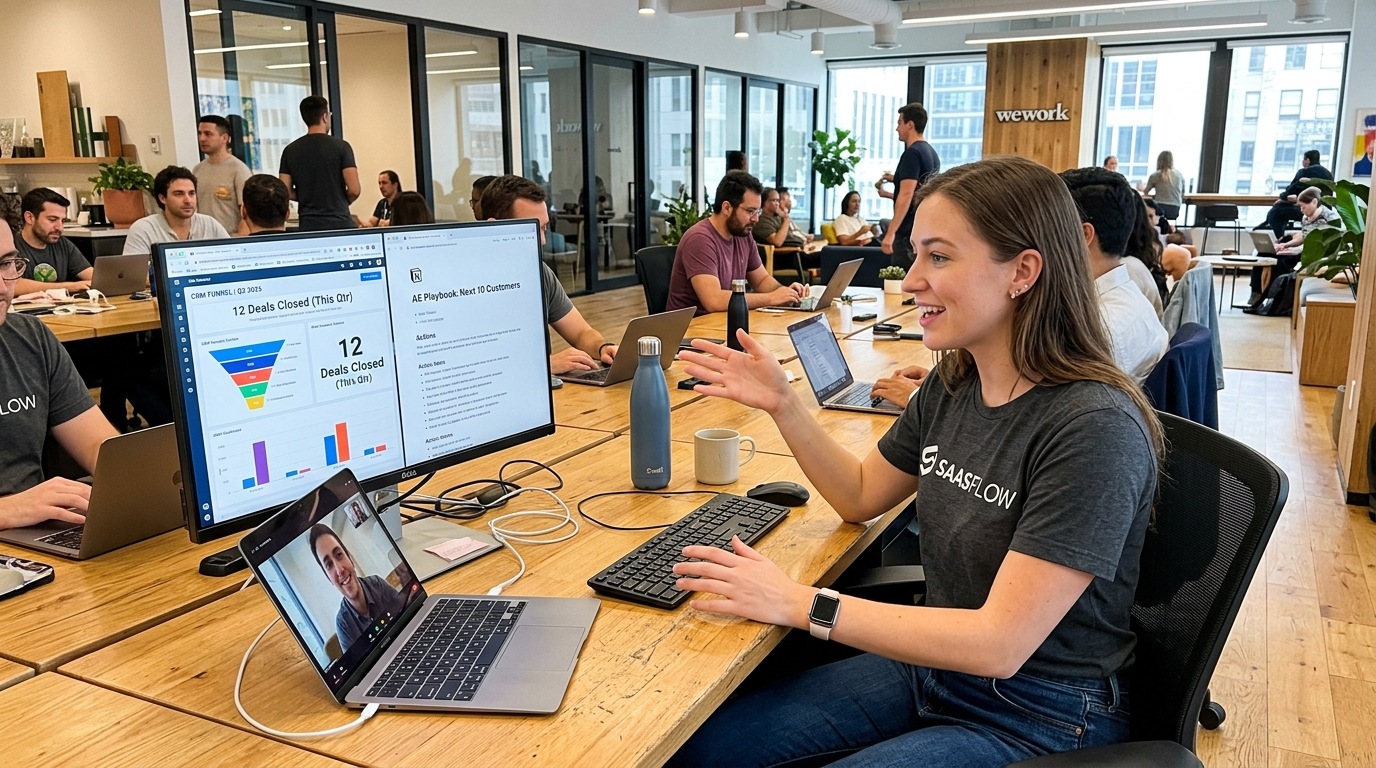
When it’s time to make that first hire, who should it be? A senior Head of Sales to build the strategy, or a junior Account Executive (AE) to start closing deals? If you’re unclear on the differences between AE, SDR, and BDR roles, see this quick overview. Most experts agree: hire one or two capable AEs first.
The founder should close the first 10 to 20 customers themselves. After that, the next logical step is to hire an AE to see if they can sell using your playbook while you are still there to guide them. If you hire a VP of Sales too early, they often struggle because the recipe for success isn’t ready for scale yet.
A true VP of Sales is most effective when you have product market fit and need to accelerate a sales engine that already works, typically around the $5M ARR mark. In the early days, you need a hands on seller more than a strategist. A senior executive from a large corporation is used to established processes and warm inbound leads, luxuries your startup doesn’t have.
Economically, it makes more sense too. A founding AE is more affordable and generates revenue directly. A common rule of thumb is that an AE should close about 5 times their on target earnings in business. This makes sense if your Annual Contract Value (ACV) is at least $5K to $10K. Investor Jason Lemkin advises hiring your first AE once you’ve closed at least 10-20 customers yourself as the founder, and only hiring a true sales leader after you have at least two AEs hitting their quotas.
Should Founders Stay Involved in Big Deals After Hiring?
Hiring a sales team doesn’t mean the founder gets to wash their hands of sales completely. Stepping back too abruptly can seriously hurt your growth. Founders should stay involved in big, strategic deals for quite some time.
No one has the credibility of a founder. For complex enterprise deals, a founder’s presence can be the deciding factor. It signals to the buyer that the highest level of the company is invested in their success. When a prospect is making a “bet the company” decision, they want to meet the founder.
Instead of managing every deal, founders should strategically pick their battles. A good approach is to set a threshold, for example, joining any deal over a certain dollar amount or any opportunity with a Fortune 500 prospect. One CEO put it this way: “I’m not in every deal anymore, but I’m in every deal that could change our company’s trajectory.”
Removing the founder from the sales process too quickly can create a vacuum. One CEO who pulled back from sales immediately after a fundraise saw the company’s close rate plummet until he re engaged. Over time, a founder can taper their involvement down, but many CEOs at top startups remain involved in key deals well past $10M ARR.
The Rise of the Hybrid Outbound Model
In 2026, the binary choice between "only the founder" and "a full in-house team" has blurred. Many startups are adopting a Hybrid Model. This involves the founder remaining the "face" of the outreach while utilizing a fractional outbound operator or an AI-augmented SDR tool to handle the top-of-funnel grunt work (list building and initial sequencing). This allows the founder to scale their impact without the 3-month ramp-up time of a full-time hire.
Need pipeline before you are ready to hire a full in-house SDR team?
Apply to work with SalesPipe and build a founder-led outbound motion that is actually repeatable. Get sharper targeting, better messaging, faster experimentation, and a path to qualified meetings without committing to full-time SDR overhead too early.
Apply for Founder-Led Outbound Support
How Long Does It Take to Build an Outbound Engine?
Building a repeatable outbound sales engine is a long game. It often takes 12 to 24 months to get it firing on all cylinders.
New hires need time to ramp up. The average Sales Development Representative (SDR) doesn’t reach full productivity until about their third month. If you hire an SDR in January, you might not see significant new pipeline from them until April.
Then you have to factor in your sales cycle. If your typical B2B sales cycle is 3 to 4 months, the first deals from that SDR’s efforts might not close until August. That’s a revenue impact about seven months after the initial hire. An outbound program typically takes 3–6 months to ramp pipeline, and requires consistent effort to test and optimize messaging, targeting, and email sequences.
High turnover in SDR roles can also reset the clock. The average SDR tenure is 1.8 years., and annual turnover can be as high as 49%. This means you will likely be hiring and training new people, which adds delays.
It often takes 12-18 months to get an effective team and repeatable process off the ground and then scale them. If you need pipeline faster, a service like SalesPipe can act as your interim sales engine, validating your sales motion before you commit to full time hires.
How to Develop a Sales Operating Model (Funnel Math)

A sales operating model is the math behind how you turn leads into customers. It’s about understanding the conversion rates at each stage of your funnel ( and getting crisp on definitions like prospect vs lead) to predict outcomes. It helps answer questions like, “If we need 10 closed deals next quarter, how many leads do we need at the top of the funnel?”
Key components include lead volume, meeting conversion rates, opportunity win rates, average deal size, and sales cycle length. For example, if your win rate on qualified opportunities is 25%, you know you need four opportunities to close one deal. If 50% of your demos turn into qualified opportunities, you need eight demos to get those four opportunities.
This funnel math is critical for diagnosing bottlenecks and planning resources. It also informs your pipeline coverage goals. A common rule of thumb is to maintain 3x to 4x pipeline coverage for your sales target. This means if a rep has a $100K quarterly quota, they should have $300K to $400K of potential deals in their pipeline. Top performing sales organizations rely on process consistency and rigorous metrics, not just hoping for magic.
Key Metrics for Evaluating an Early Sales Team
When you’re just starting to build a sales team, you need to track the right metrics to measure performance. Here are the essentials:
Win Rate: The percentage of qualified opportunities that you close. Tightening how you qualify B2B leads can materially lift this metric.
Sales Cycle: How long it takes from first contact to a signed deal. A shorter cycle means faster revenue.
Pipeline Coverage: The ratio of your total pipeline value to your sales target. As mentioned, 3x to 4x is a healthy target.
Customer Acquisition Cost (CAC): The total cost to acquire a new customer, including salaries, commissions, and marketing spend. A common goal in SaaS is to recover CAC within the first year of revenue.
Customer Lifetime Value (LTV): The total revenue you expect from a customer over their entire relationship with you. A healthy LTV to CAC ratio is often cited as 3:1 or higher.
Tracking these metrics creates a data driven culture and gives you early warning signals if something is off.
The Advantages of an In-House SDR Team
When considering the founder led outbound vs in house SDR question, it’s important to understand the benefits of building your own team.
Deep Product and Market Knowledge: In house SDRs live and breathe your product. They sit in on internal meetings and absorb tribal knowledge, making them more credible to prospects.
Cultural Alignment and Passion: Internal reps are part of your company culture. They believe in the mission, which translates into more authentic and enthusiastic outreach.
Complete Control and Agility: You have direct control over messaging, targeting, and tactics. You can pivot your strategy on a dime without going through a third party, and choose among different types of sales channels to reach buyers where they are. This also creates tighter feedback loops between sales, marketing, and product.
Long Term Capability Building: When you build an in house team, you’re creating a long term asset. Your SDR team can become a training ground for future account executives, and all the process knowledge stays within the company.
The Challenges of an In-House SDR Team
Of course, building an in house SDR team comes with its own set of hurdles.
Significant Resource Investment: Hiring, training, and equipping SDRs is expensive and time consuming. The founder often has to act as the sales manager, which is a major time commitment.
Training and Ramp Up Overhead: It can take an SDR around three months to become fully productive, and during that time you’re paying a full salary for limited output. The founder must create playbooks and provide clarity, which is a lot of upfront work. In fact, the most common reason a first sales hire fails is that they were handed an undefined process.
High Turnover and Attrition: Sales development is a high turnover field. When an SDR leaves, your pipeline generation can take a major hit until you hire and train a replacement.
High Costs: The fully loaded cost of an SDR, including salary, commission, benefits, and software, is $75,000–$108,000 per year (total annual cost). And that doesn’t include the cost of a manager to oversee the team.
The debate over founder led outbound vs in house SDR often comes down to whether a startup has the resources and expertise to overcome these challenges.
Scaling an In-House SDR Team: Constraints vs. Flexibility
Scaling an in house SDR team isn’t as simple as just hiring more people. It comes with certain constraints.
Hiring new employees takes time. Scaling down is even harder, as it can involve layoffs. This makes in house teams inherently less elastic than outsourced solutions.
As you grow, you also need to scale your management and infrastructure. A process that works for two reps will break with ten. You’ll need an SDR manager, more structured training, and better systems (like a well managed CRM) to avoid chaos.
Finally, you can face diminishing returns. Your first SDR might pick all the low hanging fruit. The fourth SDR might be scraping the bottom of the barrel unless your total addressable market is massive.
While scaling an in house team requires careful planning, the result is a powerful, dedicated asset for your company. For startups that need to scale pipeline quickly without the long lead times, a partner like SalesPipe can run outbound for you directly, without the hiring and management overhead.
The Cost Structure of an In-House SDR Team
Budgeting for an in house SDR team requires looking beyond just the base salary. Here’s a typical breakdown of the annual cost for one SDR:
Compensation: This includes a base salary and on target earnings (OTE) from commissions or bonuses. As of January 2026, the median on-target earnings (OTE) for U.S. Sales Development Representatives is $85,000 per year.
Benefits and Overhead: Factor in an additional about 40% (a 1.4x multiplier) for benefits and employer payroll taxes for things like health insurance, payroll taxes, and other company perks.
Tools and Software: An effective SDR needs a tech stack, including a CRM, a sales engagement platform, and a data provider. This can easily add up to several thousand dollars per SDR per year.
Management and Training: If you have a team of SDRs, you’ll need a manager to lead them, which is another significant salary.
Ramp Up Cost: Don’t forget the cost of the initial 3 month ramp up period. That’s over $23,000 spent before an SDR is fully contributing.
The 2026 SDR Tech Stack Essentials
To remain competitive, an in-house team requires more than just a CRM. Budget for:
Sales Engagement: (e.g., Outreach, Salesloft) for sequencing.
Data Intelligence: (e.g., Apollo, ZoomInfo) for verified intent data.
AI Personalization: Tools to ensure emails don't hit spam filters and resonate with specific pain points.
Deliverability Monitoring: Essential to protect your primary domain reputation.
When you add it all up, the investment is substantial. This is why the founder led outbound vs in house SDR decision is so critical for early stage companies.
Should You Build an In-House SDR Team? Key Criteria
Deciding whether to build an in house SDR team comes down to a few key factors:
Need for Control and Customization: If your brand voice and messaging are highly nuanced, in house is probably the way to go. You maintain tight control over every interaction.
Resource Availability: Do you have the budget for salaries and tools, and does someone on your team have the time and expertise to manage the team?
Product Market Fit: You should have a proven, repeatable sales motion before you try to scale it with a team. A good rule of thumb is to close at least your first 10 customers yourself before hiring a sales rep.
Growth and Volume Needs: If your business model relies on a high volume of leads to feed the sales engine, a dedicated SDR team is a strategic asset.
| Feature | Founder-Led Outbound | In-House SDR Team |
| Primary Goal | Market Validation & Playbook | Predictable Pipeline Scaling |
| Typical ARR Stage | $0 - $1M | $1M - $5M+ |
| Key Advantage | High Credibility & Fast Pivots | Consistency & High Volume |
| Main Constraint | Founder Time / Scaling Ceiling | High Management & Tooling Costs |
| Avg. Annual Cost | "Free" (Opportunity Cost) | $110,000 - $160,000 (Fully Loaded) |
If the answer to these questions points toward building a team, you’re ready to move beyond founder led sales. If not, it may be wiser to delay or seek external help. For many founders, a high leverage solution like the founder led outbound service from SalesPipe offers a middle ground, providing expert execution without the full burden of building an internal team from scratch. If you want senior, hands-on help now, you can apply to work with SalesPipe.
Common Mistakes When Choosing Founder-Led Outbound vs In-House SDR
Most teams do not fail because they choose the wrong channel. They fail because they scale before the sales motion is proven. These are the mistakes that create the most waste in the early stage.
Hiring an SDR before the founder has clear proof of message-market fit.
Expecting a new SDR to invent the playbook instead of execute an already validated one.
Measuring activity volume without measuring meetings, pipeline creation, win rate, and CAC payback.
Ignoring deliverability, targeting quality, and reply speed while blaming the rep.
Treating outbound like a one-month test when the ramp to reliable pipeline usually takes multiple quarters.
Final Verdict
For most early startups, founder-led outbound should come first and in-house SDR scale should come second. The founder is usually the fastest route to real buyer insight, sharper positioning, and the first repeatable wins. Once the company has a proven offer, a documented process, and enough volume to justify headcount, an internal SDR team becomes the better long-term lever.
The practical goal is not to choose one forever. It is to use founder-led outbound to discover what works, then use in-house SDR capacity to multiply it. If you skip the first phase, you often scale guesswork. If you stay in the first phase too long, you cap growth.
Want a faster path from founder-led hustle to a real outbound engine?
Apply to SalesPipe to build a cleaner outbound system, tighten your ICP, improve messaging, and create a sales motion you can actually scale. This is the fastest way to turn early traction into a repeatable pipeline without wasting months on the wrong hires.