How To Build a One Person Outbound Engine (2026 Guide)
Build a One Person Outbound Engine with 17 proven steps: ICP, lean tech stack, deliverability, AI signals, and multichannel sequences. Learn the playbook now.

A one person outbound engine is a lean B2B system that lets one founder or operator generate meetings by combining a narrow ICP, clean data, strong deliverability, timely personalization, multichannel follow-up, and weekly KPI reviews. The goal is not high volume. The goal is predictable pipeline with fewer wasted touches.

In today’s B2B market, you do not need a large SDR team to build pipeline. With the right process, tech stack, and messaging, one operator can run a disciplined outbound system that consistently books qualified meetings. The key is precision, deliverability, and repeatable execution.
Table of Contents
- What Is a One Person Outbound Engine?
- The Strategic Foundation of Your Outbound Engine
- Who This System Is For
- The Technical Infrastructure: Mastering Deliverability
- The Fuel: High Quality Data and Targeting
- The Execution: Smart Outreach and Automation
- Common Mistakes to Avoid
- The Feedback Loop: Measure and Iterate
- A 30-Day Launch Plan
- Final Verdict
- Frequently Asked Questions
Executive Summary: How to Build a One-Person Outbound Engine To build a high-performance outbound engine alone in 2026, focus on four pillars:
Technical Foundation: Authenticate domains (SPF, DKIM, DMARC) and use inbox rotation.
AI-Driven Intel: Use AI to detect "buying signals" (hiring, funding) for 1:1 relevance.
Lean Tech Stack: Integrate a CRM, a verified data source, and an automated sequence tool.
Quality over Volume: Aim for a <2% bounce rate and a >15% reply rate by targeting a narrow Ideal Customer Profile (ICP).
This guide explains the core components, workflows, benchmarks, and mistakes to avoid so you can build a one person outbound engine that is efficient, measurable, and easier to scale.
What Is a One Person Outbound Engine?
A one person outbound engine is a complete outbound sales system designed to be operated by one skilled person. It combines ICP clarity, verified prospect data, domain and inbox setup, personalized messaging, multichannel sequences, and KPI tracking into one repeatable workflow.
Best for: founders, solo sales leaders, consultants, agencies, and early-stage teams.
Main outcome: more qualified meetings without building a full SDR team.
Key tradeoff: success comes from precision, consistency, and tight systems rather than brute-force volume.
The Strategic Foundation of Your Outbound Engine
Before you send a single email, you need a solid foundation. These strategic pillars ensure your efforts are focused, efficient, and aligned with your business goals.
Who This System Is For
Founders selling a high-ticket offer: especially when product knowledge and trust matter.
Agencies and consultancies: when one operator can run research, outreach, and follow-up.
Early-stage SaaS teams: when hiring a full SDR function is too expensive or too early.
Not ideal for: low-ticket mass-market offers that depend mostly on volume over relevance.
Defining Your Ideal Customer Profile (ICP)
Your one person outbound engine runs on precision, not volume. It all starts with defining your Ideal Customer Profile (ICP). This is a crystal clear description of the perfect company that gets the most value from your product. A strong ICP goes beyond basic firmographics; it pinpoints the specific attributes, pain points, and triggers that signal a perfect fit.
Chasing poor fit leads is a massive resource drain. A well defined ICP prevents this by focusing your energy only on high probability accounts, making every action more impactful.
Embracing a Founder Led Outbound Process
The most potent one person outbound engine is often founder led. This approach leverages the founder’s deep industry knowledge, credibility, and passion. Prospects respond to authenticity, and a message from the person who built the solution carries more weight than a generic email from a junior rep.
This model allows for rapid iteration. A founder can quickly sense if messaging is off or targeting is wrong and pivot instantly. A founder’s direct involvement ensures quality control and strategic alignment, building a playbook that can eventually scale, often outperforming outsourced SDR models. If you’re looking for this type of hands on expertise, a founder led outbound service can build and run this entire process for you.
Building a Lean Outbound Tech Stack
A modern one person outbound engine doesn’t require dozens of complicated tools. It thrives on a lean tech stack: a minimal, efficient set of software to get the job done. The average B2B organization uses approximately 10 tools on average in their combined sales and marketing technology stack, but research shows only 47% of SaaS licenses are used over a 90-day period on average.
Avoid tool overload by focusing on the essentials:
A CRM: Your single source of truth for tracking leads and pipeline.
A Data Source: A tool for building and enriching lead lists.
An Engagement Platform: Software to automate email sequences and manage outreach tasks.
The key is choosing tools that integrate smoothly, reducing manual data entry and keeping you focused on selling.
The 2026 Minimalist Tech Stack Comparison
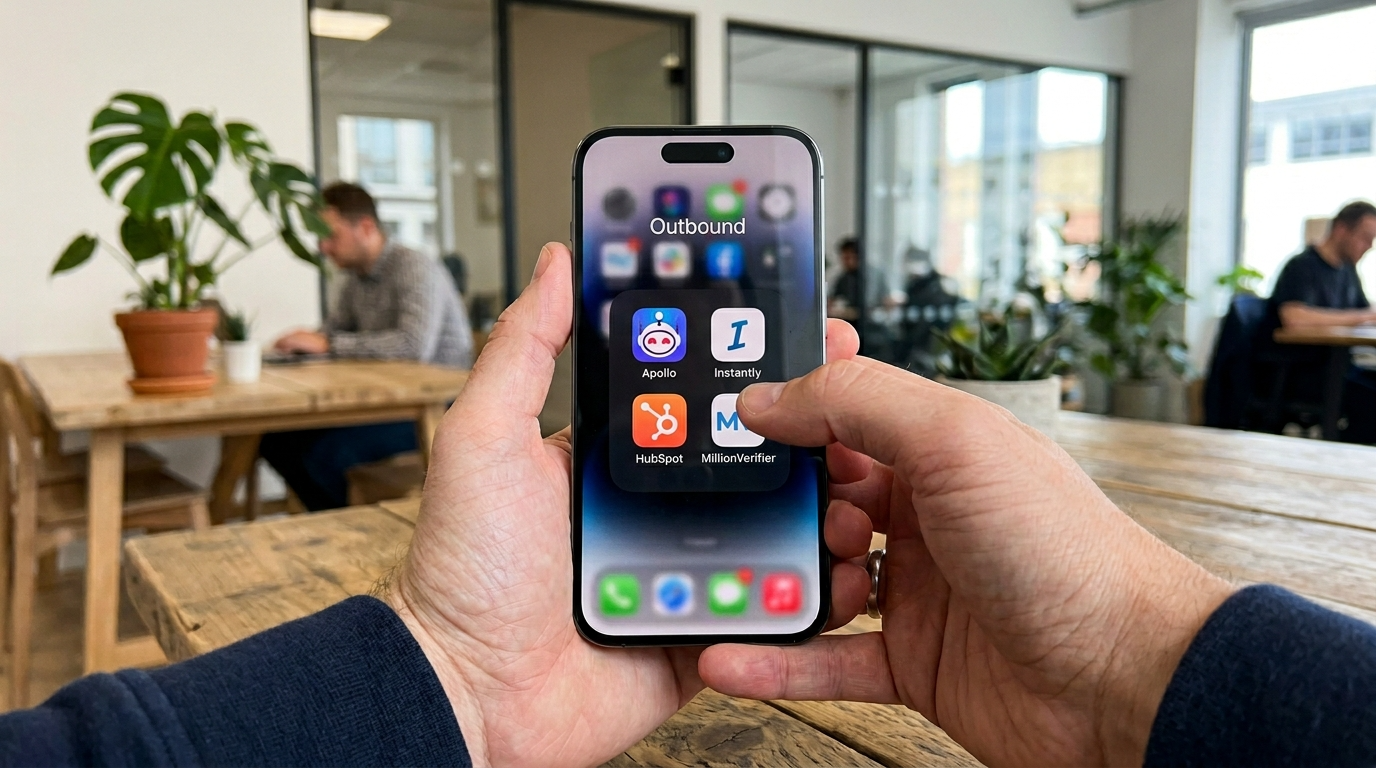
The "One-Person" model fails when you spend more time managing tools than talking to prospects. Here is the optimized stack for 2026:
| Tool Category | Recommended Function | Why it Matters for Solo Operators |
| Data & Intent | Apollo or Clay | Combines lead data with AI "signals" to automate research. |
| Sending Engine | Instantly or Smartlead | Essential for Inbox Rotation and managing multiple domains. |
| CRM | HubSpot or Pipedrive | Acts as the "Brain"; must have automated sync with your sending tool. |
| Verification | MillionVerifier or NeverBounce | Prevents domain blacklisting by scrubbing data before sending. |
Setting Up Your CRM and Pipeline Tracking
Your CRM is the command center for your outbound operation. Proper CRM setup involves defining clear sales funnel stages (e.g., Lead, Qualified, Meeting Booked, Closed) to track every prospect’s journey. Without this, leads fall through the cracks due to common sales funnel challenges. In fact, Fewer than 1% of leads convert to closed deals, often due to a lack of systematic follow up.
Effective pipeline tracking turns outreach from a chaotic activity into a measurable process. It provides the data needed to identify bottlenecks, forecast accurately, and hold yourself accountable for results.
The Technical Infrastructure: Mastering Deliverability
Even the world’s best email is useless if it lands in the spam folder. A successful one person outbound engine depends on a rock solid technical foundation to ensure your messages get seen.
Cold Email Deliverability Setup
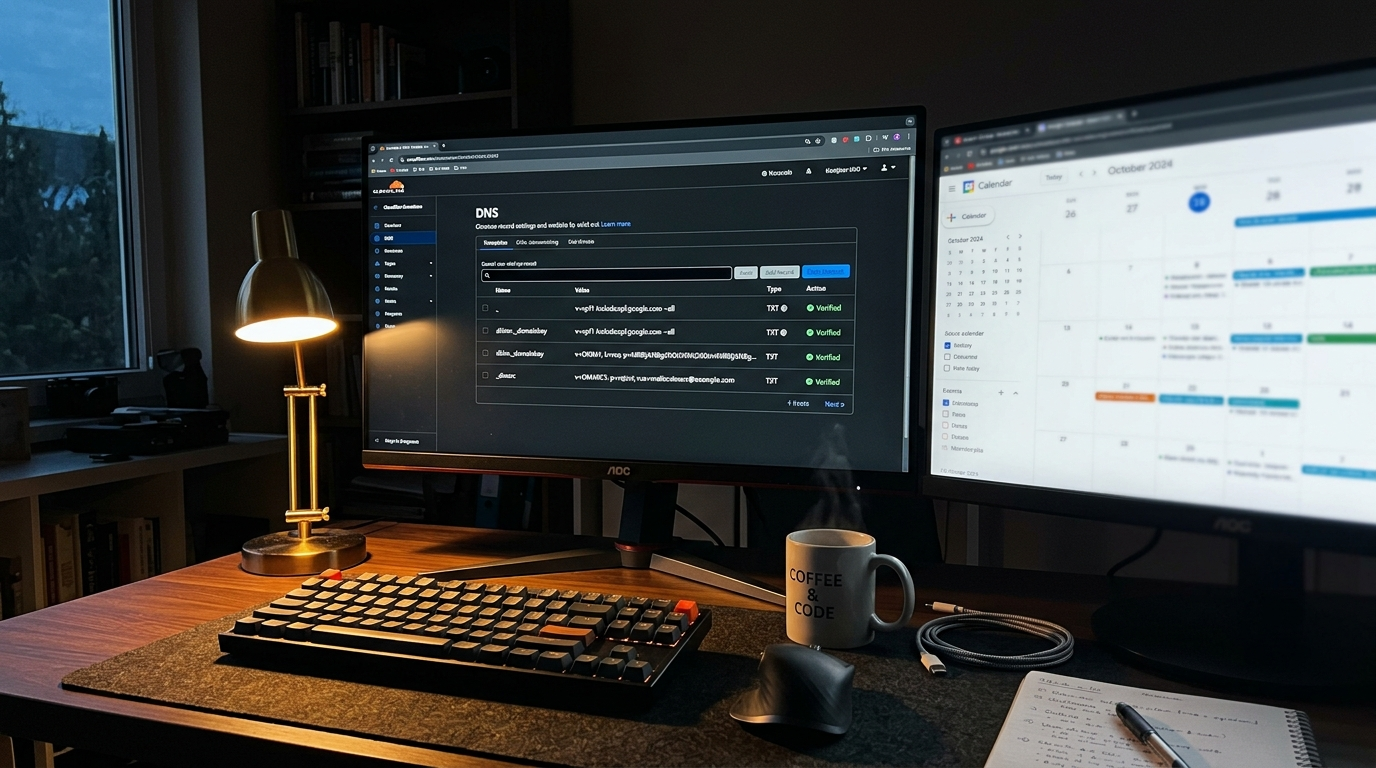
Cold email deliverability is the technical groundwork that ensures your emails reach the inbox. It involves correctly configuring your domain with authentication protocols like SPF, DKIM, and DMARC. These are no longer optional. Major providers like Google and Yahoo now mandate them for bulk senders.
Despite this, a staggering 83.9% of domains still have no DMARC policy in place. This technical gap is a major reason why legitimate emails get flagged as spam. Getting this setup right from day one is a non negotiable step for any serious outbound campaign.
Deliverability Checklist
Set up SPF, DKIM, and DMARC correctly before sending.
Use secondary domains for outreach, not your main company domain.
Warm inboxes gradually and keep sending patterns stable.
Verify emails before every send and monitor bounce and complaint rates weekly.
Inbox Rotation and Domain Setup
To send emails at a reasonable scale without triggering spam filters, a smart one person outbound engine uses inbox rotation. This strategy spreads sending activity across multiple email accounts and domains. Instead of one inbox sending 200 emails a day, you might have four inboxes each sending 50. This appears more natural to providers and protects your primary corporate domain’s reputation from any issues related to cold outreach. Each new domain and inbox must be properly set up and warmed up to build a good sender reputation.
Inbox Placement and Reputation Monitoring
Deliverability isn’t a “set it and forget it” task. Ongoing monitoring is crucial. This involves tracking your inbox placement rate (the percentage of emails landing in the primary inbox versus spam) and your sender reputation. Your reputation is like a credit score for your domain.
ISPs watch metrics like spam complaint rates very closely. Google recommends keeping your complaint rate below 0.1% to stay in good standing. Shockingly, 53% of senders do not actively monitor major email blocklists for their IP/domain, meaning they could be flagged as spam without even knowing it. Continuous monitoring allows you to catch and fix issues before they derail your campaigns.
The Fuel: High Quality Data and Targeting
Your outbound engine needs high octane fuel to run smoothly. That fuel is clean, accurate, and highly relevant prospect data.
Lead List Building and Enrichment
Building a high quality lead list is a foundational activity. Choosing the right lead prospecting tool helps you identify and enrich the best-fit accounts faster. It involves identifying prospects who fit your ICP and then enriching their profiles with accurate data like email addresses, phone numbers, and company details. Sales reps spend only about 35% of their time actually selling, with much of the rest spent on administrative tasks and research.
Efficient list building and enrichment streamlines this process. Using multiple data sources is common; 39% of enterprises engage with 3 to 6 vendors for data enrichment. This ensures your list is complete and actionable, setting the stage for effective personalization.
Email Verification and List Hygiene
B2B contact data decays quickly, with B2B data decays at about 22.5% per year. Email verification and list hygiene is the practice of regularly cleaning your lists to remove bad addresses and to keep your B2B email marketing lists healthy. This is critical for protecting your sender reputation. Experts recommend keeping your email bounce rate under 2% to avoid being flagged by ISPs. Sending to a clean list ensures your outreach is efficient and your deliverability remains strong.
AI Assisted Signal Detection
A modern one person outbound engine uses AI to gain a competitive edge. AI assisted signal detection involves using tools to monitor for “buying signals” or trigger events. These could be a funding announcement, a new executive hire, or a surge in hiring for a specific role.
AI can process vast amounts of data from news sites, social media, and intent data platforms to flag these timely opportunities. This gives you a massive speed advantage. Sellers who reach decision makers first after a trigger event win the sale 74% of the time. AI ensures you never miss that crucial window of opportunity.
Prospect Segmentation by Trigger and Value Driver
Generic outreach doesn’t work. To break through the noise, you need to segment your prospects based on triggers and value drivers. This means grouping companies based on recent events (the trigger) and tailoring your message to the specific pain point or goal they likely have (the value driver).
For example, you’d send a different message to a company that just raised a Series B (trigger) and needs to scale (value driver) than you would to a company with a new CTO (trigger) who needs to consolidate their tech stack (value driver). This relevance pays off. Segmented email campaigns have been shown to get 100.95% more clicks than non segmented ones.
Need Help Building This?
If you want a founder-led outbound system without hiring a full SDR team, SalesPipe can help build your ICP, tech stack, deliverability setup, messaging, and weekly iteration process.
The Execution: Smart Outreach and Automation
With your strategy, infrastructure, and data in place, it’s time to execute. This is where you engage prospects in a way that feels human, relevant, and persistent.
Relevant Personalized Messaging
Personalization is more than just using a {FirstName} tag. True personalization means crafting a message that is uniquely relevant to the prospect, referencing their role, company news, or a specific challenge in their industry. The data proves its power: highly personalized cold emails can achieve a reply rate of around 17%, far higher than generic blasts.
Buyers expect this level of effort. In fact, 82% of B2B buyers feel more positive about a brand after reading content tailored to their needs. A powerful one person outbound engine uses personalization to show you’ve done your homework and that you’re a serious partner.
AI Personalization vs. Human Creativity
In 2026, prospects can smell "AI-generated" flattery from a mile away. To stand out, use the "Context-Action-Bridge" framework:
Context: Mention a specific, non-generic trigger (e.g., "I saw your recent LinkedIn post about [Specific Topic]").
Action: Connect it to a problem you solve.
Bridge: Offer a low-friction "value-first" call to action (e.g., a 2-minute Loom video or a specific resource).
Multichannel Outreach Cadence
Don’t put all your eggs in the email basket. A multichannel outreach cadence uses a coordinated sequence of touchpoints across email, phone, and LinkedIn. It takes an average of 8 touches to reach a prospect, and a multichannel approach increases your chances of connecting. By combining a call with an email and a LinkedIn message, you create familiarity and persistence. This integrated strategy can yield significantly higher response rates than relying on a single channel alone.
Sequence Automation with Conditional Logic
Automation is the key to scaling a one person outbound engine. Sequence automation tools allow you to execute a series of touchpoints over time without manual effort. The “conditional logic” part makes it smart, allowing your email sequence to adapt based on a prospect’s behavior.
For example: if a prospect clicks a link about a specific feature, the sequence can automatically move them to a new track with messaging focused on that feature. If they reply, the automation stops so you can take over personally. This ensures persistence without being robotic.
Trigger Based Outreach Timing
When you reach out is just as important as what you say. Trigger based outreach timing means initiating contact at the precise moment a prospect is most likely to be receptive. As mentioned before, being the first vendor to engage after a trigger event can result in winning the deal 74% of the time. An effective trigger based outreach must be fast; its power diminishes sharply after just 14 days. By aligning your outreach with events that create need, you turn a cold call into a warm, timely conversation.
Common Mistakes That Kill a One Person Outbound Engine
Going too broad on ICP: broad targeting usually creates weak lists and generic messaging.
Over-automating personalization: prospects can spot fake relevance quickly.
Ignoring deliverability: bad domains and dirty data ruin campaigns before messaging gets a chance.
Tracking vanity metrics only: meetings, opportunities, and pipeline matter more than open rate alone.
Changing too many variables at once: test one lever at a time so you know what improved results.
The Feedback Loop: Measure and Iterate
An outbound engine is a system, and all systems require monitoring and optimization to perform at their peak.
Outbound KPI Tracking
You can’t improve what you don’t measure. Outbound KPI tracking involves monitoring key metrics to understand what’s working and what isn’t.
Key KPIs to track include:
Activity Metrics: Emails sent, calls made.
Conversion Metrics: Open rates, reply rates, meetings booked.
Outcome Metrics: Opportunities created, pipeline value, closed deals.
The Math: What Success Looks Like
| Metric | Benchmark (Good) | Benchmark (Elite) |
| Open Rate | 40% - 50% | 65%+ |
| Reply Rate | 5% - 8% | 15% - 20% |
| Positive Reply % | 2% | 5%+ |
| Bounce Rate | < 2% | < 0.5% |
Tracking these numbers turns outbound into a science. If your open rate is low (the average open rate across all industries is 35.63%), you know you need to work on your subject lines. If reply rates are high but meetings booked are low, you might need to refine your call to action.
Weekly Review and Iteration Cadence
Top performing teams are disciplined. A weekly review and iteration cadence is a routine where you analyze the past week’s KPIs and make small, continuous improvements. This agile approach allows you to quickly double down on what works and cut what doesn’t.
Companies with regular pipeline reviews have been shown to achieve 11% higher relative revenue growth when they spend more than three hours per month per rep on pipeline management. This weekly feedback loop is what transforms a good one person outbound engine into a great one over time, ensuring it constantly adapts and improves. Ready to see how an expert can fine tune your process? Learn more about building a high performance outbound system.
A 30-Day Launch Plan for Your Outbound Engine
Week 1: define ICP, value proposition, offer angle, and target triggers.
Week 2: set up CRM, domains, inboxes, verification, and sending infrastructure.
Week 3: build and verify your first lead list, write segment-specific messaging, and launch your first sequences.
Week 4: review replies, positive response rate, bounce rate, meetings booked, and pipeline quality. Then tighten targeting, subject lines, and CTAs.
Final Verdict: Should You Build a One Person Outbound Engine?
Building a one person outbound engine is about creating a systematic, measurable, and scalable process for generating pipeline. By mastering these 17 components, from strategic ICP definition to tactical weekly iterations, a single operator can achieve extraordinary results. It’s a model built for the modern era of sales, combining human expertise with the leverage of AI and automation.
Whether you are a founder leading the charge or a solo sales leader, this framework provides the blueprint for building a predictable and powerful engine for business growth. If you’d like hands-on help building this system, apply to work with SalesPipe.
Build a Better Outbound Engine
The best one person outbound engines do not rely on hacks. They rely on clean data, relevant messaging, strong technical setup, and disciplined weekly optimization.
Want help building that system faster? Apply here.