8 Best Fractional Outbound Operator Picks for 2026
Compare 8 ways to hire a Fractional Outbound Operator in 2026—costs, models, pros/cons, and best fits for B2B startups. Get the right fit.

TL;DR
A fractional outbound operator is a hands-on execution specialist who builds and runs your outbound pipeline on a part-time or contracted basis, without the cost or commitment of a full-time SDR team. This article compares 8 options, from founder-led operators and fractional SDR marketplaces to outsourced agencies and AI tools. Costs range from $30/month for software-only solutions to $15,000/month for full-service engagements. The right choice depends on your stage, budget, and how much strategic guidance you need alongside raw execution.
Why the Old Outbound Playbook Is Falling Apart
Building an in-house SDR team costs $9,800 to $14,200 per month per productive rep once you factor in compensation, tools, data, management, and enablement. Tack on 3 to 4 months of ramp time before that rep generates a single qualified meeting. Then factor in 34% annual turnover, and you start to understand why early-stage B2B companies are looking for another way.
The obvious alternative, outsourcing to an SDR agency, doesn’t have a great track record either. A SaaStr survey found that only 7% of companies said outsourced SDRs truly worked for them. Jason Lemkin put it bluntly: he has not personally seen an outsourced SDR team successfully replace an in-house one. The question of whether outsourced SDRs actually work is one that B2B leaders keep asking, and the data keeps giving the same uncomfortable answer.
This is why the fractional outbound operator model is gaining traction. Instead of hiring a team or outsourcing to an agency that staffs junior reps, companies are engaging experienced operators who bring strategy, infrastructure, and execution together. One person, armed with AI and deep outbound expertise, replacing what used to require three to five headcount.
The fractional talent market is growing fast. The number of fractional professionals doubled from 60,000 to 120,000 between 2022 and 2024. In sales specifically, fractional leaders grew from 5,000 to 9,000 in the same period, with average monthly fees reaching $9,651. Practitioners in the Bravado community have noticed the shift too, with one post asking whether fractional outbound has become “the new meta on LinkedIn.” The trend is real.
What Exactly Is a Fractional Outbound Operator?
A fractional outbound operator is someone who does the work of generating pipeline through outbound channels (cold email, LinkedIn, calling) on a part-time, embedded, or contracted basis. The word “operator” matters. This is not an advisor who hands you a strategy deck and disappears. An operator builds the infrastructure, writes the messaging, configures the tech stack, runs the campaigns, and optimizes based on results.
This distinction is critical because of a well-known critique from Jason Lemkin about fractional sales leadership. He’s called fractional VPs of Sales “almost always a waste of time, money and energy” for early-stage startups, arguing that these leaders simply aren’t around enough to figure out the chaos of early sales motions. His one exception: when the fractional resource is “truly great and hands-on.”
That exception is exactly what a fractional outbound operator is. The role sits at the intersection of strategy and execution. They define your ICP, build your outbound infrastructure, write sequences that get replies, manage deliverability, and generate qualified meetings. They’re operators, not advisors.
Here’s how the model compares to adjacent alternatives:
Fractional VP of Sales: Advises on strategy, coaches reps, helps hire. Rarely sends a cold email themselves.
Outsourced SDR agency: Staffs junior reps on your account. Volume-oriented, often generic messaging.
AI SDR tool: Software that automates sending. No strategy, no ICP work, no infrastructure.
Fractional outbound operator: Combines strategy, technical setup, and hands-on execution in one person.
AI is what makes this model viable at scale. One experienced operator using AI for research, personalization, and workflow automation can now match or exceed the output of a small SDR team. Stage 2 Capital documented this pattern when they profiled how QuotaPath built a high-performing outbound engine without an SDR team, using automation plus founder-led outbound instead.
At-a-Glance Comparison
| Option | Starting Price | Model | Best For | Execution Included? | Infrastructure Setup? |
|---|---|---|---|---|---|
| SalesPipe | Custom (scope-based) | Founder-led operator | Startups wanting senior, hands-on outbound | Yes, full | Yes |
| Activated Scale | $3,500/mo + commission | Fractional SDR marketplace | Adding part-time SDR capacity | Partial (SDR only) | No |
| LevelUp Leads | Custom | Agency (fractional SDR) | Scalable SDR + support services | Yes, agency-managed | Partial |
| SalesHive | $6,000/mo | Outsourced SDR agency | High-volume meeting generation | Yes, full | Partial |
| RevPilots | Custom | Talent matching | Finding fractional sales consultants | Depends on match | No |
| Profs | Custom | Managed marketplace | Startups needing sales leadership | Depends on match | No |
| AI SDR Tools | $30 to $900+/mo | Software | Automating email outreach at scale | No (tool only) | No |
| Fractional Talent Platforms | $3,000 to $5,000 (one-time) | Hiring platform | Self-directed fractional hiring | Depends on hire | No |
The 8 Best Options for Fractional Outbound Help
1. SalesPipe
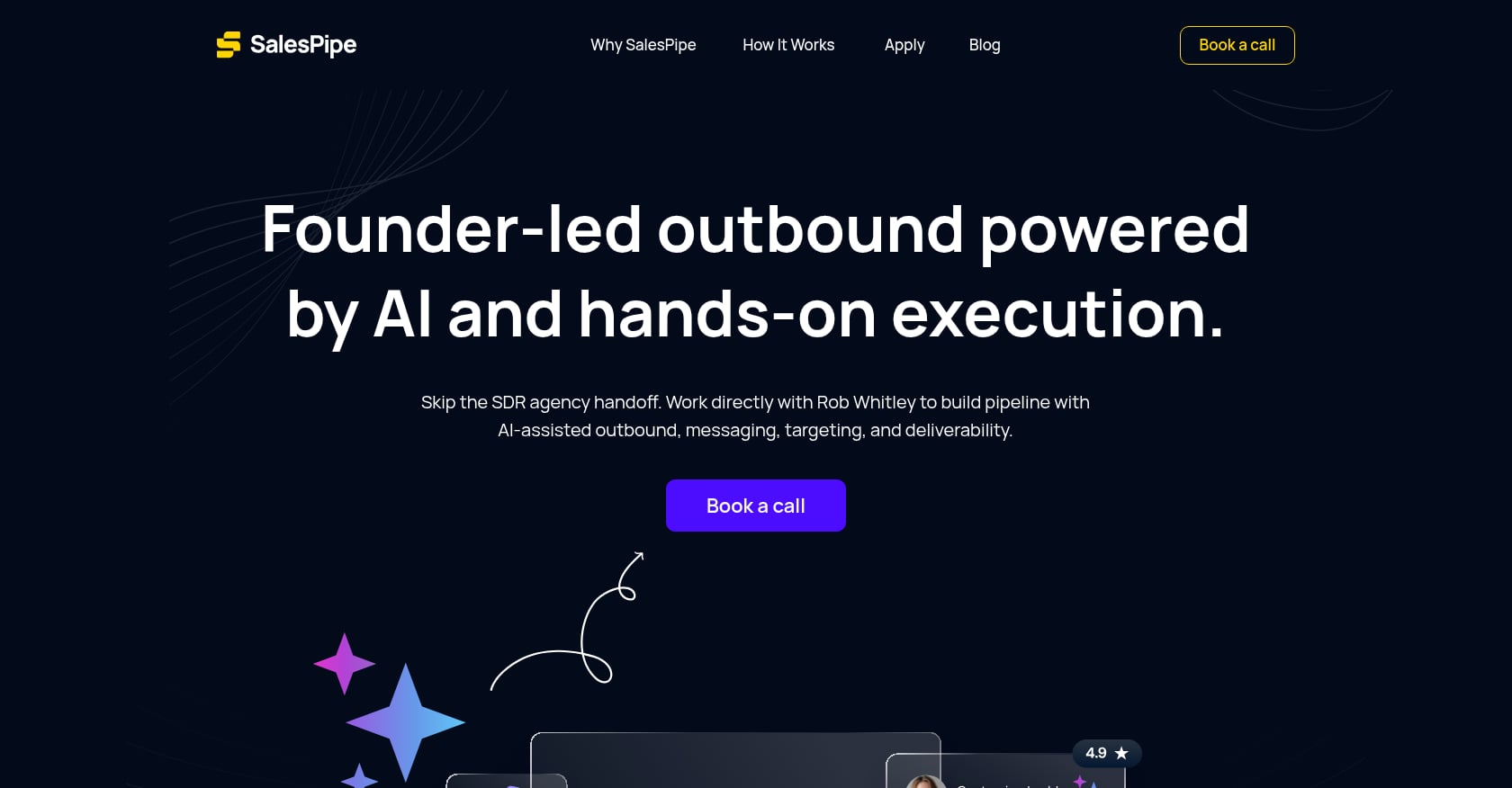
Best for: B2B startups that want a senior, hands-on fractional outbound operator without agency bureaucracy.
Pricing: Custom, scope-based engagements. Often begins with a pilot and continues month-to-month.
SalesPipe is a founder-led outbound pipeline generation service. Clients work directly with founder Rob Whitley on every aspect of outbound execution, from ICP definition and messaging to infrastructure setup, cold email, LinkedIn outreach, and qualified meeting generation.
Key features:
Direct founder involvement on every engagement, no handoff to junior staff
AI-powered leverage that lets one experienced operator match the output of a multi-person SDR team
Full technical setup including inbox and domain configuration, warming, and deliverability protection
ICP targeting and list-building support to reach the right prospects
Multi-channel outbound across cold email and LinkedIn
Ongoing campaign optimization, not a set-and-forget approach
Plugs directly into client workflows and GTM environment
Why it’s different: Most agencies sell you access to junior reps. Most consultants hand you a playbook and leave. SalesPipe sits between those models, combining strategic depth with daily execution. The AI-plus-operator approach means you get agency-level output from someone with over a decade of outbound experience, without paying for a bloated team.
Limitations:
The founder-led model limits the number of simultaneous clients
Pricing is customized rather than standardized, so you won’t find a pricing page with tiers
Not a fit if you just want raw email volume without strategic input
Who should consider this: Founders and revenue leaders at B2B tech companies who’ve been burned by agencies or aren’t ready to hire a full sales development team. If you want someone who actually does the work and takes ownership of pipeline outcomes, start a conversation with SalesPipe.
2. Activated Scale
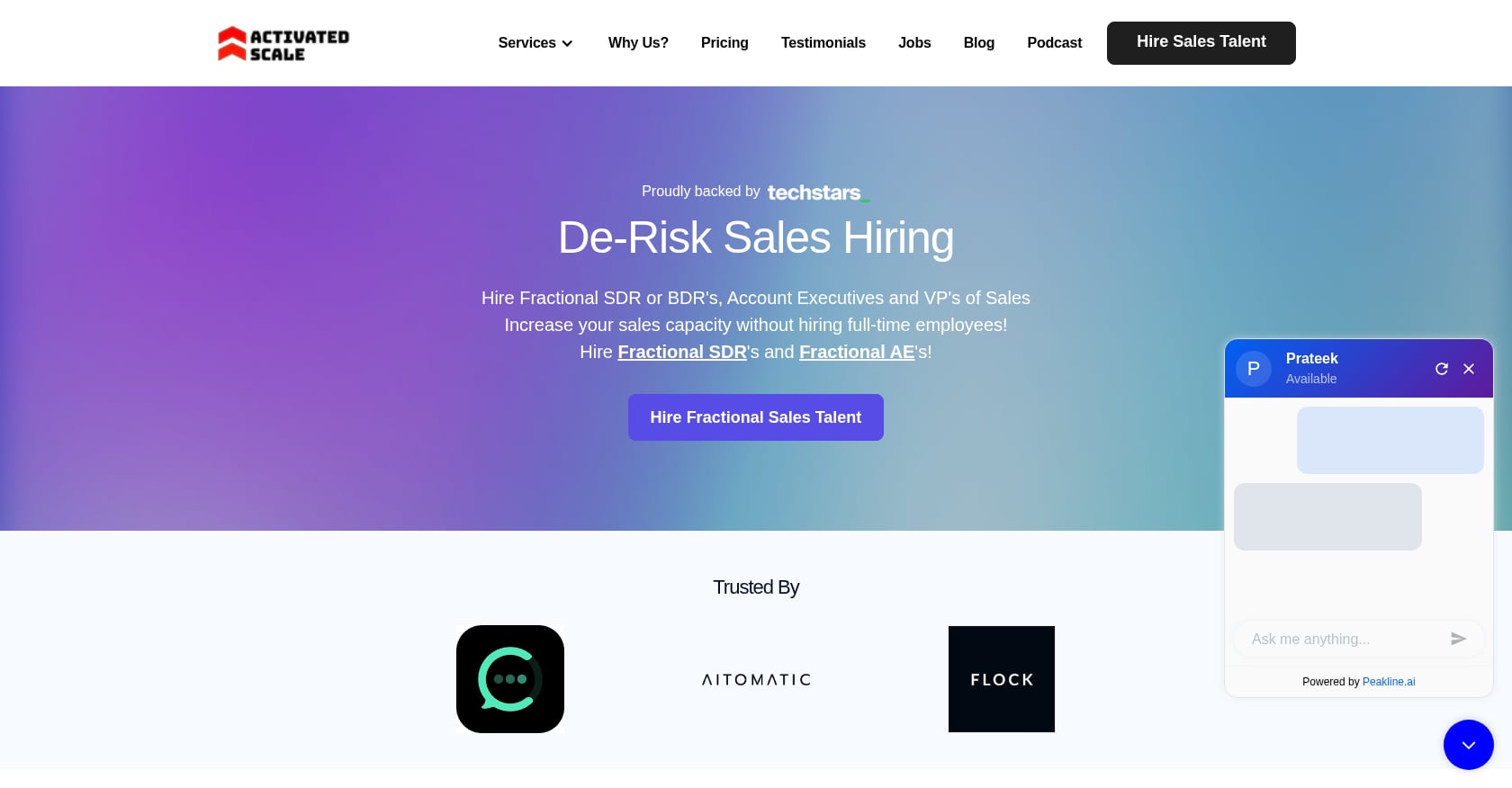
Best for: Startups wanting to add part-time SDR or AE capacity through a talent marketplace.
Pricing:
Fractional SDR: $3,500 to $4,500/month + commission
Fractional AE: $4,500 to $7,500/month + commission
VP of Sales: $8,000 to $15,000/month + bonus
Activated Scale positions itself as “Toptal for Sales,” connecting startups with vetted, US-based fractional sales professionals. You get matched with an individual rep who works part-time on your account.
Key features:
Access to vetted SDRs, AEs, and VPs of Sales
US-based talent only
Claims 4.8-star review average
One testimonial highlights increasing average deal size by 4X
No long-term contracts required
Limitations:
You’re hiring an individual rep, not a system. They still need direction, coaching, and tools.
No infrastructure setup, deliverability management, or outbound strategy included
If the matched SDR doesn’t work out, you’re back to square one
Commission structure on top of base fee increases effective cost
Best comparison: Think of Activated Scale as the hiring shortcut. You skip the recruiting process but still carry the management burden. This works well if you have outbound expertise internally and just need more hands.
3. LevelUp Leads
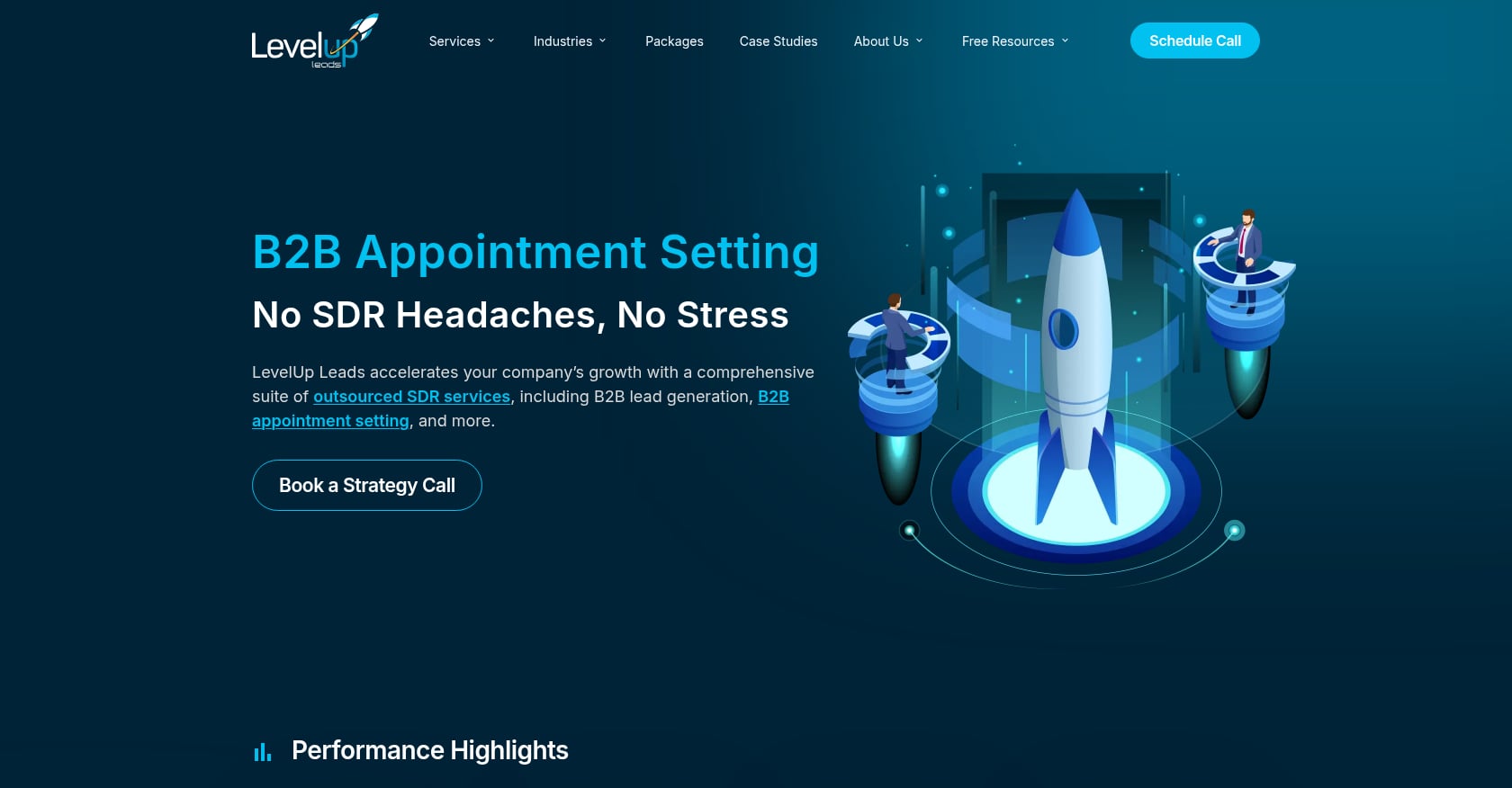
Best for: Companies wanting agency-managed fractional SDR capacity with supporting services.
Pricing: Custom, not publicly listed. Reviews suggest mid-range agency pricing.
LevelUp Leads is an outbound lead generation agency that offers a specific “fractional SDR” service alongside full-service options. Their pitch is “scalable SDR support, exactly when you need it.”
Key features:
Appointment setting and fractional SDR services
GTM strategy and engineering support
List building and email services included
Cold calling and LinkedIn outreach available
Listed on G2 with reviews
Limitations:
Agency model means you’re paying for a service, not building internal capability
Pricing opacity makes it harder to budget upfront
Less personalized than working directly with a solo operator
You’re one of many accounts being managed simultaneously
Best comparison: LevelUp Leads bridges the gap between a pure fractional hire and a full SDR agency. If you want some strategic support alongside execution but don’t need the depth of a dedicated operator, it’s worth evaluating.
4. SalesHive
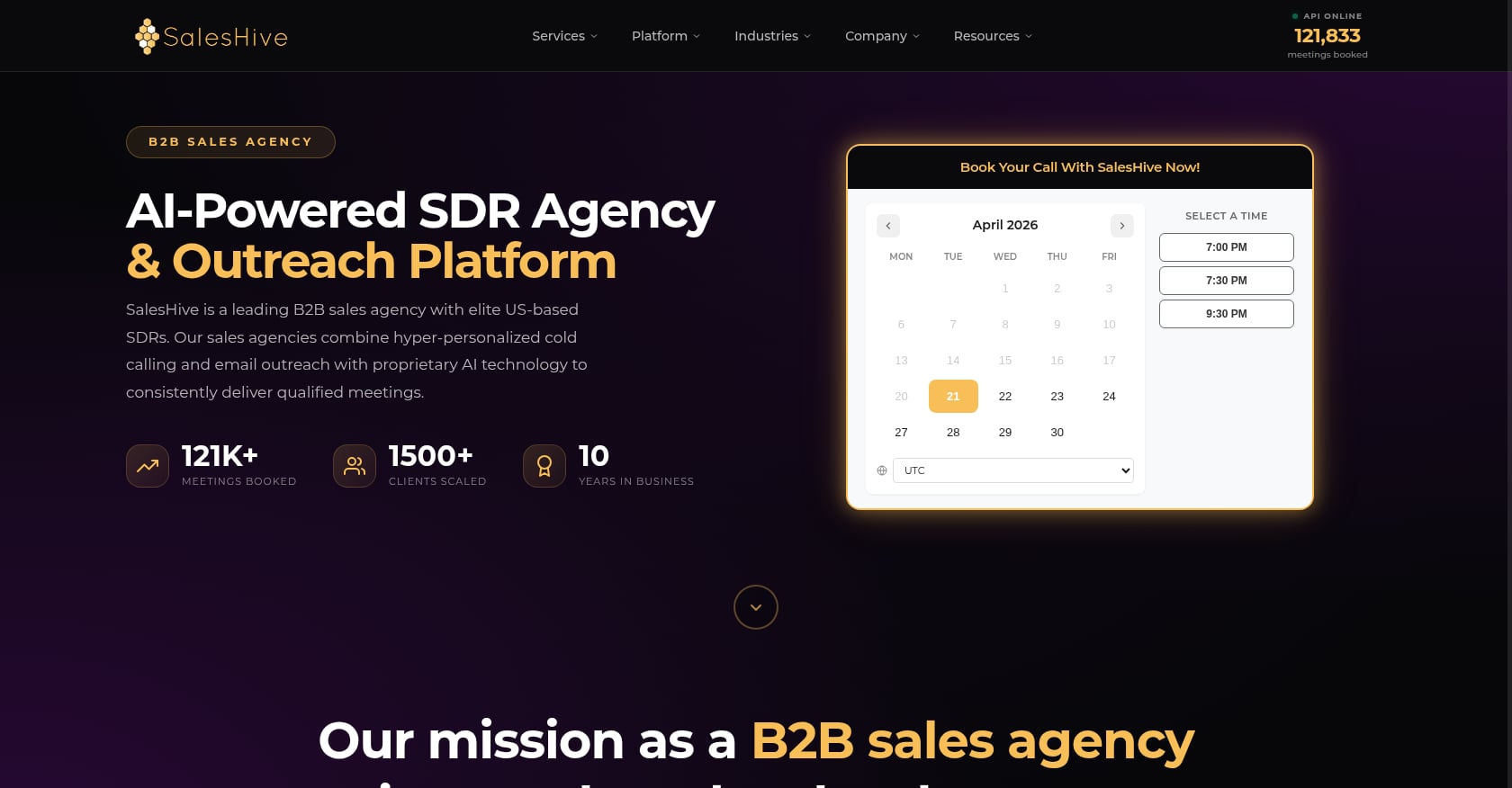
Best for: Companies with budget for high-volume, AI-augmented outsourced SDR campaigns.
Pricing (flat-rate, transparent):
Starter: $6,000/month (25 to 35 meetings/quarter)
Growth: $8,000/month (55+ meetings/quarter)
Crush: $12,000/month (90+ meetings/quarter)
SalesHive is a Denver-based SDR agency founded in 2016 that combines AI tools with human outreach. They’re one of the more established players in the SDR outsourcing space.
Key features:
Month-to-month contracts (no long-term lock-in)
Proprietary AI email platform
US or Philippines-based SDRs available
Custom outbound playbook per client
Multi-channel campaigns (email, calling, LinkedIn)
Limitations:
Automation-first approach can feel impersonal for complex or niche ICPs
You’re still working with an agency team, not a dedicated senior operator
At $6,000 to $12,000/month, pricing approaches in-house SDR costs without building internal capability
Falls into the broader outsourced SDR category where only 7% report full success
Best comparison: SalesHive is one of the better outsourced SDR agencies, with transparent pricing and modern tech. But it’s still an agency model. If you’ve already tried agencies and been disappointed, a fractional outbound operator is the alternative path worth exploring.
5. RevPilots
Best for: Companies that want help finding and vetting a fractional sales consultant.
Pricing: Custom, based on the consultant matched.
RevPilots is a matching platform that connects companies with fractional sales talent, including SDRs, AEs, VPs of Sales, and consultants. You describe your sales challenge, and they match you with someone from their vetted network.
Key features:
Curated matching based on your specific needs
Access to fractional SDRs, AEs, and sales leaders
Testimonials reference help booking meetings with “hard to reach prospects”
One user noted RevPilots “taught us exactly what we needed”
Limitations:
It’s a matching service, not a managed execution service
Quality depends entirely on the individual consultant you’re matched with
No outbound infrastructure, deliverability setup, or campaign management included
Less control over the process compared to hiring directly
Best comparison: RevPilots is useful when you know you need fractional outbound help but aren’t sure what profile to look for. The tradeoff is that the platform adds a layer between you and the talent, and execution quality varies.
6. Profs
Best for: Early-stage startups needing fractional sales leadership and strategic direction.
Pricing: Custom, determined after free consultation.
Profs is a managed marketplace that matches startups with vetted sales consultants and fractional heads of sales. The process starts with a free consultation, followed by a match within 48 hours.
Key features:
Hand-selected expert matching
Ongoing check-ins to ensure quality
One testimonial notes the fractional Head of Sales “took a lot of the sales management responsibilities off my plate”
Another founder said Profs “connected me with a sales consultant who completely changed our approach”
Limitations:
More sales management-focused than pure outbound execution
May not specialize in cold email infrastructure or deliverability
Quality is match-dependent
Strategic guidance without execution can lead to the same problem Lemkin identified with fractional VPs
Best comparison: Profs works best when your primary gap is sales leadership, not outbound execution specifically. If you need someone managing your sales process while you figure out hiring, it fills that role. But for pure pipeline generation, a dedicated fractional outbound operator is a better fit.
7. AI SDR Tools (Instantly, AiSDR, Artisan, 11x)
Best for: Teams with existing outbound expertise who want to scale email volume or automate repetitive tasks.
Pricing:
Instantly: From ~$30/month
AiSDR: From ~$900/month
11x (Alice): ~$40,000 to $60,000/year
Artisan (Ava): Custom pricing, annual contracts
AI SDR tools promise to automate prospecting, email sequences, and follow-ups. The category has exploded, with dozens of tools now competing to replace traditional outbound SDRs with software.
Key features:
Automated email sequencing and follow-ups
AI-generated personalization
Prospect research and list building (varies by tool)
Scales to thousands of emails per day
Low starting cost for basic tools
Limitations:
These tools automate sending, not strategy. Without strong ICP definition and messaging, they generate spam, not pipeline.
Deliverability management is your problem, and most users underestimate how quickly domains get burned
No one reviews your ICP, adjusts your positioning, or tells you your messaging isn’t working
The cheap tools have cheap output. The expensive ones ($40K+/year) cost as much as hiring a real person.
The honest take: AI SDR tools are best understood as force multipliers for someone who already knows outbound. They supplement a fractional outbound operator; they don’t replace one. A tool can send 10,000 emails. An operator decides which 500 are worth sending and what they should say.
8. Fractional Talent Platforms (Fractional Jobs, Go Fractional, Toptal)
Best for: Companies that want to recruit a fractional outbound operator directly and manage the relationship themselves.
Pricing:
Fractional Jobs: One-time fee of $3,000 to $5,000 (reports 86% hire rate, 30,000+ professionals)
Toptal: Up to 40% commission on placement
Go Fractional: Platform-based hiring across roles
These are general-purpose platforms for finding fractional talent across functions. They’re not outbound-specific, but some operators on these platforms do specialize in pipeline generation.
Key features:
Large talent pools across multiple disciplines
Fractional Jobs offers white-glove search with dedicated support
Toptal has rigorous screening (originally for engineering, now expanding)
One-time fees rather than ongoing platform costs (for some)
Limitations:
These are hiring platforms, not outbound services. You still manage everything after the match.
Finding a true outbound operator (versus a generic sales consultant) requires careful vetting
No infrastructure, deliverability, or campaign management included
72.8% of fractional professionals have 15+ years of experience, which is great for seniority but means most skew toward leadership rather than hands-on outbound execution
Best comparison: Use these platforms when you’re confident you can evaluate outbound talent yourself and want to build a long-term fractional relationship. If you’d rather skip the hiring process and go straight to pipeline, a managed fractional outbound operator is faster.
How to Choose the Right Fractional Outbound Model
The right model depends on three things: your company stage, your monthly budget, and how much strategic guidance you need alongside execution.
Pre-revenue or early stage (under $1M ARR):
You probably can’t justify $6,000+/month on an agency, and you don’t have enough data to brief a junior SDR effectively. A founder-led fractional outbound operator is the strongest fit here. You get senior thinking applied to your ICP and messaging from day one, with actual campaigns running, not just a strategy document. AI tools at the low end ($30 to $900/month) can supplement this, but they need someone driving the strategy.
Proving outbound ($1M to $5M ARR):
You’ve found some product-market fit and need to systematize pipeline. This is where a fractional outbound operator shines brightest, building the outbound engine that you’ll eventually hand off to an in-house team. Fractional SDR marketplaces like Activated Scale can also work here if you have internal leadership to manage the rep.
Scaling outbound ($5M+ ARR):
At this stage, you may have the budget for an outsourced SDR agency or in-house hires. But a fractional outbound operator can still add value by setting up infrastructure, optimizing deliverability, and training your team. Some companies at this stage use a fractional operator to build the system, then transition to in-house execution.
Budget-constrained (any stage):
Combine AI SDR tools with founder-led cold outreach. It won’t match the output of a dedicated operator, but it’s far better than doing nothing. When budget opens up, a fractional outbound operator is the natural next step.
Questions to ask before you commit:
Am I paying for strategy, execution, or both? (The best fractional outbound operators deliver both.)
Who actually does the work, a senior person or a junior rep?
Does this include infrastructure setup (domains, warming, deliverability), or is that on me?
Can I start with a pilot before committing to a long contract?
Will this build internal capability, or am I renting output that disappears when the contract ends?
The Bottom Line
The traditional outbound playbook, hire SDRs, outsource to an agency, spray and pray, is failing most B2B companies. The fractional outbound operator model offers a third path: one experienced person, amplified by AI, who brings both the strategic thinking and the daily execution needed to build pipeline.
Among the options covered here, SalesPipe stands out for companies that want founder-led, hands-on outbound execution without agency overhead. The combination of deep outbound expertise, AI-powered leverage, and full infrastructure support (deliverability, domain setup, messaging, targeting) addresses the exact failure points that sink most outsourced SDR engagements.
If you’re tired of paying for outbound that doesn’t produce pipeline, apply to work with SalesPipe and see what a senior fractional outbound operator can do for your business.