AI-Powered Outbound vs Traditional SDR Team: 2026 Comparison
AI-Powered Outbound vs Traditional SDR Team, 2026: costs, reply rates, and ROI. Learn why hybrid wins and how one operator scales.
TL;DR
AI-powered outbound uses software to automate prospecting, personalization, and follow-up at a fraction of the cost of human SDRs, but autonomous AI tools fail predictably through deliverability collapse, hallucination, and reply rate decay. Traditional SDR teams offer better conversion quality but cost $102,000 to $176,500 per rep annually, ramp slowly, and churn at 34 to 40% per year. The data from 2025 and 2026 overwhelmingly favors a hybrid approach, and the most efficient version of that hybrid is a single experienced outbound operator using AI for execution leverage rather than a full team or a fully autonomous tool.
At a Glance: AI-Powered Outbound vs. Traditional SDR Team
In 2026, the choice is no longer binary. Fully autonomous AI SDR tools provide 10x the volume at lower cost (around $39 per lead), but face high churn (50 to 70%) and serious deliverability risk. Traditional SDR teams offer higher conversion quality (5.2% reply rate) but cost $100k+ annually. The winning model is not an autonomous AI SDR at all. It is AI-powered outbound run by a human operator, where AI provides execution leverage and a senior operator keeps the strategic judgment that autonomous tools lack.
What Is AI-Powered Outbound?
AI-powered outbound refers to software systems that automate the sales development workflow, from identifying prospects and researching accounts to writing personalized messages, managing follow-up sequences, and booking meetings. These systems use large language models and automation to do the work traditionally handled by human SDRs, with minimal human input.
The category spans a wide spectrum. On one end, you have copilot tools that assist human reps with research, draft writing, and task prioritization. On the other end, fully autonomous AI SDR agents attempt to replace human reps entirely, handling everything from list building to meeting confirmation without human involvement.
The market is growing fast. According to MarketsandMarkets, the AI sales automation market will grow from $4.12 billion in 2025 to $15.01 billion by 2030, a 29.5% compound annual growth rate. That growth reflects real demand. But it also masks a critical problem: UserGems reports that AI SDR tools churn at 50 to 70% annually, roughly double the turnover rate of the human reps they’re designed to replace.
That churn rate tells you something important. Companies are buying these tools, testing them, and canceling at extraordinary rates. The promise of autonomous outbound is compelling. The execution, for most vendors and most buyers, is still falling short.
If you’re new to the fundamentals of outbound sales development, it helps to understand what an outbound SDR actually does before evaluating whether to automate that role.
What Is a Traditional SDR Team?
A traditional SDR team is a group of human sales development representatives who manually research prospects, write outreach, make calls, manage follow-ups, and qualify leads. They typically sit under a sales or revenue leader, carry structured quotas, and operate within defined territories or account lists.
The standard model looks something like this: hire 2 to 5 junior reps, give them a ramp period of 3 to 6 months, set a monthly meeting quota (usually 10 to 15 qualified meetings), and hope they stick around long enough to become productive.
The real cost of this model is almost always higher than leaders expect. The fully loaded cost of one SDR, including salary, benefits, tools, management overhead, and ramp time, runs between $102,000 and $176,500 per year. For a 5-person team with average turnover, hidden costs from constant hiring, ramping, and replacing add $260,000 to $500,000 per year on top of base compensation.
And that turnover is relentless. Average SDR tenure sits at just 16 to 19 months, with annual turnover rates between 34 and 40%. The top reasons SDRs quit aren’t about money. Burnout accounts for 35% of departures, feeling stuck for 28%, and unrealistic quotas for 18%. Salary ranks at only about 7%.
The result is a perpetual cycle: hire, ramp for nearly half a year, get 10 to 12 months of productive output, then start over. If you’re a startup evaluating whether to build this function internally, the guide on how to hire a salesperson for a startup covers the practical considerations in detail.
Side-by-Side Comparison: AI-Powered Outbound vs Traditional SDR Team
Here’s how the two models compare across the metrics that actually matter:
| Feature | AI-Powered Outbound (Autonomous) | Traditional SDR Team (Human) | AI-Augmented Operator (Hybrid) |
| Annual Cost | $12,000 – $60,000 | $102,000 – $176,500 | $60,000 – $90,000 |
| Ramp Time | < 24 Hours | 5.7 Months | < 14 Days |
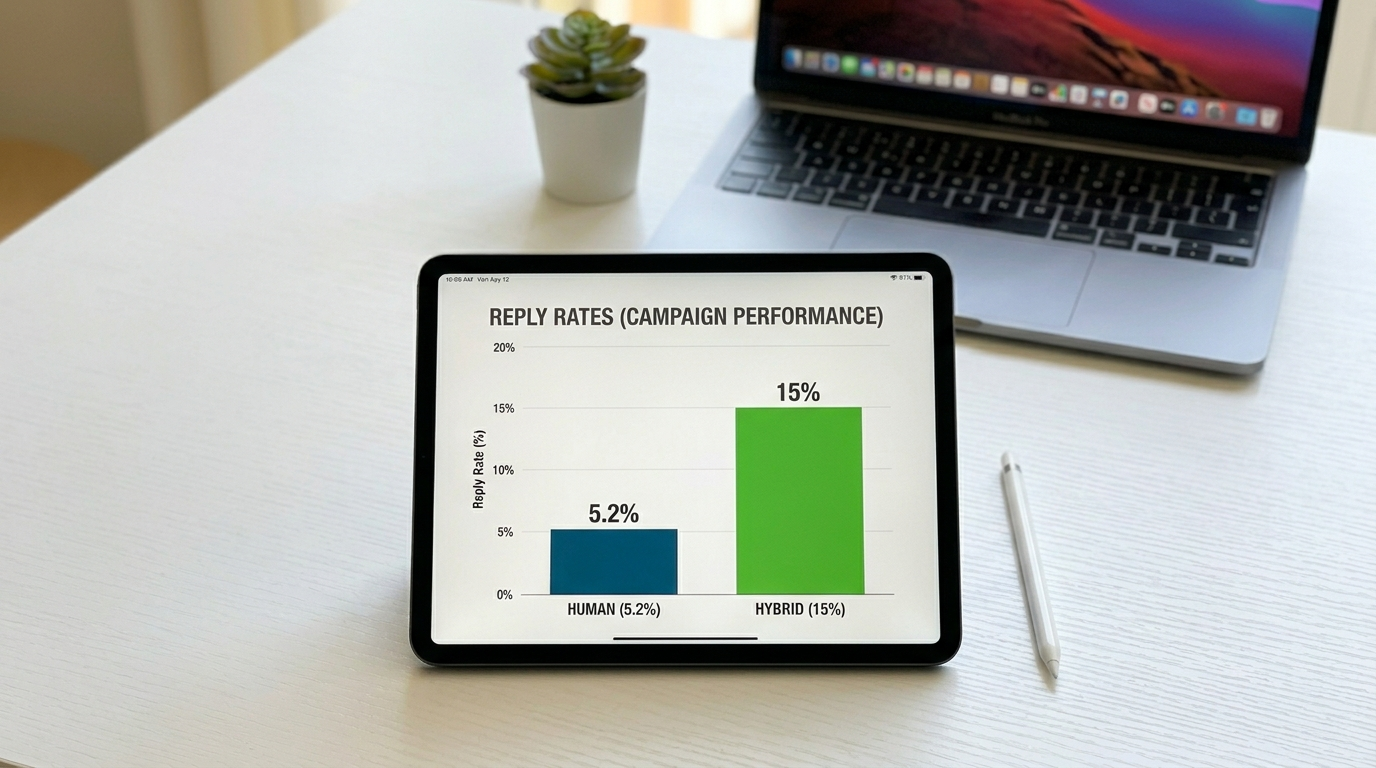
| Reply Rate | 4.1% | 5.2% | 8% – 15% |
| Email Volume | 1,000+ / day | 50 – 100 / day | 300 – 500 / day |
| Deliverability Risk | Very High | Low | Controlled / Optimized |
| Primary Value | Raw Volume & Low Cost | Relationship Building | High-Signal Efficiency |
These numbers come from a 100,000 paired email study conducted between October 2025 and April 2026, which remains one of the most rigorous head-to-head comparisons available.
The pattern is clear. AI wins decisively on cost and volume. Humans win on conversion quality. AI SDRs book meetings at $237 each compared to $990 for human SDRs, but humans generate higher positive reply rates (5.2% vs 4.1%) and significantly fewer spam flags (3% vs 8%).
What the table doesn’t show is the quality gap downstream. When industry data segments by approach, fully autonomous AI SDR campaigns convert at 1 to 3% at production scale. Hybrid AI-plus-human approaches land between 8 and 15%. And signal-based outbound layered on top of a hybrid model reaches 14 to 25%.
Volume and cost efficiency matter. But they matter a lot less if the meetings don’t convert to pipeline.
Where AI-Powered Outbound Breaks Down
The autonomous AI SDR narrative peaked between 2024 and 2025. By early 2026, the results are in, and they’re sobering. Fully autonomous AI SDRs have not replaced human sales teams at any meaningful scale. Companies that deployed tools like Artisan and 11x.ai as full SDR replacements have largely reverted to hybrid models.
Here are the specific failure modes that keep showing up.
Deliverability Collapse
This is the hidden killer. Domain reputation collapse from over-sending now caps 47% of attempted AI SDR deployments within the first 90 days. When you go from sending 50 emails a day from a domain to 1,000+, ISPs notice. The median sender reputation drop is 38 points within 90 days of scaling to agentic volumes. Once your domain is flagged, every email you send, including legitimate ones from your sales team and even transactional emails, suffers.
Understanding cold email structure and deliverability best practices is essential context here, because AI doesn’t fix bad infrastructure. It just scales it.
Hallucination and Brand Risk
AI systems fabricate information. They reference companies that don’t exist, cite job titles that are wrong, and sometimes reach out to existing customers as if they’re cold prospects. One user on Reddit described their experience with an AI SDR tool (11x’s Alice) as a “literal disaster,” with the system adding irrelevant companies to their CRM, contacting existing customers, and creating hundreds of duplicate records.
These aren’t edge cases. They’re the predictable result of giving an autonomous system permission to act without human review on tasks where accuracy matters.
Reply Rate Decay
Even when AI outbound starts strong, it doesn’t stay strong. Agentic outbound cohorts lose 60% or more of their reply rate within 18 months. The mechanism is straightforward: as more companies send AI-generated outreach, prospects develop pattern recognition and filtering behaviors. What worked six months ago sounds generic today.
The “Set and Forget” Trap
One practitioner on Reddit summarized the current sentiment on AI SDRs bluntly: “Pretty much all hype… The problem with all the AI SDR startups was that they tried to automate the entire workflow, which they did poorly.”
AI scales what’s already working. If your outbound motion hasn’t been validated by humans first, with a clear ICP, tested messaging, and proven channels, the AI will just scale your failures faster. The number one reason AI SDR deployments fail is deploying AI before validating outbound with human-led efforts. There’s nothing worth cloning if you haven’t proven what works.
The Real ROI: Calculating the Cost of 'Burned' Domains
When evaluating AI-powered outbound vs. traditional SDR teams, most leaders forget to calculate the cost of a "Burned Domain."
Infrastructure Damage: Once an AI tool triggers a spam flag (8% vs. 3% for humans), your primary company domain reputation can drop by 30+ points.
Opportunity Cost: Replacing a domain and warming it up takes 4–6 weeks.
Recovery Cost: Expert deliverability remediation typically costs $5,000 to $15,000 in consulting fees.
Where Traditional SDR Teams Break Down
Traditional SDR teams have their own serious structural problems, and the data from the last two years makes those problems harder to ignore.
Productivity Is Abysmal
Sellers spend roughly 25% of their time actually selling. The other 75%? Administrative tasks, bad data, CRM updates, and broken internal processes. More specifically, SDRs spend 60 to 70% of their time on non-selling activities like dialing, leaving voicemails, and updating records. You’re paying $100K+ for someone who spends most of their day on work that creates no pipeline.
Ramp Time Has Gotten Worse
Average ramp-up time for SaaS companies has reached 5.7 months in 2025. That’s nearly half a year before a new hire produces any ROI. Combined with 16 to 19 month average tenure, you’re looking at roughly one year of productive output from each hiring cycle, preceded by a nearly six-month investment with no return.
The Math Gets Worse at Scale
Traditional SDR teams scale linearly. Want 2x the meetings? Hire 2x the reps. That means 2x the fully loaded cost, 2x the management burden, 2x the turnover risk. For context, net SDR headcount in US B2B SaaS companies is down 18% year-over-year in 2026. Junior SDR roles (0 to 2 years experience) are down 31%, while senior SDR and “reply specialist” roles are up 14%.
The market is telling you something: companies are moving away from the junior-heavy SDR model. According to an Emergence Capital survey of 560+ B2B companies, 36% cut SDR/BDR roles in 2025, while only 19% grew their teams.
If you’re considering outsourced sales development as a middle path, it’s worth understanding how that model compares to building internally.
The Hybrid Model: Why It Wins, and Why It’s Still Not Enough
Nearly every credible source analyzing AI-powered outbound vs traditional SDR team performance in 2026 arrives at the same conclusion: hybrid wins.
The data supports this clearly. SDR team managers running hybrid models consistently report 30 to 60% lower cost-per-meeting compared to all-human teams, while maintaining meeting-to-opportunity conversion rates at pre-AI levels. The most effective configuration has AI handling list building, research, first-touch messages, and follow-up sequences, while humans manage objection handling, high-stakes accounts, and meeting handoffs.
The most economically powerful version of this approach is the AI-augmented hybrid, where one SDR does the work of 3 to 4 with AI tooling. This dramatically reduces per-meeting cost while preserving human judgment at the moments that determine whether a meeting becomes an opportunity.
But here’s the problem most content about hybrid models glosses over: building and running a hybrid outbound system requires significant expertise. You need a clear ICP definition, validated messaging that actually gets replies, proper domain and deliverability infrastructure, the right tooling stack, and someone with enough experience to continuously optimize all of it.
A sales leader quoted in a Knock AI article captured the bind perfectly: AI slop is killing sales, but sales orgs that don’t adopt AI will die. The tension is real. The question isn’t AI or humans. It’s who has the judgment to combine them effectively.
For many companies, especially startups and growth-stage SaaS businesses, the answer isn’t a team at all. It’s an operator.
The AI-Augmented Operator Model
There’s a model that most comparisons of AI-powered outbound vs traditional SDR teams never mention. It sits between subscribing to an autonomous AI tool and hiring a full SDR team, and for many companies it’s the approach that actually works.
The concept: one experienced outbound operator who uses AI for execution leverage, achieving the output of a small team without the overhead, management burden, ramp time, or turnover risk of building that team.
This is fundamentally different from three common alternatives:
Hiring 2 to 3 junior SDRs gives you bodies but not strategy. Junior reps need training, management, scripts, and months of ramp time. You’re paying for learning curves.
Subscribing to an AI SDR platform gives you volume but not judgment. As the failure mode data shows, autonomous tools without experienced human oversight produce deliverability collapse, hallucination risk, and reply rate decay.
Building a full hybrid team gives you the best performance but at significant cost and complexity. You need an experienced manager, the right mix of tools, and enough pipeline volume to justify the overhead.
The AI-augmented operator model resolves the tension. Strategy and judgment come from someone with deep outbound experience. Volume and efficiency come from AI handling research, personalization, sequencing, and follow-up. The operator defines the ICP, builds the messaging, sets up the infrastructure, monitors deliverability, and makes the judgment calls that determine whether outbound actually converts.
This is what AI-powered outbound means at SalesPipe, and it is not an autonomous AI SDR. Rather than staffing clients with junior SDRs or pointing them toward an AI tool, SalesPipe provides direct access to a founder-level outbound operator who uses AI to multiply capacity while maintaining the strategic judgment that autonomous tools lack. The work spans ICP definition, messaging, cold email, LinkedIn outreach, deliverability infrastructure, and qualified meeting generation.
If you’re weighing whether to hire, subscribe, or find a different path entirely, applying to work with SalesPipe is worth considering as a way to get senior outbound execution without the overhead of building a team.
When AI-Powered Outbound Makes Sense (And When It Doesn’t)
Not every company faces the same decision. The right model depends on your stage, your deal size, and whether you’ve already validated your outbound motion.
AI-first outbound works best when:
You have a proven ICP and validated messaging (from human-led outbound or founder selling)
Your average deal size is under $10K and volume matters more than relationship depth
You have someone internally who can monitor deliverability, review outputs, and iterate on strategy
You’re supplementing an existing outbound motion, not building one from scratch
Traditional SDR teams work best when:
You’re selling into enterprise accounts where relationship building is critical
Your sales cycle is long and requires multi-threaded engagement across an org
You have the management infrastructure to hire, train, and retain reps
Your deal sizes justify the $990+ cost per meeting
The operator model works best when:
You need pipeline now but don’t have months to hire and ramp a team
You haven’t fully validated your outbound motion yet and need someone who can figure it out
You want AI leverage without the deliverability and quality risks of autonomous tools
You’re a founder or small team that can’t justify the overhead of a full SDR org
For companies exploring their options around outsourcing the SDR function, the distinction between an agency staffing junior reps and an operator delivering founder-level execution is worth understanding before signing anything.
Decision Matrix: Which Model Should You Choose?
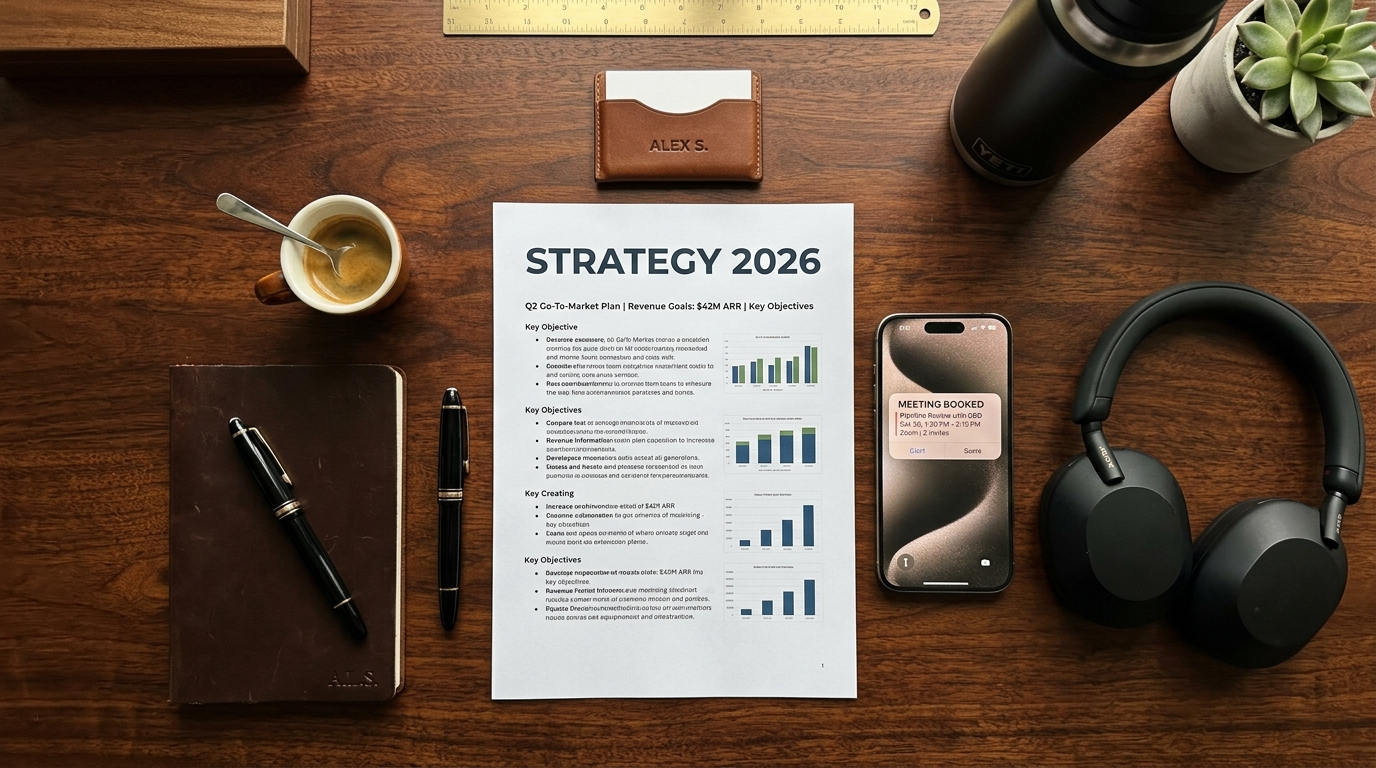
Choose AI-Powered Outbound if: You have a low ACV (< $5k), a massive TAM, and a technical team that can monitor deliverability daily.
Choose a Traditional SDR Team if: You are selling Enterprise deals ($100k+) where multi-threaded relationships and "white glove" touchpoints are required.
Choose the Operator Model (SalesPipe) if: You need founder-level strategy, want to scale quickly without the $170k overhead, and require human-level deliverability protection.
Quick-Reference Glossary of Related Terms
AI SDR: An AI system designed to perform the functions of a human sales development representative, including prospecting, personalization, sequencing, and meeting booking.
SDR (Sales Development Representative): A human sales rep focused on top-of-funnel activities: identifying prospects, initiating outreach, qualifying leads, and booking meetings for account executives. Here’s a deeper explanation of the SDR role.
BDR (Business Development Representative): Often used interchangeably with SDR. In some organizations, BDRs focus on outbound prospecting while SDRs handle inbound leads.
ICP (Ideal Customer Profile): A description of the company type most likely to buy your product, defined by firmographic characteristics like industry, size, revenue, and technology stack.
Deliverability: The ability of your emails to reach the recipient’s primary inbox rather than being filtered to spam or blocked entirely. This is the single most underestimated factor in outbound success.
Outbound Sequence: A planned series of touchpoints (emails, calls, LinkedIn messages) designed to engage a prospect over days or weeks. Learn more about email sequences and how they work.
Cost Per Meeting (CPM): The total cost of your outbound operation divided by the number of qualified meetings produced. The metric that matters most when comparing models.
Meeting-to-Opportunity Rate: The percentage of booked meetings that convert into qualified sales opportunities. AI outbound often produces more meetings but at lower conversion rates.
Signal-Based Outbound: Targeting prospects based on real-time buying signals (job changes, funding rounds, technology adoption, website visits) rather than static list criteria. When layered on top of hybrid outbound, this approach produces the highest conversion rates.
Hybrid Model: Any combination of AI tools and human judgment in the outbound workflow. The consensus best-performing approach in 2026, though execution quality varies enormously based on who’s running it.