Best Outbound Teams Use Human Plus AI in 2026: How to Win
Learn how Best Outbound Teams Use Human Plus AI to book 1.9x more meetings, cut cost per opp, and build a hybrid pod that wins in 2026.
TL;DR
The best outbound teams use human plus AI by splitting work according to each side’s strengths: AI handles research, enrichment, list building, and sequencing at scale, while humans own ICP definition, messaging strategy, reply handling, and relationship building. Hybrid pods book 1.9x more meetings per dollar than pure AI setups and 2.4x more than human-only teams. Neither full automation nor brute-force manual outreach wins alone. The teams producing real pipeline in 2026 are the ones that figured out exactly where to draw the line.
What is Human Plus AI Outbound? Human Plus AI Outbound is a hybrid sales model that combines AI's scalability with human strategic judgment. In this model, AI handles 90% of the operational workload (research, data enrichment, and sequencing), while humans own the 10% high-value tasks (messaging strategy, relationship building, and reply handling). According to 2026 benchmarks, this hybrid approach generates 1.9x more meetings per dollar than AI-only setups and 2.4x more than manual human teams.
Why Pure Automation Stalls, and Pure Effort Cannot Scale
In 2026, most outbound teams have already tried both extremes and felt them fail. Fully automated AI blasts the inbox and watches reply rates collapse. Fully manual teams write great emails but cannot send enough of them to build real pipeline. The teams pulling ahead stopped arguing AI versus human and started asking a sharper question: which tasks belong to the machine, and which belong to the person? This guide answers that with 2026 benchmarks, a clear task split, and a workflow you can run.
What “Human Plus AI Outbound” Actually Means
Human plus AI outbound is the practice of combining artificial intelligence tools with human judgment to run outbound sales programs. AI takes on the high-volume, data-intensive, repetitive work. Humans take on the strategic, relational, and high-judgment work. Together, they produce results that neither side achieves alone.
This is not a vague aspiration. It describes a specific operational model that has become the default for high-performing B2B teams. At its core, the concept rests on a simple division: AI does the research, humans do the relationship.
To understand how this differs from the alternatives, consider three approaches:
Fully autonomous AI outbound means an AI system handles everything, from identifying prospects to writing messages to responding to replies, with no human involvement. In theory, this is cheap and infinitely scalable. In practice, it produces low reply rates (1 to 3% at production scale) and significantly worse closed-won outcomes.
Fully manual human outbound means a team of sales development representatives doing everything by hand: building lists, researching accounts, writing emails, sending follow-ups, handling replies. This produces higher-quality conversations but cannot scale without proportional headcount increases.
Human plus AI outbound takes what works from both. The AI layer automates the operational 90% (research, enrichment, sequencing, scheduling). The human layer controls the strategic 10% (ICP clarity, messaging direction, reply conversations, objection handling). That 10% determines whether the 90% produces pipeline or spam.
Several related concepts support this model, and they show up repeatedly in how the best outbound teams use human plus AI together:
AI SDR: Software that automates tasks a human SDR typically performs, from prospect research to email drafting to follow-ups.
Human-in-the-loop (HITL): An approach that keeps human judgment integrated into AI workflows, so people can refine outputs, correct errors, and make strategic decisions the AI cannot.
Hybrid pod: The team structure built around this model, typically one human SDR plus two to four AI SDR seats, supported by a fractional ops role.
Reply specialist: The evolved role of the human SDR in a hybrid pod, focused on handling replies, managing named accounts, and conducting judgment-heavy conversations rather than bulk activity.
Why the Hybrid Model Wins: The Data
The argument for human plus AI outbound is not philosophical. It is mathematical. Every major benchmark study from 2025-2026 points in the same direction: hybrid beats both extremes.
Meetings Per Dollar
RevOps Co-op benchmarks across 380 companies found that hybrid pods (one human SDR per two AI SDR seats) book 1.9x more meetings per dollar than pure AI configurations and 2.4x more than human-only configurations. The median hybrid pod ratio is 1 human to 2.4 AI seats.
Cost Per Opportunity
The Bridge Group’s SDR Metrics 2026 report shows cost per qualified opportunity fell from $487 in human-only pods to $224 in hybrid AI plus human pods, a 54% reduction.
Reply Rates by Model Type
Kyle Poyar’s research maps the reply rate spectrum clearly:
| Model | Reply Rate |
|---|---|
| Fully autonomous AI SDR | 1 to 3% |
| Hybrid AI plus human | 8 to 15% |
| Signal-based outbound on top of hybrid | 14 to 25% |
The gap is enormous. And it gets worse for pure AI when you look further down the funnel.
Closed-Won Performance
Pure AI pods (no human in the loop) underperform on closed-won revenue by 22 percentage points compared to hybrid pods. Even when AI SDRs successfully book meetings, AE win rates on AI-sourced opportunities run 9 to 12 percentage points below human-sourced opportunities at the average B2B SaaS company. The meetings look similar on the calendar. They perform very differently in the pipeline.
The Seniority Gradient
Here is a data point most articles overlook: AI SDR reply rates are within roughly 1.2 percentage points of human SDR rates when targeting managers and individual contributors. But the gap widens past 1.7 points at the VP level and crosses 2 points at CISO and C-suite titles.
The more senior your target buyer, the more you need a human in the conversation. This makes intuitive sense. A VP of Engineering can smell a templated sequence from the subject line. The best outbound teams use human plus AI by routing senior prospects to experienced humans and letting AI handle volume at lower titles.
Outbound Performance by Buyer Seniority (2026 Data)
| Buyer Level | AI-Only Reply Rate | Hybrid (Human+AI) Rate | Performance Gap |
| Manager / IC | 2.8% | 4.1% | +1.3% |
| Director | 1.9% | 3.6% | +1.7% |
| VP / SVP | 0.8% | 2.9% | +2.1% |
| C-Suite (CXO) | 0.4% | 2.5% | +2.1% |
Volume vs. Quality
Per Apollo and ZoomInfo 2026 outbound benchmarks, per-rep monthly outbound volume rose from a 1,150 human baseline to a 7,400 AI-augmented mean. But raw reply rates fell from 4.7% to 2.9%. More emails, fewer responses per email. This is the predictable outcome of adding AI without adding human judgment. Volume without targeting is just noise.
What AI Handles vs. What Humans Handle

The clearest way to understand how the best outbound teams use human plus AI is to map specific tasks to the right owner. This is not about preference. It is about which side produces better results on each task.
| Outbound Task | Best Owner | Why |
|---|---|---|
| Prospect research and enrichment | AI | Processes company data, signals, and org charts at scale |
| List building and segmentation | AI | Scores thousands of accounts against the ICP in minutes |
| Sequence scheduling and A/B tests | AI | Consistent timing and testing with no variance |
| Signal detection | AI | Flags funding, hiring, and tech changes in real time |
| ICP definition | Human | Requires strategic judgment AI cannot supply |
| Messaging strategy and positioning | Human | Decides whether the angle actually resonates |
| Reply handling | Human | A real response builds trust; automation destroys it |
| Named-account and C-suite outreach | Human | Senior buyers need empathy and multi-threaded engagement |
| Objection handling | Human | Reads the intent behind pushback in context |
| Campaign calibration | Human | Adjusts strategy on qualitative sales signals |
AI’s Territory
Research and enrichment. AI agents pull company data, technographics, org charts, recent news, hiring patterns, and funding events faster and more consistently than any human. This is the highest-value AI application in outbound: tell the human who to email and why.
As Matthew Metros wrote in his Substack analysis (February 2026), “The entire value of AI in outbound is shifting from ‘write the email for me’ to ‘tell me who to email and why.’” That reframing matters. AI as a research engine, not a copywriter, is where the real gains come from.
List building and segmentation. AI can process thousands of companies against your ideal customer profile criteria in minutes. It filters, scores, and ranks prospects based on fit signals.
Email sequence management. Scheduling sends, managing follow-up cadences, optimizing send times, running A/B tests on subject lines and messaging variants.
Signal detection. Identifying real-time buying signals like leadership changes, funding rounds, hiring surges, and technology adoption. This is what turns static lists into signal-based outbound, the highest-performing layer of the hybrid model.
Consistency. AI outbound performance is predictable. If it booked 40 meetings last month, it will book 38 to 42 this month. No ramp time. No variance. No sick days. For cold outreach at scale, this reliability matters.
Human Territory
ICP definition. AI cannot decide who your best customers are. That requires strategic judgment, pattern recognition from sales conversations, and deep understanding of your product’s actual value. Get the ICP wrong, and AI will efficiently target the wrong people.
Messaging strategy. AI can generate email copy. It cannot tell you whether your angle resonates, whether your positioning is off, or whether the market has shifted underneath you. Campaign strategy is a human job.
Reply handling. This is where human oversight becomes non-negotiable. When someone takes the time to respond, they deserve a response from an actual human being who has read what they wrote. Every time. Automating replies is the fastest way to destroy trust and waste the pipeline your hybrid system generated.
Named-account outreach. Your top 50 target accounts need personalized, strategic engagement. That means custom research, tailored messaging, multi-threaded relationship building, all things humans do well and AI does poorly.
VP-plus and C-suite engagement. The seniority gradient data confirms this: senior buyers require human judgment, empathy, and strategic framing.
Objection handling. When a prospect pushes back, the response needs to be genuinely contextual, not a canned objection-handling script. The nuance of “this person is testing us” versus “this person is actually not interested” requires human pattern recognition.
Campaign calibration. Recognizing when an approach is not resonating, adjusting targeting based on qualitative signals from sales conversations, knowing when a segment requires a fundamentally different angle. AI systems are measurably less effective at this kind of strategic adaptation.
The Modern Outbound Pod Structure
The team shape has changed fundamentally. In 2024, a typical outbound pod consisted of four SDRs and a manager. In 2026, the best outbound teams use human plus AI in a completely different configuration.
The 2026 Hybrid Pod
The production-tested pod shape is:
One human SDR (functioning as a reply specialist and named-account owner)
Two to four AI SDR seats (handling research, sequencing, and follow-up automation)
One fractional sender ops or RevOps role (managing deliverability, infrastructure, and data quality)
This structure explains a staffing trend that might otherwise seem contradictory: junior SDR roles are down 31% while senior outbound roles are up 14%. Companies are not eliminating SDRs. They are replacing entry-level volume roles with experienced operators who can manage both AI tools and human judgment in one workflow.
The human SDR in this pod is not grinding through 100 cold calls a day. They are reviewing AI-generated research, refining targeting, handling every inbound reply with care, and running strategic outreach to named accounts. The role has shifted from activity machine to judgment-heavy operator.
The Operator Model
There is an emerging model that sits between a pure tool stack and a traditional outsourced SDR agency. Call it the operator model: one experienced outbound professional who manages AI tools, owns the strategy, handles the human-judgment tasks, and runs the entire system. This person replaces a team of three to five junior SDRs while producing comparable or better pipeline.
The operator model works because AI has collapsed the operational workload. One person with the right tools and experience can now do what required a team just two years ago. But it only works if that person is genuinely experienced, not a junior rep given an AI login. The judgment layer is the whole point.
For companies that want this model without hiring for it, working with a founder-led outbound partner can be a faster path to production. The key is finding someone who combines strategic thinking with hands-on execution and understands the AI layer deeply enough to use it properly.
Ramp Time Advantage
Time-to-first-meeting for an AI SDR seat is 24 days on average versus 142 days for a new human SDR hire, per Bridge Group’s 2026 ramp survey. This does not mean AI replaces human ramp time. It means the hybrid model gets to full productivity much faster because the AI seats are generating activity while the human is still getting up to speed on messaging and ICP nuance.
Adoption Is Accelerating
According to Salesforce’s State of Sales 2026 report, 41% of enterprise B2B teams had at least one AI SDR running in production by Q1 2026, up from 12% one year earlier. The hybrid approach is no longer experimental.
The 2026 Hybrid Outbound Tech Stack
To run a successful Human Plus AI pod, your stack must prioritize data flow over raw volume. The best teams utilize three specific layers:
The Intelligence Layer: Tools like Apollo or ZoomInfo for signal detection (hiring, funding, tech installs).
The Execution Layer: AI SDR agents that don't just send emails but perform "Reasoning-based Research" before every send.
The Infrastructure Layer: Dedicated "Sender Ops" tools for automated mailbox rotation and DMARC/SPF/DKIM monitoring to ensure 99% deliverability.
Where Human Plus AI Outbound Fails
The hybrid model is not a magic formula. It fails in predictable ways, and understanding those failure modes is as important as understanding the model itself.
Data Quality Problems
AI amplifies whatever you feed it. If your prospect lists are outdated, your segmentation is sloppy, or your ICP is poorly defined, AI will efficiently reach the wrong people with the wrong message. Practitioners across Reddit consistently report that the real bottleneck is data quality and ICP clarity, not AI capability. As one SaaStr practitioner noted after real-world testing, “The hardest part isn’t the AI. It’s having clean lead lists, good segmentation, and messaging that actually resonates.”
AI amplifies fundamentals. It does not replace them.
Deliverability Neglect
This is the invisible killer of AI outbound programs, and most content on this topic ignores it entirely. AI SDRs sending from poorly warmed mailboxes on shared IPs land in spam at 3 to 4x the baseline rate of properly warmed dedicated setups. Spam complaint rates above 0.3% trigger enforcement actions from email providers. The AI agent gets blamed for what is actually an infrastructure failure.
The teams winning with human plus AI outbound send fewer, better emails to signal-matched accounts. They do not send more emails to larger lists. Proper inbox setup, domain warming, and deliverability management are prerequisites, not afterthoughts. Without them, even the best cold email structure in the world will never reach the inbox.
Over-Automation of Replies
Some teams automate the reply stage to save time. This is a catastrophic error. A prospect who replies is the most valuable signal in your entire outbound system. Handing that reply to an AI chatbot communicates that you do not value their time. Smartlead’s team (a major email infrastructure provider that sees thousands of campaigns) put it bluntly: “Anyone selling ‘AI SDRs that fully replace your team in 2026’ is showing you a demo and calling it production.”
No Strategic Oversight
AI cannot tell you that your entire campaign angle is wrong. It cannot recognize that a prospect segment requires a fundamentally different approach. Without a human reviewing performance, making strategic adjustments, and applying qualitative judgment from actual sales conversations, the system drifts. High volume plus bad strategy equals expensive failure.
Staying Compliant: AI Outbound Regulations in 2026
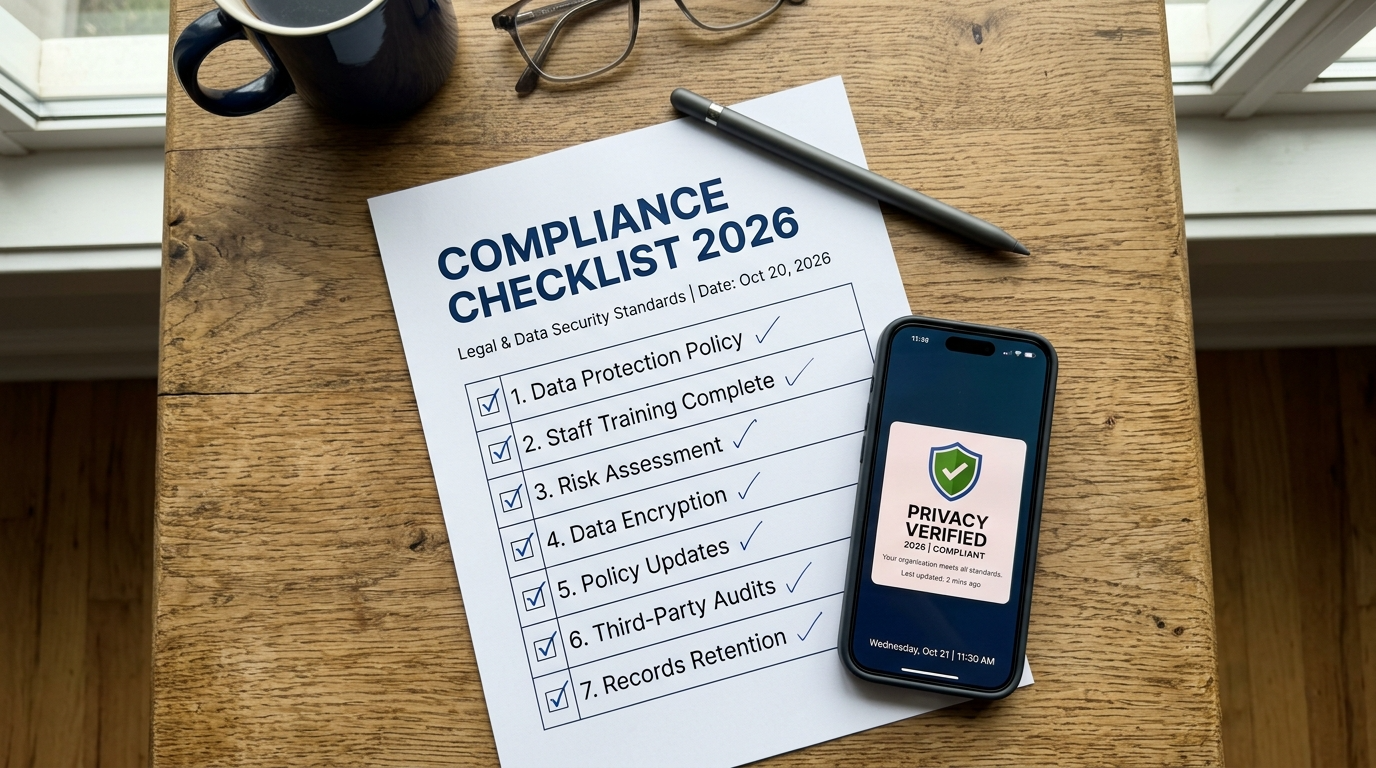
With the 2026 updates to global privacy laws, the "Spray and Pray" AI model isn't just ineffective—it’s a legal risk.
Transparency: Ensure your AI agents identify as assistants or are clearly overseen by a human "Sender of Record."
Data Minimization: Use AI to filter out prospects who have opted out of global "Do Not Track" registries.
Human Oversight: The "Human-in-the-loop" model isn't just for quality; it's your primary defense against automated spam penalties and legal non-compliance.
Glossary of Key Terms
AI SDR (AI Sales Development Representative)
Software that uses artificial intelligence to automate the tasks a human SDR typically performs: researching prospects, writing outreach messages, sending emails or LinkedIn messages, following up, and booking meetings. Distinct from a human outbound SDR in that it operates autonomously on operational tasks but requires human oversight for strategic decisions.
Human-in-the-Loop (HITL)
A collaborative approach that integrates human judgment into AI-driven processes. In outbound sales, this means humans review AI-generated prospect lists, refine messaging, handle replies, and make strategic adjustments. HITL is the mechanism that makes the hybrid model work.
Hybrid Pod
The standard team structure for human plus AI outbound. Typically consists of one human SDR, two to four AI SDR seats, and a fractional ops role. RevOps Co-op benchmarks put the median ratio at 1 human to 2.4 AI seats across 380 companies.
Signal-Based Outbound
Outbound targeting driven by real-time buying signals (leadership changes, funding rounds, hiring surges, technology adoption) rather than static lists. When layered on top of a hybrid model, signal-based outbound produces the highest reply rates (14 to 25%) of any approach.
Reply Specialist
The evolved role of the human SDR in a hybrid pod. Rather than sending hundreds of cold emails daily, the reply specialist focuses on handling inbound replies, managing named accounts, and conducting the judgment-heavy conversations that convert interest into meetings.
Sender Ops / Deliverability Ops
The operational function responsible for email infrastructure: domain configuration, inbox warming, IP reputation, spam compliance, and send volume management. This role is increasingly critical in hybrid outbound because AI’s ability to send at scale means infrastructure failures are amplified proportionally.
Ideal Customer Profile (ICP)
A detailed description of the company and buyer persona most likely to become a valuable customer. ICP definition is a human-led activity that determines the effectiveness of everything downstream, including what the AI targets.
Multi-Channel Outbound
Running outbound across multiple communication channels simultaneously, typically cold email and LinkedIn prospecting, sometimes with phone and video. The hybrid model makes multi-channel outbound more manageable because AI handles sequencing across channels while humans focus on live conversations.
Autonomous AI SDR vs. AI-Assisted Human SDR
Two distinct approaches. An autonomous AI SDR operates independently with minimal human involvement. An AI-assisted human SDR is a person using AI tools to amplify their work. Current data strongly favors the second approach: the best outbound teams use human plus AI in an assistive configuration, not a replacement one.
How to Get Started with Human Plus AI Outbound
Starting with the hybrid model does not require a massive technology investment or a complete team restructure. It requires getting the fundamentals right and then adding AI on top.
Step 1: Nail Your ICP and Messaging First
AI cannot define your ideal customer. Before turning on any AI tool, you need a clear, tested ICP and messaging that resonates with real buyers. If your current outbound is not working with human effort, AI will not fix it. It will scale the dysfunction.
Step 2: Build Proper Infrastructure
Set up dedicated sending domains, warm your inboxes properly, configure authentication (SPF, DKIM, DMARC), and monitor deliverability. This is boring but essential. Skip it and nothing else matters.
Step 3: Layer AI on Research and Enrichment
Start with AI for prospect research, data enrichment, and list building. This is where the ROI is highest and the risk is lowest. Let AI tell your team who to contact and why, rather than trying to replace the outreach itself.
Step 4: Automate Sequences, Not Conversations
Use AI to manage email sequencing, follow-up timing, send optimization, and A/B testing. Keep humans on every reply. When a prospect responds, a human takes over. No exceptions.
Step 5: Measure Outcomes, Not Activity
The metric that matters is qualified pipeline, not emails sent. A hybrid pod sending 2,000 targeted emails that generate 30 qualified opportunities beats a pure AI system sending 50,000 emails that generate 15 opportunities of questionable quality. Track meetings booked, opportunities created, and revenue influenced.
Step 6: Consider the Operator Model
If building a hybrid pod internally feels like too much overhead, working with an experienced outbound operator who already runs this model can shortcut the learning curve significantly. The right partner combines ICP strategy, messaging, AI-powered execution, and deliverability management into one engagement, the exact approach companies like SalesPipe were built around. If this sounds like the right fit, start a conversation here.
A Practical Example: One Week in a Hybrid Workflow
Here is how the task split plays out across a single week for a pod targeting Series B SaaS companies.
Monday. AI enriches 200 accounts that match the ICP and flags 40 with a live signal, such as a new VP of Sales or a fresh funding round. The operator reviews the list, removes 8 poor-fit accounts, and picks the 12 named accounts worth manual research.
Tuesday. AI drafts first-touch emails for the 32 signal accounts and loads them into sequences. The operator rewrites the opening lines for the 12 named accounts and approves the rest.
Wednesday and Thursday. AI runs the sequences, handles timing and follow-ups, and pauses anyone who replies. The operator personally answers every reply and books calls, spending the freed-up hours on the named accounts.
Friday. The operator reviews reply and meeting data, notices healthcare prospects are not responding to the main angle, and rewrites that segment's messaging for next week. AI never made that call. The human did.
The lesson is simple. AI moved the volume, the operator made every decision that touched a buyer, and the week produced qualified meetings instead of spam.