Outbound Personalization With AI: The 2026 Playbook
Learn outbound personalization with AI the right way: signals, segmentation, short messages, and deliverability. Get the 2026 playbook now.
TL;DR
Outbound personalization with AI means using artificial intelligence to research prospects, find relevant business signals, and tailor cold emails or LinkedIn messages to a specific person, company, or buying situation. The goal is not to make every email sound custom. The goal is to make every touch more relevant. AI works best upstream of the message itself, helping identify the right accounts, the right timing, and the right reason to reach out, while a human operator controls strategy, accuracy, and deliverability.
What is AI outbound personalization? Outbound personalization with AI is the use of machine learning and large language models to automate prospect research and tailor sales outreach. Unlike basic mail merges, AI analyzes business signals—such as hiring trends, tech stack changes, and funding—to create relevant, signal-based messaging at scale. Its primary goal is to increase conversion rates by moving from generic templates to context-aware communication.
Definition of Outbound Personalization With AI
Outbound personalization with AI is the practice of using artificial intelligence to research prospects, identify account or buyer signals, and tailor outbound sales messages to a specific person, company, role, or situation. In B2B sales, it applies most often to cold email, LinkedIn outreach, follow-ups, and multi-step email sequences.
The plain-English version: it means using AI to make outbound outreach more relevant. Instead of sending the same pitch to everyone, AI helps find details like a company trigger, hiring pattern, tech stack change, recent funding round, role-specific pain point, or prior engagement signal, then turns that context into a more specific message.
Here is what outbound personalization with AI is not: letting AI blast thousands of “personalized” emails that all sound the same. The best use of AI is often upstream of the message. Identifying the right accounts. Finding the right reason to contact them. Segmenting the list. Giving the human operator better context before a single word gets written.
Practitioner discussions on Reddit and LinkedIn increasingly describe shallow AI personalization (referencing a LinkedIn post or a job title without connecting it to a real business problem) as “personalization theater.” One Reddit thread about cold email agencies found that many agencies claim personalization but only swap first name, company name, city, or industry while keeping identical body copy. Real personalization uses observable business signals that change the actual message angle.
Why This Term Matters Now
AI adoption in sales is no longer experimental. HubSpot’s 2025 State of Sales report found that only 8% of surveyed sales professionals reported not using AI at all, while 83% said AI personalizes prospect interactions source. The technology has gone mainstream fast.
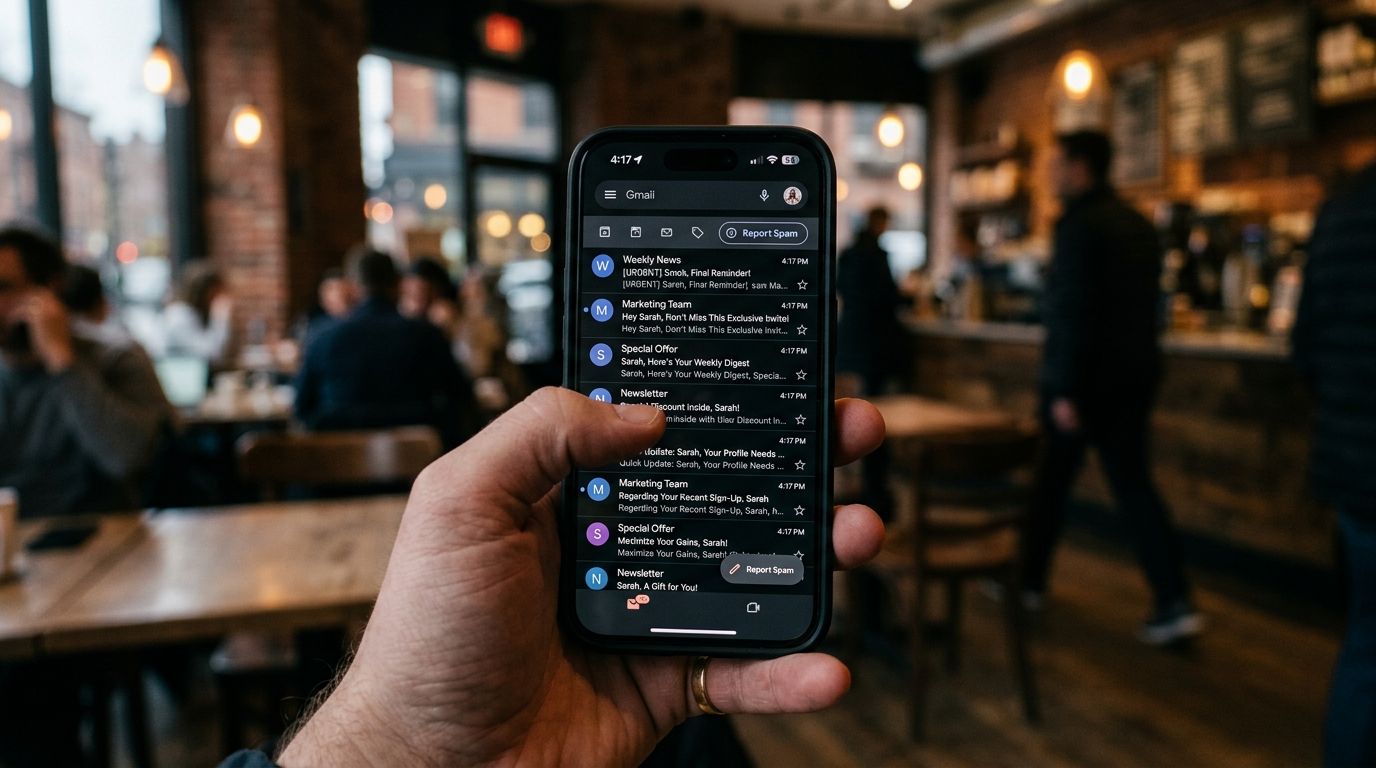
But mainstream adoption has created a new problem. Buyers are now flooded with AI-generated outreach that looks personalized on the surface and feels generic underneath. Gartner found that 73% of B2B buyers actively avoid suppliers who send irrelevant outreach source. That makes poorly executed AI personalization a brand risk, not a harmless experiment.
AI made personalization cheaper. That made bad personalization more common. Buyers can now spot “fake personal” messages quickly, and they punish senders for it by ignoring them, marking messages as spam, or mentally blacklisting the brand.
The bar for relevance has increased. And outbound personalization with AI can either clear that bar or make things worse, depending entirely on the system behind it.
How Outbound Personalization With AI Works
The most useful way to think about the workflow is not “AI writes emails.” It is a system where AI and a human operator each handle what they are best at.
| Tool Category | Purpose in 2026 Playbook | Example Tools |
| Data Enrichment | Finding verified emails and phone numbers | Apollo, Clay, Waterfall |
| Signal Detection | Identifying triggers (hiring, news, tech changes) | Keyplay, PredictLeads |
| Workflow Automation | Connecting data sources to AI prompts | Clay, Zapier, Make |
| Sending Platforms | Managing deliverability and sequence timing | Instantly, Smartlead, Salesloft |
The Signal, Segment, Message Framework
| Step | What AI helps with | Human/operator responsibility |
|---|---|---|
| 1. Define ICP | Analyze win/loss data, firmographics, technographics, role patterns | Decide what market is worth pursuing |
| 2. Build list | Enrich accounts, find contacts, validate emails, map buying committee | Exclude poor-fit prospects |
| 3. Find signals | Detect hiring, funding, tech stack changes, website updates, job posts | Decide which signals actually imply pain or timing |
| 4. Segment | Group prospects by role, industry, pain, maturity, trigger, or account tier | Create segment-level message strategy |
| 5. Draft message | Generate first drafts, snippets, subject lines, LinkedIn variants | Edit for accuracy, tone, brevity, and brand risk |
| 6. Send safely | Support workflow execution and timing | Manage domains, inboxes, authentication, compliance, deliverability |
| 7. Learn | Summarize replies, classify objections, identify patterns | Decide what to change in ICP, offer, copy, and sequence |
McKinsey has reported that companies empowering sales teams through technology and automation saw consistent efficiency gains of 10% to 15% source. But those gains came from reducing repetitive work, not from removing strategic judgment.
Practitioners on Reddit echo this. In a thread asking where AI actually helps in cold outbound, multiple users said AI is most useful for research, identifying pain points, segmenting leads, initial drafting, and pattern recognition. Nobody called it a magic bullet.
A practitioner in the Clay community described a cold email system built around this exact order: deliverability first, intent-based lead sourcing second, verified emails third, AI workflows for personalization fourth source. The sequence matters. Start with infrastructure and targeting. AI drafting comes later.
This is why AI-personalized outbound is less about “having an AI tool” and more about having a well-run outbound system. If you are building that system from scratch or fixing one that is not producing results, SalesPipe helps B2B tech and SaaS teams define ICP, build outbound infrastructure, improve messaging, protect deliverability, and generate qualified meetings with founder-led execution. You can apply here to start that conversation.
Good Versus Bad AI Personalization
The difference between useful AI personalization and noise comes down to one question: does the personalization connect a fact to a likely business problem?
| Bad AI personalization | Better AI-assisted personalization |
|---|---|
| “Saw you’re VP Sales at Acme.” | “Saw Acme is hiring three SDRs after raising a seed round. Teams at that stage often need outbound process before adding headcount.” |
| “Loved your recent LinkedIn post.” | “Your team is pushing into healthcare accounts, but your case studies still speak mostly to fintech buyers.” |
| “Congrats on the funding.” | “After a Series A, pipeline usually has to shift from founder-led sales to repeatable outbound. That transition is where teams often lose months.” |
| “I noticed you use Salesforce.” | “Your open AE roles mention Salesforce and Gong, but no dedicated SDR ops role. That usually creates gaps in sequence QA and reply handling.” |
| “I work with companies like yours.” | “We help B2B SaaS teams that need qualified meetings but do not yet want to hire or manage a full SDR team.” |
A LinkedIn post by Avinash Raju captures the shift well: prospects are drowning in “personalized” emails like “Congrats on your Series A” or “Loved your post.” The better frame is relevance, using AI to identify who is dealing with a problem right now, not just to mention something they did source.
The best AI-personalized outbound does not prove you found a fact about the prospect. It proves you understand why that fact matters to their business.
If you want more tactical guidance on structuring the email itself, the guide on cold email structure covers anatomy, length, and CTA placement in detail.
What AI Should Personalize (and at What Level)
Not all personalization is equal. It helps to think in levels.
Level 1: Identity Personalization
Name, company, role, industry. This is basic mail merge. Use it, but do not confuse it with real personalization.
Level 2: Segment Personalization
The message changes by role or segment. “Seed-stage B2B SaaS founder” gets a different message than “VP Sales at a 200-person company.” This is useful, scalable, and often more effective than fake 1:1 personalization.
Level 3: Trigger Personalization
The message references a timely business event: funding, hiring, new executive, product launch, expansion, tech stack change, competitor pressure, negative review patterns, or relevant job posts.
This is where AI becomes genuinely valuable. Clay community practitioners specifically mention hiring, funding, launches, and job posts as the strongest AI-personalization inputs source.
Level 4: Pain Personalization
The message connects a signal to a likely operational problem. “Your team is hiring SDRs but has no outbound infrastructure.” “Your new segment requires new messaging.” This is the highest-value level because it connects context to urgency.
Level 5: Journey Personalization
The prospect visited a pricing page, attended a webinar, downloaded a comparison guide, or replied to a prior email. Best for warmer outbound or account-based motions, not pure cold outreach.
Most teams think they are at Level 4. They are usually at Level 1 or 2.
What AI Should Not Personalize
AI should not invent personal details, overstate familiarity, or reference things that feel invasive.
Avoid:
Personal family details or sensitive traits
Fake compliments about content the sender never read
Unverified claims about the prospect’s company
“I noticed you…” lines that everyone uses
Overly long custom intros that delay the point
AI-generated humor (it almost never lands)
Personalization that does not connect to the offer
Hunter’s 2025 cold email study found that 69% of decision makers are bothered by AI use unless the output feels genuinely human, while 65% say cold emails fail because they feel too sales-focused and 61% cite irrelevance source.
Personalization becomes creepy when it proves you collected data without proving you understand the buyer’s problem.
Benefits of AI-Personalized Outbound

Faster Prospect Research
AI can summarize websites, LinkedIn profiles, job posts, company news, funding events, and product pages faster than any human doing manual research. HubSpot found 55% of AI-using sales professionals used AI for customer research, while 52% used it for data analysis source.
Better Segmentation
AI helps group prospects by shared pain, maturity stage, technology stack, or trigger. Hunter’s benchmark data found sequences sent to 21 to 50 recipients achieved a 6.2% reply rate, compared with just 2.4% for sequences over 500 recipients source. Smaller, tighter segments win.
A Reddit practitioner shared that narrowing ICP from broad “SaaS companies 10 to 200 employees” to a much more specific segment lifted reply rates from around 2% to 8 to 9% on the same copy source. The most important personalization decision is often who you exclude.
More Relevant Messages
Hunter found emails with two custom attributes saw a 5.6% reply rate versus 3.6% for non-personalized emails source. When AI helps turn raw account data into a message angle, reply rates respond.
More Consistent Execution
AI helps generate first drafts, adapt messaging by persona, summarize replies, classify objections, and maintain campaign variation across sequences. McKinsey found early adopters of sales automation saw 10% to 15% efficiency improvements and up to 10% sales uplift potential source.
Better Use of Senior Operator Time
This is the most underappreciated benefit. AI should help a senior outbound operator do more high-value work, not turn the process into a junior labor model. The combination of AI leverage and experienced judgment is where the real gains happen.
Common Mistakes and Failure Modes
Starting With AI Copy Before ICP
The biggest mistake is using AI to write more emails before fixing targeting. AI-personalized outreach sent to the wrong people is still irrelevant outreach. Woodpecker’s team recommends using AI for deep qualification and research rather than generic first lines, describing a workflow that starts with company data, extracts initiatives and pain points, scores leads, and segments by strategic priorities before drafting any copy source.
Do not start with the prompt. Start with the list and signal.
Confusing Merge Fields With Personalization
Swapping {{first_name}} and {{company}} is not personalization. It is automation. If the body copy stays the same for every recipient, AI is not adding relevance.
Ignoring Deliverability
A Reddit post titled “Cold email deliverability matters more than personalization” described a test where highly personalized emails with broken infrastructure underperformed basic emails with proper setup source. DNS records, domain reputation, warm-up, and sending limits can matter more than clever copy.
Personalization cannot rescue an email that lands in spam.
Google’s sender guidelines require SPF or DKIM for all senders, with SPF, DKIM, and DMARC required for bulk senders. Senders exceeding 5,000 daily messages to Gmail accounts face additional requirements including spam rate thresholds, TLS, valid DNS, and one-click unsubscribe source.
Trusting Unverified Data
Wrong company details, stale job titles, invalid emails, outdated funding news, and incorrect assumptions make AI-personalized outreach worse than a simple message. Practitioners on Reddit repeatedly point to data quality, verification, and list freshness as major drivers of cold email performance source.
Hallucinated Facts
AI may fabricate accomplishments, misread company websites, or infer problems that are not true. Every AI-generated message touching a specific claim should be verified before sending.
Brand Risk From Volume
Gartner’s finding that 73% of B2B buyers avoid suppliers with irrelevant outreach source should make any team pause before prioritizing volume. Adam Robinson argued on X that the old Predictable Revenue-style cold email playbook has broken down because automation tools and AI have flooded inboxes, making personalization useless if people never even see the email source.
Measuring Opens Instead of Meetings
Hunter found campaigns without open tracking saw higher reply rates than campaigns with tracking source. Open rates are unreliable and the tracking itself can hurt deliverability. Measure positive replies, meetings booked, and pipeline created.
Best Practices for AI Outbound Personalization
1. Start With ICP, Not Prompts
Before using AI to write anything, define best-fit industries, company size, buyer roles, trigger events, pain points, exclusion criteria, offer fit, and deal size threshold. If you need help with building B2B email lists, start there before worrying about AI copy.
2. Use AI to Find Relevance Signals
Good signals include hiring patterns, funding rounds, new territory expansion, product launches, executive hires, tech stack changes, job postings that reveal priorities, website messaging gaps, competitor engagement, and review patterns.
3. Segment Before Writing
Do not generate 1,000 unique emails for 1,000 loosely related prospects. Create tightly defined segments, then personalize inside those segments. Example segments: seed-stage SaaS founders hiring their first SDR, Series A companies expanding outbound after inbound slows, B2B tech teams with no outbound infrastructure.
4. Keep Messages Short
LinkedIn’s InMail guide notes that more than 50% of InMails are opened on smartphones and recommends messages around 100 words source. The same principle applies to cold email. Brevity signals confidence. For LinkedIn prospecting specifically, short and direct consistently outperforms long and elaborate.
5. Use AI for Drafts, Not Blind Sending
Hunter found manually edited emails outperformed fully automated emails by 18% in reply rate source. AI should prepare the message. A human should approve it, especially for high-value accounts.
6. Personalize the Problem, Not Just the Opener
Bad: “Saw you just hired a VP Sales.”
Better: “Saw you just hired a VP Sales and are adding SDRs. That is usually when outbound process, deliverability, and messaging need to get tightened before volume increases.”
The first version is recognition. The second is relevance.
7. Protect Deliverability
This means SPF, DKIM, and DMARC authentication. Separate sending domains where appropriate. Warm-up and ramping. Clean list verification. Low bounce rates. Opt-out handling. Reasonable send volumes. Monitoring replies, spam complaints, and domain reputation.
Deliverability is part of personalization because the best message is useless in spam.
8. Use Low-Friction CTAs
Hunter’s report found decision makers prefer open-ended CTAs like “Can I send more info?” or “Open to learning more?” over hard calendar asks source. A fact is not a reason to reply, but neither is a premature meeting request.
9. Iterate Weekly
The goal is qualified conversations, not personalized-looking emails. Review reply data, objection patterns, and meeting quality each week. Adjust ICP, messaging, and segmentation based on what the data says.
Outbound Personalization With AI vs. Related Terms
| Term | Meaning | Key difference |
|---|---|---|
| Mail merge personalization | Inserts variables like first name, company, title | Basic automation, not true personalization |
| Dynamic fields | Custom snippets inserted into a template | Only as good as the data and logic behind them |
| AI-personalized outbound | AI helps research and tailor cold outreach | Broader than email copy; includes targeting, research, segmentation |
| Trigger-based outbound | Outreach based on a timely event or signal | Often the strongest form of AI-assisted personalization |
| AI SDR | AI system performing parts of the SDR workflow | May include personalization, but is broader and more autonomous |
| Account-based outbound | Targeting selected accounts with coordinated outreach | AI personalization can support ABM with account-specific research |
Understanding the difference between an outbound SDR role and an AI SDR system matters here. AI can automate parts of SDR work (research, list enrichment, drafting, workflow support), but it does not automatically replace outbound strategy, ICP judgment, deliverability management, or offer positioning. Buying AI software does not guarantee a working outbound motion.
The AI Outbound Personalization Maturity Ladder
| Level | Description | Typical outcome |
|---|---|---|
| 0. No personalization | Same message to everyone | Lowest relevance, highest ignore rate |
| 1. Mail merge | Name, company, title swapped in | Basic automation |
| 2. Persona personalization | Message changes by role or segment | Better relevance |
| 3. Trigger personalization | Message references a timely business event | Stronger timing |
| 4. Pain personalization | Message connects signal to likely problem | Best reply potential |
| 5. Operator-led personalization | AI prepares insight; human edits strategy and tone | Highest quality |
Most teams think they are at Level 4. They are really at Level 1 or 2.
The Three-Fit Test
Before sending any AI-personalized outbound message, check three things:
Account fit. Is this company actually in the ICP?
Signal fit. Is there a timely or meaningful reason to reach out?
Message fit. Does the message connect the signal to the offer?
If any of the three are missing, AI personalization will produce noise. Dimitar Angelov on X argued for the same principle: ICP precision, batching by pain point, and data quality over volume, with no fake personalization source.
When to Use AI for Outbound Personalization
Use it when:
There is a clearly defined ICP
There is enough data to personalize accurately
The offer is specific and differentiated
Deal size supports the outbound effort
There is a human owner for strategy and QA
Deliverability setup is solid
Pause or hold off when:
ICP is vague or untested
Contact data is stale or unverified
Domain reputation is weak or sending infrastructure is not set up
The message is not differentiated from competitors
The team wants AI to replace strategy rather than support it
If your outbound is too generic, too manual, or too dependent on junior execution, the question is not “which AI tool should we buy?” The question is “who will own the outbound system?” For teams exploring the tradeoffs between outsourced SDR models and more hands-on alternatives, that distinction matters.
Personalization Quality Checklist
Before sending, ask:
Is the account in the ICP?
Is the contact the right person?
Is the data verified?
Is the personalization business-relevant?
Does the message connect the signal to a pain?
Would the email still make sense if the first line were removed?
Is the CTA easy to answer?
Is the email under 100 to 125 words?
Is the domain authenticated (SPF, DKIM, DMARC)?
Is there a clear opt-out?
Would this damage the brand if forwarded publicly?
Signs Your AI Personalization Is Weak
It starts with “I noticed…”
It compliments without context
It references a generic LinkedIn post
It mentions funding but not the likely operational implication
It uses a detail that has nothing to do with the offer
It sounds like every other AI-generated email in the inbox
The email is longer because of personalization, not more useful
The personalized claim cannot be verified in 10 seconds
Compliance Matters
AI personalization does not change the legal requirements. In the United States, commercial email must comply with CAN-SPAM, which requires non-deceptive headers and subject lines, a valid physical postal address, a working opt-out mechanism, and proper identification of the message’s commercial nature. Each separate email in violation can be subject to penalties of up to $53,088 source.
Understanding how to write a cold email that balances personalization with compliance is not optional.
Final Takeaway
Outbound personalization with AI works best when it is used as leverage for a strong outbound operator, not as a replacement for one. AI can research accounts, find triggers, segment lists, and draft messages faster than a person working manually. But it cannot fix a weak ICP, a bad offer, poor deliverability, or lazy strategy.
The winning model is AI for leverage and a skilled human operator for judgment. That is the difference between AI-personalized spam and AI-powered outbound that creates qualified conversations.
If your team needs help building that system, SalesPipe works directly with B2B tech and SaaS founders on ICP definition, messaging, cold email, LinkedIn outreach, deliverability protection, and qualified meeting generation. No junior handoffs, no marketplace model. Start here.