How AI for LinkedIn Outreach Works in 2026: 6 Stages
Learn how AI for LinkedIn Outreach works in 2026—personalization, warm-up, safety limits, and real benchmarks. Use our hybrid playbook to win.
TL;DR
AI for LinkedIn outreach uses artificial intelligence to research prospects, generate personalized messages, and manage follow-up sequences on LinkedIn at scale. It’s different from basic automation because it analyzes profile data, company news, and behavioral signals to create contextual messages, not just swap first names into templates. But the flood of AI-generated spam is making tools-only approaches increasingly ineffective, and LinkedIn’s enforcement crackdown in 2026 means safety matters more than ever. The winning model combines AI’s speed with an experienced human operator’s judgment.
Looking to skip the learning curve? SalesPipe offers founder-led outbound execution that uses AI as internal leverage, not a replacement for human expertise.
What Is AI for LinkedIn Outreach? (Quick Answer)
AI for LinkedIn outreach is software that uses artificial intelligence to research prospects, personalize connection requests, write follow-up messages, and automate outreach workflows on LinkedIn.
Unlike traditional LinkedIn automation, AI outreach tools analyze profile data, company updates, recent posts, hiring activity, and behavioral signals to generate context-aware messages instead of basic templates.
In 2026, the most effective AI LinkedIn outreach combines:
AI-driven personalization
Human review and strategy
Warm-up engagement before outreach
Multichannel follow-up
LinkedIn-safe activity limits
The average benchmarks in 2026:
Connection acceptance rates: 30–45%
Reply rates: 10–25%
Safe daily connection requests: 20–25
Best-performing approach: Human + AI hybrid outreach
What Is AI for LinkedIn Outreach?
AI for LinkedIn outreach is the use of artificial intelligence to automate and personalize LinkedIn prospecting, covering connection requests, follow-up messages, and engagement sequences while maintaining a conversational, human tone.
That definition sounds simple. The nuance is in what “AI” actually means here.
In this context, AI refers to large language models (LLMs), natural language processing (NLP), and signal processing systems that analyze prospect data and generate unique outreach messages. The technology pulls from LinkedIn profiles, recent posts, company announcements, funding events, job changes, and other behavioral signals to craft messages that reference specific, relevant details about each prospect.
This is the critical distinction most content misses. Basic LinkedIn automation is mail merge with a pulse: same template, swap {first_name}, send, repeat 200 times. AI-powered LinkedIn outreach uses prospect data, behavior signals, and context to generate variable-driven personalization. Not just “Hi Sarah” but references to a specific post she wrote, a hiring trend at her company, or a pain point tied to her role.
The gap between those two approaches is the gap between getting ignored and getting a reply.
How AI for LinkedIn Outreach Works

| Stage | What AI Does | Human Role |
|---|---|---|
| Prospect Research | Analyzes LinkedIn profiles, company data, and buying signals | Defines ICP and targeting |
| Personalization | Generates custom connection requests and DMs | Reviews messaging quality |
| Warm-Up Activity | Automates profile views and engagement timing | Chooses engagement strategy |
| Follow-Ups | Sends sequenced follow-ups with timing variation | Handles nuanced conversations |
| Optimization | Tracks reply rates and acceptance rates | Adjusts positioning and offer |
| Compliance | Randomizes actions and pacing | Monitors LinkedIn safety |
How AI Is Used in LinkedIn Outreach
AI touches the LinkedIn prospecting workflow at six distinct stages. Understanding each one matters because most tools only cover two or three, and that partial coverage is where things break down.
1. Prospect Identification and ICP Matching
AI scores and filters prospects from LinkedIn data against Ideal Customer Profile (ICP) criteria. The most effective segmentation is based on live context rather than broad categories. Real-time triggers like recent funding rounds, new executive hires, company expansion announcements, or activity within your product category produce sharply better targeting than static lists built on industry and title alone.
2. Deep Research and Intelligence Gathering
Some tools analyze 200+ data points per prospect, pulling from recent posts, company news, podcast appearances, and funding rounds. This research gets turned into messages that sound like you spent 20 minutes on each prospect. The intelligence gathering stage is where AI creates the most obvious time savings. A human doing this research manually might handle 15 to 20 prospects per day. AI can process hundreds.
3. Personalized Message Generation
AI drafts connection requests, follow-ups, and DMs using context from the research phase. Best practice is to create 3 to 5 variants per sequence step with different tones, angles, and structures. One variant leads with a question. Another opens with a bold statement. A third references a shared experience. AI rotates between them, reducing the pattern detection that gets accounts flagged.
4. Warm-Up Sequencing
This is the stage most beginners skip, and it’s arguably the most important. Profile views, post likes, and thoughtful comments all happen before the first DM. The consulting firms and sales teams winning on LinkedIn in 2026 aren’t sending the most messages. They’re building familiarity before the first touchpoint, showing up in feeds and engaging with content so their name is already recognized when the connection request arrives.
5. Follow-Up Management
AI tracks conversation context across touchpoints and automates follow-ups with timing variation. This prevents the common failure mode where a prospect goes cold simply because the sender forgot to follow up or sent a follow-up that ignored everything discussed previously.
6. Analytics and Optimization
AI evaluates acceptance rates, reply rates, and meeting conversion to iteratively improve targeting and messaging. This feedback loop is what separates AI-powered outreach from static automation. The system gets better over time because it learns which messages, angles, and timing patterns produce results for your specific ICP.
Step-by-Step AI LinkedIn Outreach Process
Step 1: Define Your ICP
Focus on:
Industry
Company size
Job titles
Revenue stage
Buying triggers
Current pain points
The tighter the ICP, the better the personalization quality.
Step 2: Build Signal-Based Prospect Lists
Prioritize prospects showing active buying signals such as:
Funding announcements
Hiring activity
Leadership changes
Recent LinkedIn posts
Technology adoption
Expansion initiatives
Step 3: Warm Up the Account
Before sending connection requests:
View profiles
Like posts
Leave thoughtful comments
Engage with shared content
This increases familiarity and improves acceptance rates.
Step 4: Generate Personalized Outreach
Use AI to create:
Connection requests
Follow-ups
Conversation starters
Variant testing
Avoid generic templates.
Step 5: Review Every Message
Human review is essential for:
Tone accuracy
Relevance
Compliance
Avoiding awkward AI outputs
Preventing over-personalization
Step 6: Track and Optimize
Monitor:
Acceptance rates
Reply rates
Meeting rates
Positive response rates
Restriction warnings
AI LinkedIn Outreach vs. Basic Automation
This comparison deserves its own section because the confusion between these two approaches causes most of the problems people experience.
Basic automation sends the same email sequence structure to everyone on a list. The personalization is cosmetic: first name, company name, maybe a job title. The underlying message is identical. At scale, this approach produces messages that recipients instantly recognize as automated, and it performs accordingly.
AI-powered outreach generates contextually unique messages. The difference isn’t just better fill-in-the-blank templates. It’s that each message can reference something specific and timely about the prospect, their company, or their recent activity.
Here’s a concrete example. A basic automation message might read: “Hi Sarah, I noticed you’re the VP of Sales at TechCorp. We help companies like yours generate more pipeline.” An AI-powered message might read: “Sarah, saw your post about the challenges of scaling outbound after your Series B. We ran into the same wall at a similar stage and found that restructuring the follow-up cadence made a bigger difference than adding headcount.”
The second message takes a position. It references something real. It sounds like a person wrote it. Personalized connection requests achieve roughly 45% acceptance rates, compared to about 15% for generic outreach, a 3x improvement.
The “spray and pray” approach that basic automation enables no longer works. Response rates to generic outreach have dropped below 5% across most B2B categories. Volume without quality is now a losing strategy.
Best AI LinkedIn Outreach Tools in 2026
Different tools specialize in different parts of the outreach workflow. Some focus on personalization, while others focus on sequencing, analytics, or multichannel execution.
| Tool Type | Primary Function | Best For |
|---|---|---|
| AI personalization tools | Generate custom outreach messages | SDR teams and founders |
| LinkedIn sequencing tools | Automate follow-up workflows | High-volume outbound |
| Signal-based prospecting tools | Identify buying intent signals | Account-based sales |
| Multichannel outreach platforms | Combine LinkedIn + email + calls | Full outbound systems |
| AI SDR platforms | End-to-end automation | Experimental scaling |
LinkedIn Safety Limits and Compliance in 2026
This section matters more than any other for practitioners. LinkedIn’s enforcement became dramatically more aggressive in early 2026, and the consequences of ignoring these limits are severe.
Daily and Weekly Activity Limits
The 2026 consensus across multiple sources:
| Activity | Daily Limit | Weekly Limit |
|---|---|---|
| Connection requests | 20–25 | 100–150 |
| Direct messages (existing connections) | 40–50 | N/A |
| Profile views | 80–100 | N/A |
LinkedIn tracks your SSI score, connection acceptance rate, and overall engagement patterns to determine your individual limits. If your connection acceptance rate drops below 20%, LinkedIn will throttle your account regardless of volume.
What LinkedIn Actually Detects
Detection happens through behavioral analysis, not simple volume monitoring. LinkedIn examines timing precision (are your actions spaced at exact intervals?), action sequences (do you always view, then connect, then message in the same order?), message similarity (are your messages structurally identical even with different words?), and browser fingerprinting.
Practitioners on Reddit report that the most common trigger isn’t sending too many messages. It’s sending messages that look too similar to each other. LinkedIn’s detection systems analyze message structure, and even when the words change, identical sentence patterns and paragraph layouts get flagged.
Ban Risk Statistics
The numbers tell a stark story. About 23% of automation users experience restrictions within 90 days when using browser extensions or operating at maximum volume limits. Cloud-based tools with dedicated IPs, randomized delays, and proper warm-up periods reduce this risk to 5 to 10%.
LinkedIn enforcement got serious in Q1 2026. Roughly 40% of accounts using non-compliant automation tools received some form of restriction between January and March 2026.
The most dramatic enforcement action came on March 25, 2026, when LinkedIn permanently removed HeyReach’s 16,400-follower company page and banned founder Nikola Velkovski’s personal profile. This was a watershed moment for the industry, proving that LinkedIn is willing to take action against not just individual users but the platforms enabling automation at scale.
For a broader view of managing risk across cold outreach channels, it’s worth understanding how LinkedIn restrictions compare to email deliverability challenges.
LinkedIn’s Tiered Restriction System
LinkedIn implements a graduated enforcement approach:
Tier 1: Temporarily disables features for 1 to 24 hours. A warning shot.
Tier 2: Locks accounts for 3 to 14 days and requires ID verification to unlock.
Tier 3: Permanent bans with less than 15% recovery success rate.
Most users don’t realize they’re at Tier 1 until they’ve already triggered Tier 2. By then, the damage to their account’s trust score is done.
SSI Score as a Safety Factor
Your Social Selling Index (SSI) score measures LinkedIn activity across four pillars on a 0 to 100 scale. It updates daily and reflects your last 90 days. LinkedIn is officially de-emphasizing SSI in favor of other AI tools, but the score still exists and remains the clearest activity diagnostic available.
Accounts scoring 70+ receive 2 to 3x higher organic reach and 40% better search ranking. More importantly for outreach, higher SSI scores reduce automation detection sensitivity. Users with strong SSI scores see 25 to 30% higher acceptance rates on connection requests. According to LinkedIn’s own data, professionals with high SSI scores create 45% more opportunities and are 51% more likely to hit quota.
Performance Benchmarks for AI LinkedIn Outreach
Numbers matter. Here’s what “good” looks like in 2026.
Reply Rates
A good LinkedIn outreach reply rate falls between 10 and 25%, with top performers hitting 30 to 50% through personalized, multi-touch sequences. For context, the average cold email response rate is 5.1% (down from 7% the prior year), while LinkedIn response rates average 10.3%, more than double email.
SaaS and technology verticals sit at just 4.77% reply rate due to inbox saturation. Recruiting tends to perform best, with reply rates of 18 to 25%.
Connection Acceptance Rates
A LinkedIn connection acceptance rate of 30 to 45% is the 2026 benchmark. Below 20% signals targeting or profile issues that need fixing before scaling volume. Remember: dropping below 20% also triggers LinkedIn’s throttling mechanisms.
InMail Performance
InMail open rates average 57.5%. Personalized messages achieve 93% higher acceptance rates and 10 to 25% InMail response rates, versus under 1% for generic templates.
Multichannel Amplification
Using multiple sales channels together produces dramatically better results than LinkedIn alone. Businesses integrating email with LinkedIn outreach and other touchpoints have seen customer engagement jump by 287% and conversion rates climb by 300%.
2026 AI LinkedIn Outreach Benchmarks
| Metric | Average | Strong Performance |
|---|---|---|
| Connection acceptance rate | 20–30% | 30–45% |
| Reply rate | 5–10% | 10–25% |
| Top-tier reply rate | — | 30–50% |
| InMail open rate | 57.5% | 65%+ |
| Safe daily connection requests | 20–25 | 25 max |
| Safe daily DMs | 40–50 | 50 max |
| SSI score target | 50–60 | 70+ |
Common Mistakes with AI LinkedIn Outreach
Pitching in the Connection Request
The connection request is not a sales pitch. It’s an introduction. Using it to pitch your product immediately signals “automated outreach” and tanks acceptance rates.
Over-Personalization That Feels Invasive
There’s a line between “I noticed your recent post about hiring challenges” (helpful) and “I saw you attended the Denver Tech Summit on March 14 and liked three posts about data infrastructure afterward” (creepy). AI makes it easy to cross that line because it can surface so much data. The human operator’s job is knowing which details to use and which to leave alone.
Sending Structurally Identical Messages
Even when the words change, if every message follows the same skeleton (compliment, pain point, solution, CTA), LinkedIn’s systems and human recipients both notice. Creating genuine structural variety matters more than swapping adjectives.
Skipping the Warm-Up Phase
Jumping straight to DMs without any prior engagement is the single biggest mistake. Profile views, post engagement, and thoughtful comments create familiarity. Without them, your connection request is from a stranger.
Using Browser Extensions
Browser extensions carry the highest ban risk because LinkedIn can detect them through browser fingerprinting. Cloud-based tools are significantly safer, though still not risk-free.
No Human Review of AI-Generated Messages
This is where things get genuinely embarrassing. In May 2026, a LinkedIn user demonstrated that AI outreach tools are vulnerable to prompt injection by embedding instructions in their “About” section. They successfully manipulated AI-driven recruiters into writing in Old English and addressing them as “My Lord.” The recruiters’ tools blindly scraped the bio, fed it into their LLM, and sent the messages without anyone checking. This is not a theoretical risk. It happened publicly, went viral, and proved that fully automated AI outreach has quality-control gaps that only human review can catch.
The AI Spam Problem: Why Tools Alone Aren’t Enough
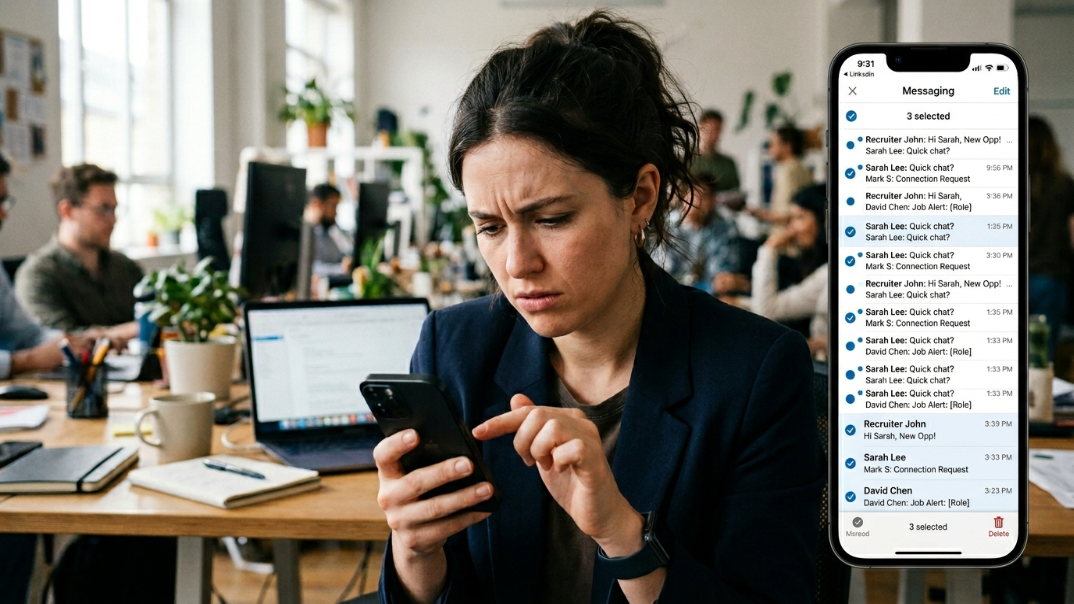
The uncomfortable truth about AI for LinkedIn outreach is that the technology’s own success is undermining its effectiveness.
One operations executive shared on LinkedIn that they deleted 29 messages in a single day without reading past the first sentence. Same opening line, same canned references, same robotic cadence. “All AI. All trash.”
That experience is increasingly common. AI-written outreach has become so prolific, so identical, and so transparently generated that it’s actively destroying the channels it was supposed to scale. When everyone uses the same tools with the same prompts, the output converges. Recipients develop pattern recognition for AI-generated messages the same way they learned to spot email spam a decade ago.
Practitioners on Reddit have been vocal about this trend. Several users in r/SaaS have noted that response rates have cratered precisely because the tools work “too well” at generating volume, flooding inboxes with messages that feel interchangeable. The tools made outreach cheaper, but they also made it worthless when used without judgment.
This is where the distinction between tool-first and operator-first approaches becomes critical. An experienced outbound operator using AI as a force multiplier produces fundamentally different results than a beginner buying an AI tool and pressing “go.” The operator knows which signals matter, which angles resonate with specific ICPs, when to break patterns, and when a prospect needs a phone call instead of another LinkedIn message.
The irony is that the flood of AI spam actually makes skilled, AI-assisted outreach from experienced operators more valuable. When every inbox is full of generic messages, a genuinely relevant, well-timed message stands out even more than it did before the AI wave.
Want outbound execution that combines AI efficiency with experienced human judgment? See how SalesPipe works.
AI for LinkedIn Outreach vs. AI SDRs vs. Human SDRs
These three categories get conflated constantly. Here’s what each one actually means.
AI for LinkedIn Outreach (Tools and Features)
Software that handles specific outreach tasks: message generation, sequencing, profile research, follow-up timing. The human sets the strategy and reviews the output. AI executes the repetitive parts.
AI SDRs
An AI SDR is a system that handles the full sales development representative workflow: finding leads, reaching out, engaging in conversations, and booking meetings. It automates data entry, lead enrichment, outreach, and scheduling. In theory, it does what a human SDR does, but faster and more consistently.
In practice, AI SDRs have significant limitations. As one industry analysis noted, companies spend millions figuring out what works for their outbound strategy, and you can’t copy-paste what another company does and expect the same results. Yet AI SDRs treat every company’s outreach the same way.
Human SDRs
A junior SDR in the US earns $45,000 to $55,000 base salary, with fully loaded annual costs reaching approximately $142,500. A US-based human SDR booking 35 meetings per month costs roughly $200 per meeting fully loaded. An AI agent booking the same volume runs $5 to $15 per meeting.
The cost difference is real, but so is the capability gap. Humans excel at complex objections, relationship nuance, strategic pivots, and reading between the lines of a prospect’s response. AI excels at research volume, consistent follow-up timing, and generating message variants.
The Hybrid Model
The emerging consensus across practitioner communities and independent analysis is clear: the future isn’t human versus AI but human with AI. AI brings speed, data, and consistency. Humans bring judgment, creativity, and empathy. Together, they create the most effective outreach approach LinkedIn has ever seen.
This is exactly why the outsourced SDR model is evolving. The question is no longer “should we use AI or hire people?” but “who is operating the AI, and how much do they know about outbound?”
Key Terms Glossary
SSI Score: LinkedIn’s Social Selling Index, a 0 to 100 score measuring your activity across four pillars: establishing your professional brand, finding the right people, engaging with insights, and building relationships. Updates daily based on 90-day rolling activity.
Connection Acceptance Rate: The percentage of your connection requests that get accepted. The 2026 benchmark is 30 to 45%. Below 20% triggers LinkedIn throttling and indicates targeting problems.
Reply Rate: The percentage of outreach messages that receive a human response. Good is 10 to 25%. Top performers hit 30 to 50%.
Signal-Based Outreach: Targeting prospects based on behavioral intent signals rather than static demographics. Examples include job changes, company funding rounds, profile views, post engagement, and technology adoption signals.
Warm-Up Sequence: A series of low-pressure engagement actions (profile views, post likes, comments) performed before sending a connection request or DM. Builds familiarity and increases acceptance rates.
InMail: LinkedIn’s paid messaging feature that allows you to message people outside your network. Open rates average 57.5%, significantly higher than cold email.
Multi-Channel Outreach: Combining LinkedIn with email, phone, and other touchpoints in a coordinated sequence. Produces dramatically better results than any single channel alone.
ICP (Ideal Customer Profile): A detailed description of the company and buyer most likely to purchase your product. Defined by industry, company size, role, pain points, and behavioral characteristics.
AI LinkedIn Outreach vs Cold Email
| Factor | LinkedIn Outreach | Cold Email |
|---|---|---|
| Average response rate | Higher | Lower |
| Personalization depth | Strong | Moderate |
| Relationship building | Excellent | Limited |
| Scale potential | Moderate | High |
| Spam sensitivity | High | Very high |
| Best use case | Warm B2B prospecting | Broad outbound campaigns |
The highest-performing outbound systems combine both channels rather than relying on one alone.
A common 2026 workflow:
Engage on LinkedIn
Send connection request
Follow with email
Continue multichannel follow-up
Transition to call or meeting
Bottom Line: When AI for LinkedIn Outreach Works and When It Doesn’t
AI-powered LinkedIn outreach works when you have a sharp ICP, a strong personal profile, a proper warm-up phase before any pitch, human oversight of AI-generated messages, and a multichannel strategy that doesn’t depend on LinkedIn alone.
It fails when it’s used for generic messaging at volume, when no human reviews the output, when the approach is tool-first and strategy-second, and when safety limits get ignored in pursuit of scale.
The winning formula is straightforward: an experienced operator using AI to multiply their effectiveness, combined with tight ICP definition and multichannel execution. The operator knows when AI’s suggestion is brilliant and when it’s subtly wrong. The operator catches the prompt injection before it becomes a viral embarrassment. The operator adjusts strategy based on pattern recognition that no tool has yet replicated.
The noise in LinkedIn inboxes is getting louder. That’s exactly why a skilled, AI-powered outbound operator generates more pipeline than any tool on autopilot.
If you want founder-led outbound execution that combines AI efficiency with real outbound expertise, start a conversation with SalesPipe .
AI LinkedIn Outreach Best Practices
Successful LinkedIn outreach campaigns in 2026 consistently follow these principles:
Use signal-based targeting instead of mass prospect lists
Warm up prospects before messaging
Personalize beyond first-name variables
Create multiple structural message variants
Stay within LinkedIn safety limits
Maintain a high SSI score
Review all AI-generated messages manually
Combine LinkedIn with email and phone outreach
Avoid browser-extension automation tools
Focus on conversation quality over volume
The best outreach feels relevant, timely, and human.