Best AI Tools for Outbound Prospecting in 2026: Honest Guide
Discover the Best AI Tools for Outbound Prospecting in 2026—honest reviews, real costs, and when to use Apollo, Clay, Instantly, Lemlist, Outreach.

TL;DR
Most listicles about AI prospecting tools read like vendor marketing. This one doesn’t. The best AI tools for outbound prospecting in 2026 are Apollo.io for all-in-one simplicity, Clay for deep data enrichment, Instantly for cold email volume, Lemlist for multi-channel sequences, Outreach for enterprise teams, and AI SDR platforms for high-volume autonomous plays. But tools alone don’t build pipeline. The real cost of these platforms runs 2-3x their sticker price, and companies using AI to augment human operators see 2.8x more pipeline than those trying full automation. Sometimes the best investment isn’t another login, it’s an experienced outbound operator who knows how to use all of them.
Best AI Tools for Outbound Prospecting in 2026 (Quick Answer)
If you need the best AI outbound prospecting tool in 2026, here’s the short version:
Use Apollo.io if you want an affordable all-in-one outbound platform
Use Clay if your team needs advanced enrichment and AI research workflows
Use Instantly.ai for high-volume cold email and deliverability infrastructure
Use Lemlist for LinkedIn + email multi-channel outreach
Use Outreach if you run a large enterprise sales organization
Use AI SDR platforms like Artisan or 11x only for high-volume transactional outbound
Work with an outbound operator like SalesPipe if you need strategy, infrastructure, and execution together
The most important takeaway: AI tools improve outbound efficiency, but companies using AI to support human SDRs consistently outperform teams trying to automate sales entirely.
The Real Question Behind This Search
Sales reps spend just 28% of their time actually selling. The rest disappears into admin, research, data entry, and toggling between tools. That stat from Salesforce explains why so many teams are hunting for AI tools to fix their outbound motion.
But here’s what most “best AI tools for outbound prospecting” articles won’t tell you: the tool is rarely the bottleneck. Messy CRM data, weak ICP definitions, poor deliverability, and generic messaging cause far more pipeline failures than picking the wrong software. If your CRM is misaligned with your ICP, AI will make bad decisions faster.
The question isn’t just “which tool?” It’s “what does my outbound motion actually need?”
This guide covers six categories of AI outbound tools with honest pricing (including hidden costs), real user complaints, and clear “best for” guidance. It also covers the option nobody else talks about: working with an experienced outbound operator who uses these tools as infrastructure rather than treating them as a strategy.
Let’s start with a comparison table you can screenshot and share with your team.
How We Evaluated These AI Prospecting Tools
We evaluated these outbound prospecting platforms using five criteria:
| Criteria | What We Looked At |
|---|---|
| Data Quality | Accuracy of emails, phone numbers, and enrichment |
| Ease of Use | Setup time, learning curve, workflow complexity |
| Deliverability | Inbox placement, warmup tools, infrastructure support |
| AI Capabilities | Personalization quality, automation depth, signal intelligence |
| Cost Efficiency | Real-world monthly cost vs advertised pricing |
At-a-Glance Comparison Table
| Tool | Starting Price | Best For | Free Tier | Key Limitation | G2 Rating |
|---|---|---|---|---|---|
| Apollo.io | $49/user/mo | All-in-one starting point | Yes (limited) | Data accuracy ~65-70% | ~4.7/5 |
| Clay | $149/mo | Data enrichment at scale | Yes (100 credits) | Steep learning curve, credit burn | 4.8/5 |
| Instantly.ai | $30/mo (annual) | Cold email volume & deliverability | 14-day trial | Email only, no multi-channel | 4.3/5 |
| Lemlist | $79/user/mo | Email + LinkedIn multi-channel | Yes (limited) | Per-seat pricing scales poorly | ~4.5/5 |
| Outreach | ~$100/user/mo | Enterprise sales engagement | No | No data provider, opaque pricing | ~4.3/5 |
| AI SDRs (Artisan, 11x, AiSDR) | $250-$5,000/mo | High-volume autonomous outbound | No | 50-70% annual churn rate | 3.8-4.2/5 |
One thing jumps out from this table: every tool has a gap. No single platform handles prospecting, enrichment, sequencing, deliverability, and multi-channel execution well. That’s why practitioners stack tools, and why operator-level expertise matters more than any individual feature.
1. Apollo.io
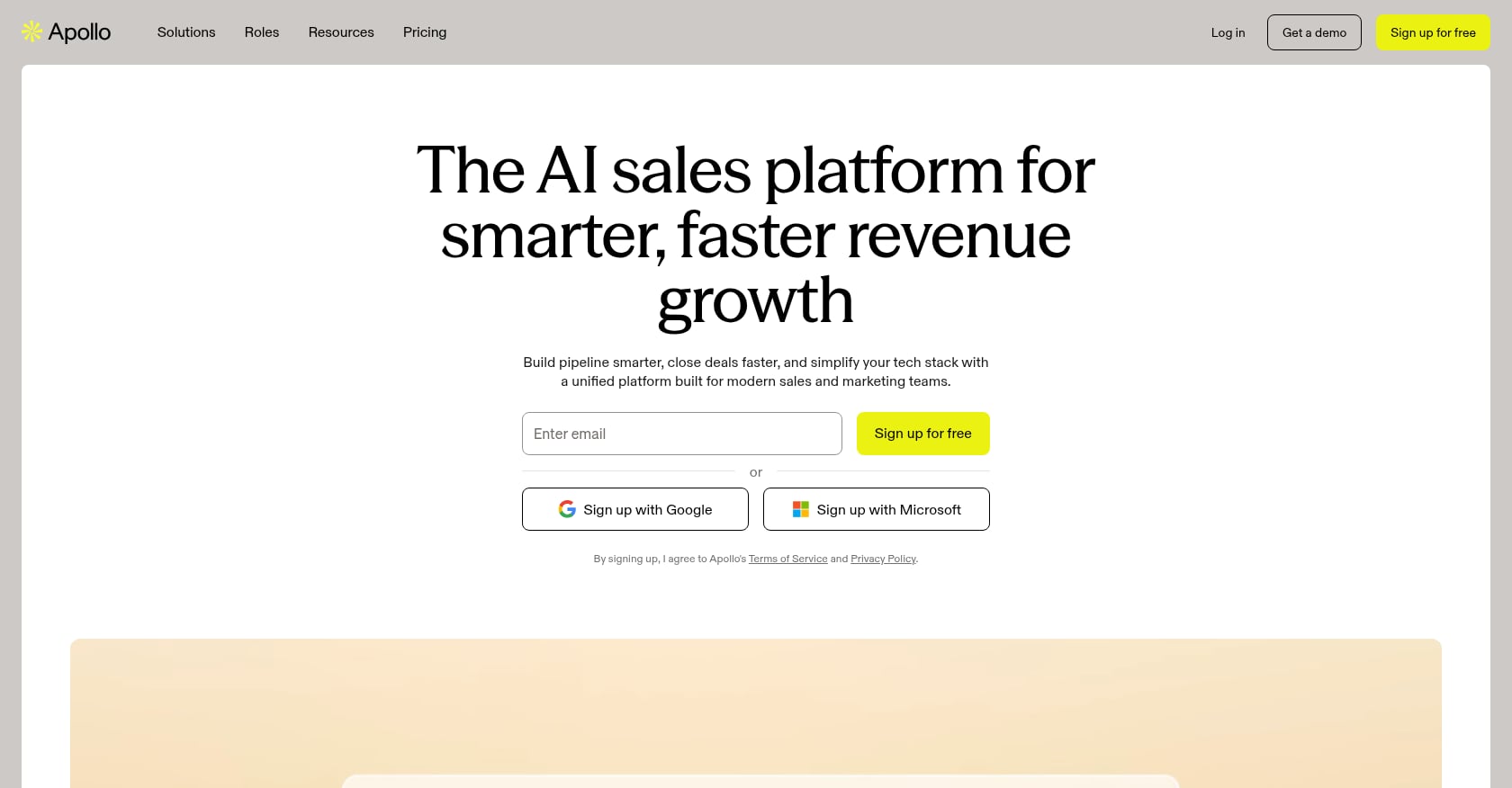
Best for: SMB and mid-market teams building outbound from scratch with limited budget.
Apollo is the default starting point for a reason. It combines a B2B prospecting database, email sequencing, a dialer, and CRM integrations in one platform. For teams that need to get outbound running this quarter without assembling a five-tool stack, Apollo is the fastest path.
Pricing (2026):
Free tier with limited credits and features
Basic: $49/user/month (billed annually)
Professional: $79/user/month
Organization: $119/user/month
Real cost warning: credit limits, feature gates, and data accuracy gaps push actual costs to 2-3x the advertised rate for most teams
Key strengths:
Largest free-tier contact database in the market
Built-in email sequence automation with A/B testing, open tracking, and automated follow-ups
Search filters for industry, company size, tech stack, and job title
Strong native integrations with Salesforce and HubSpot
Fast setup with minimal configuration, useful for teams that don’t have a dedicated RevOps person
Tradeoffs and limitations:
Real-world data accuracy hovers around 65-70% based on user reviews, with email bounce rates of 15-25% reported across G2 and Trustpilot
AI personalization pulls from static database fields (title, company, industry), not live account intelligence. The AI writes emails about what a company is, not what it’s doing right now
The gap between sticker price and actual cost catches many teams off guard. One practitioner on Reddit described it as “death by a thousand credits”
Who should skip it: Teams with deal sizes above $50K who need deep account research and signal-based timing. Apollo gives you breadth, not depth.
2. Clay
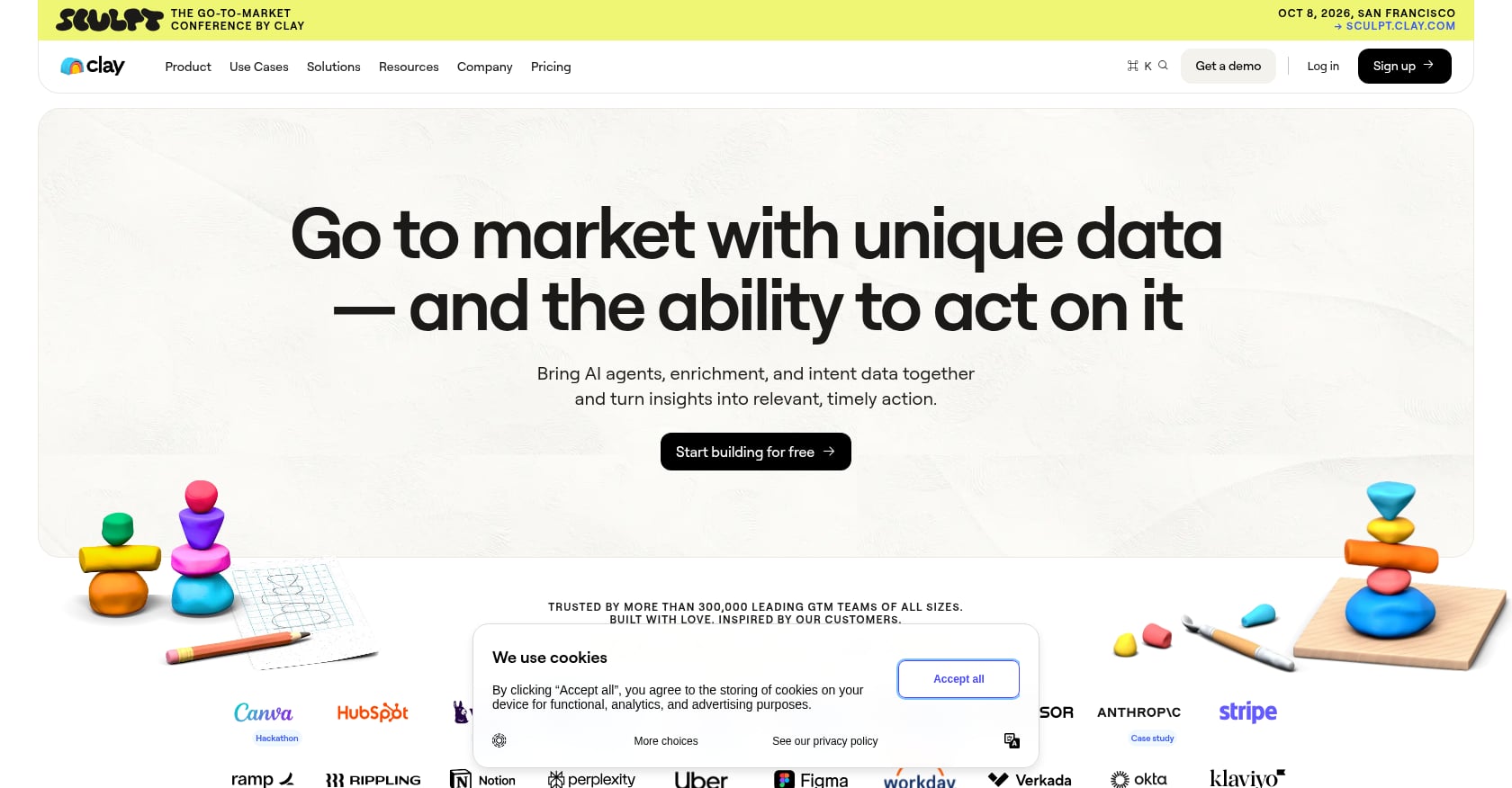
Best for: RevOps teams and growth operators who need deep enrichment, waterfall lookups, and custom AI research workflows at scale.
Clay sits in a different category than most tools on this list. It’s not a sequencer or a sender. It’s a data enrichment and orchestration platform that aggregates information from over 100 providers to build richer prospect profiles than any single-source tool can deliver.
Pricing (2026):
Free tier: 100 credits (enough to test, not enough to run campaigns)
Starter: $149/month, 2,000 credits, unlimited users, up to 5,000 searches per query
Explorer: $349/month, 10,000 credits, 100+ integration providers, rollover credits
Pro: $800/month, 50,000 credits, unlocks Signals, Webhooks, lower credit costs
Note: Clay overhauled pricing in March 2026. New customers see two self-serve tiers plus Enterprise. Legacy customers keep their old pricing.
Key strengths:
Waterfall enrichment hit 78% email match rates across a 2,000-contact test, compared to 42% from single-source tools
Aggregates data from 100+ providers for more complete prospect profiles
Custom AI research workflows let you build personalization that goes beyond basic firmographics
4.8 out of 5 on G2 from 162 reviews, one of the highest-rated tools in the category
Tradeoffs and limitations:
42% of negative Clay reviews mention credit burn. Users report spending $800 in a single week while learning the platform. The credit system penalizes experimentation.
28% of negative reviews cite the learning curve. This is not a tool you hand to your SDR team and expect results on Monday. Expect 4-6 weeks of dedicated onboarding.
For teams under five reps or with deal sizes below $15K, Clay’s complexity and credit costs rarely pay off.
Real user perspective: Practitioners on Reddit frequently describe Clay as “incredibly powerful but expensive to learn.” The consensus is that it rewards teams with a dedicated operator who builds and maintains workflows, and punishes teams that treat it as plug-and-play.
3. Instantly.ai
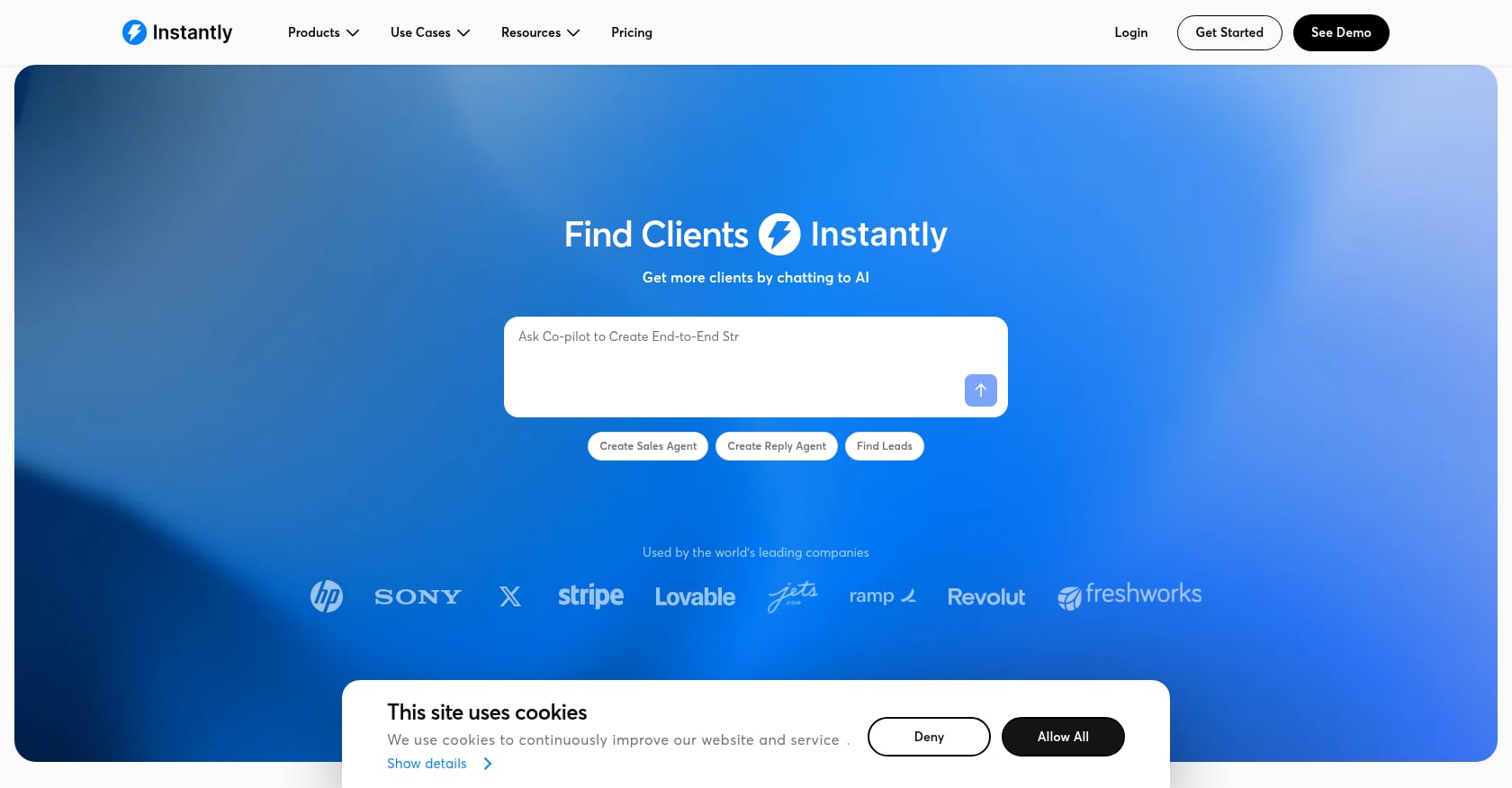
Best for: Teams whose primary pipeline channel is cold email and who need volume plus deliverability protection at a flat rate.
Instantly is the cold email workhorse. It handles the full sending workflow: finding leads, warming inboxes, running sequences, rotating email accounts, managing replies, and tracking pipeline. If cold email is your primary channel, Instantly’s infrastructure is hard to beat on price.
Pricing (2026):
Growth: $30/month (annual), 1,000 active contacts, warmup, inbox rotation, basic analytics
Hypergrowth: $97/month, 25,000 contacts, 100,000 emails/month
Real cost warning: the advertised starting price doesn’t tell the full story. Most users need credits, additional email accounts, and domains. This pushes real monthly costs to $76-96 minimum, and often $150-400 for teams running serious volume.
Key strengths:
Unlimited email accounts, automated warmup, inbox rotation, and deliverability protection on every plan
Volume-based pricing means team size doesn’t change the bill
One of the cheapest entry points for a full-featured cold email sending platform
Good for teams following a solid cold email structure who just need reliable infrastructure to send at scale
Tradeoffs and limitations:
Fundamentally an email tool. No LinkedIn automation, no phone dialer, no true multi-channel capability.
The “AI Sales Agent” feature is newer and less proven. Signal coverage is limited to website visitors and reply triggers, with no deep intent data.
If your ICP responds better to phone or LinkedIn, you need completely separate tools that don’t integrate natively with Instantly.
Who should skip it: Teams that need multi-channel outreach or whose buyers live on LinkedIn rather than email. Instantly does one thing well, and that’s all it does.
4. Lemlist
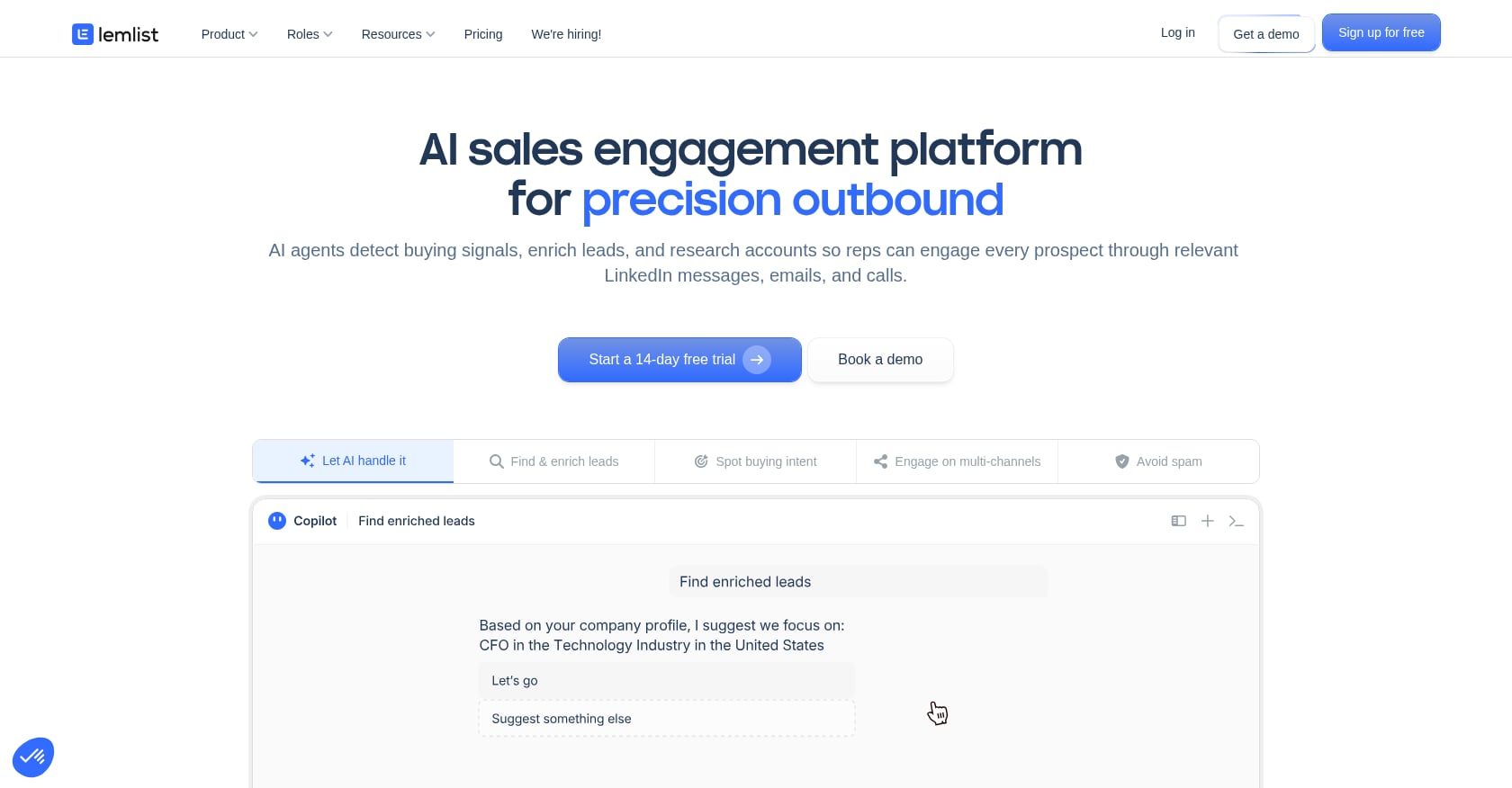
Best for: Small teams (1-5 reps) that want coordinated email and LinkedIn sequences in one workflow.
Lemlist occupies the multi-channel sweet spot. While most tools force you to choose between email and LinkedIn (or cobble together integrations), Lemlist builds both channels into a single sequence. You can start with a LinkedIn connection request, follow up with a LinkedIn message if accepted, then switch to email if there’s no response.
Pricing (2026):
Email Pro: $79/user/month ($63 billed annually). Includes unlimited email campaigns, Lemwarm warmup, CRM integrations, AI personalization.
Multichannel Expert: $109/user/month ($87 annual). Adds LinkedIn automation, in-app cold calling, centralized multichannel inbox.
Key strengths:
LinkedIn automation is the standout feature, built directly into sequences rather than bolted on
Dynamic personalized images in emails generate 15-25% higher reply rates than plain text alone
For teams serious about LinkedIn prospecting, this is the most integrated option available
Clean UX that doesn’t require a RevOps specialist to operate
Tradeoffs and limitations:
Per-seat pricing becomes painful fast. A team of 10 reps on the Multichannel Expert plan costs $1,090/month before any other tools.
Less sophisticated data enrichment than Clay or Apollo. You still need a data source upstream.
Best suited for small teams running targeted campaigns. Not built for high-volume spray-and-pray motions.
Real user perspective: Several practitioners in sales communities note that Lemlist’s strength is coordination, not volume. If you’re running a focused cold outreach campaign against 200 accounts, Lemlist shines. If you’re trying to reach 20,000 contacts, you’ll outgrow it quickly.
5. Outreach
Best for: Structured enterprise sales organizations with existing data infrastructure and 50+ rep teams.
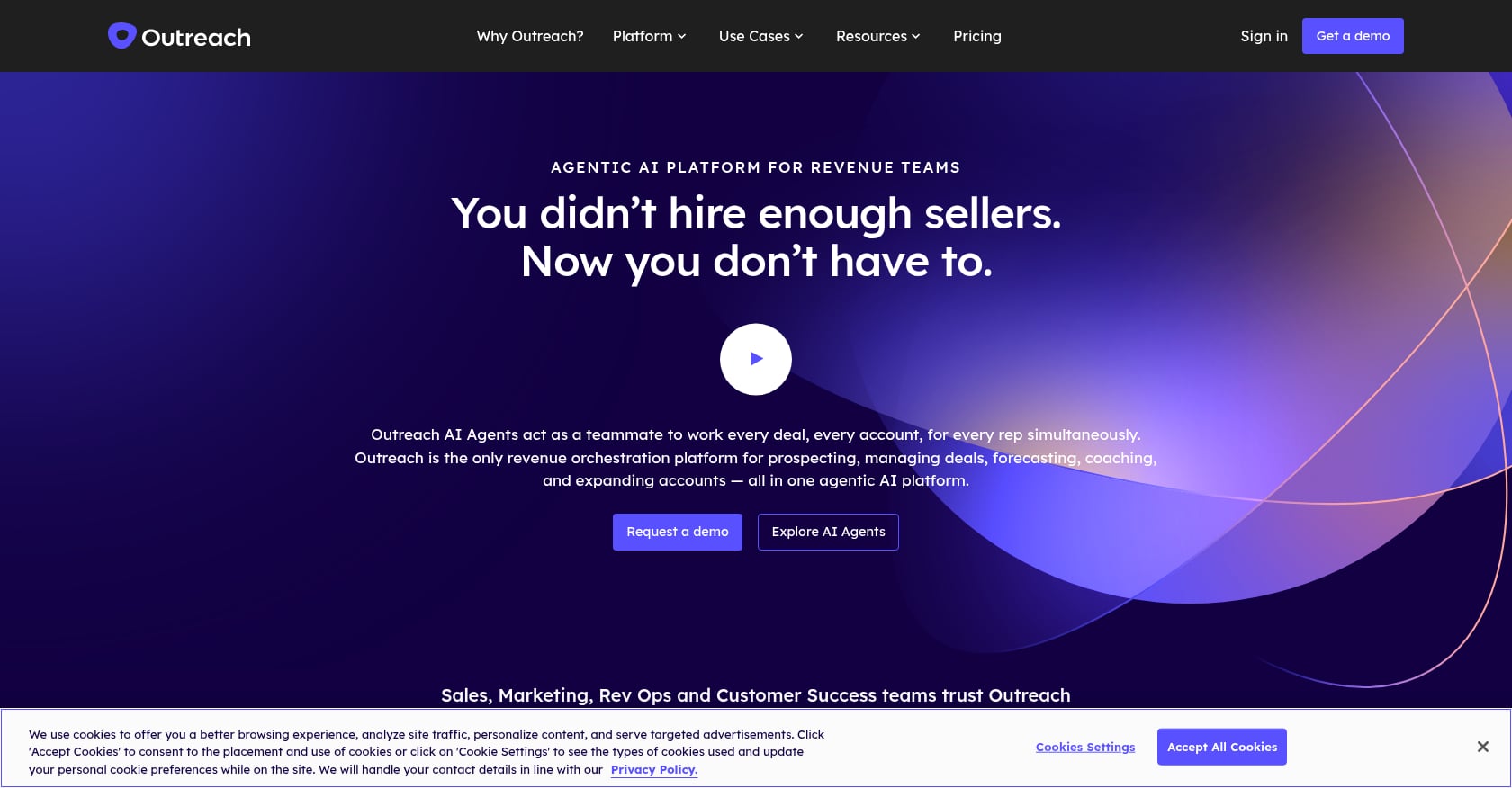
Outreach calls itself an “AI Revenue Workflow Platform,” and that label is accurate in scope if nothing else. It covers prospecting, deal management, forecasting, coaching, and retention. For large sales orgs that need governance, reporting, and multi-channel engagement under one roof, Outreach is the incumbent.
Pricing (2026):
Starts around $100/user/month
Enterprise pricing is not publicly available
Expect custom quotes and annual contracts for most deployment scenarios
Key strengths:
Full revenue lifecycle coverage, not just outbound. Native multi-channel engagement with a built-in dialer.
AI features for deal inspection, coaching, and forecasting are more mature than most competitors.
After rolling out AI-powered features, Seismic reported reps gained back 11.5 hours per week and saw a 54% lift in productivity.
Deep integrations with enterprise CRMs, data platforms, and BI tools.
Tradeoffs and limitations:
Not a data provider. You need separate tools for prospect data, contact info, and intent signals, then pipe everything into Outreach.
Opaque pricing and enterprise contracts make it inaccessible for startups and smaller teams.
Overkill for teams under 20 reps. The configuration and admin overhead only pays off at scale.
Implementation timelines run 2-4 months for full deployment.
Who should skip it: Any team without a dedicated sales ops function. Outreach assumes you have the infrastructure and headcount to support an enterprise platform.
6. AI SDR Platforms (Artisan/Ava, 11x, AiSDR)
Best for: High-volume, transactional outbound with broad ICPs and low-complexity sales cycles.
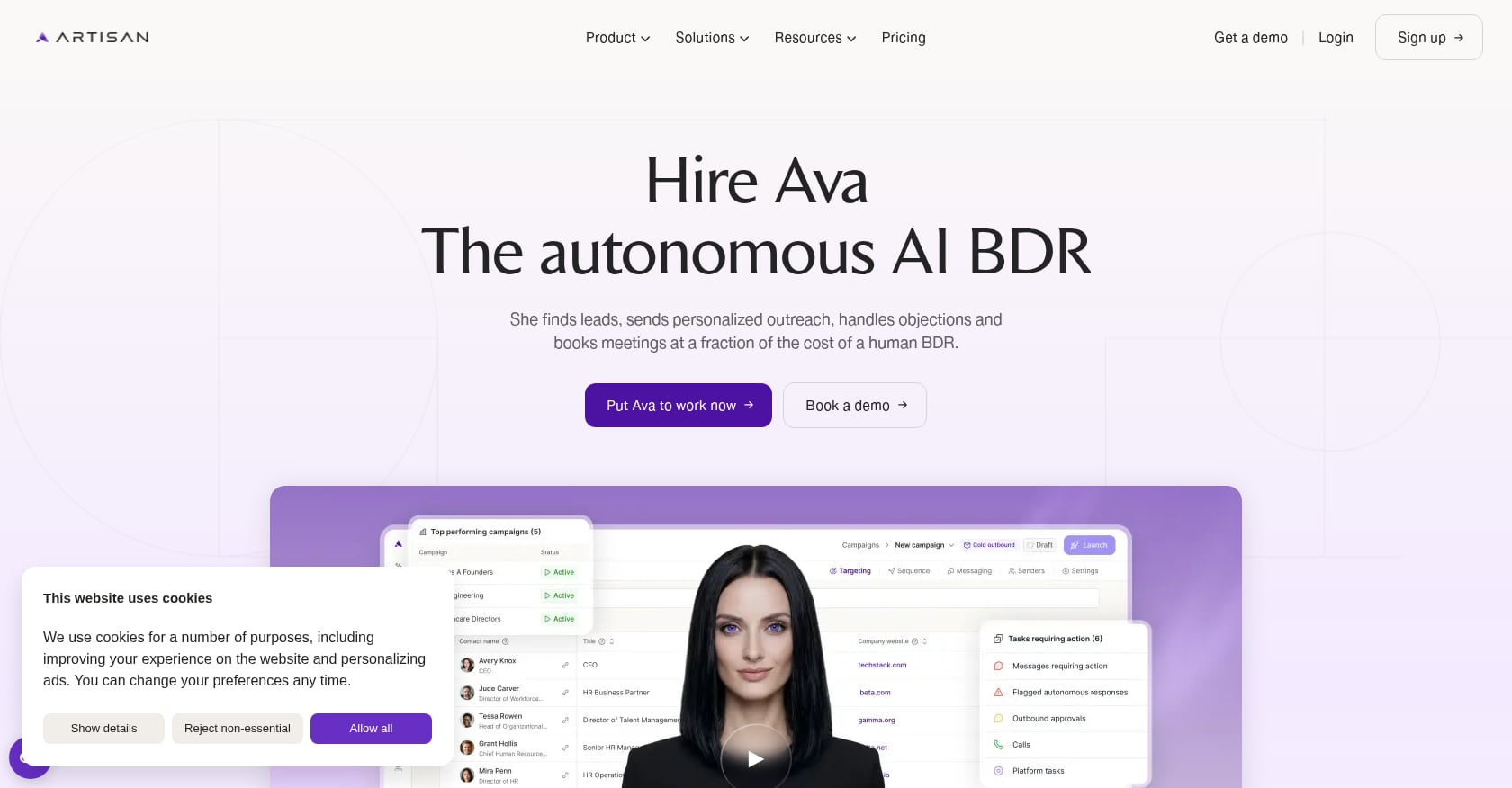
AI SDR platforms represent the boldest promise in outbound: autonomous agents that handle prospecting end-to-end, from identifying leads to sending messages to booking meetings, without human intervention. The pitch is compelling. The reality is more complicated.
Pricing (2026):
Artisan: starts around $250/month for the “Intern” tier
AiSDR: from $900/month
Enterprise-grade solutions (11x and similar): $5,000-$15,000/month
For context, a fully loaded human SDR costs $75,000-$110,000 annually. An enterprise AI SDR solution runs $15,000-$35,000 per year.
Key strengths:
Cost per lead averages $39 for AI SDRs versus $262 for humans, an 85% reduction
45% of sales teams now use AI for account research, and 54% use it for personalized outbound emails
Runs 24/7 without vacation, sick days, or ramp time
Can process thousands of prospects simultaneously
Tradeoffs and limitations, and there are many:
AI SDR tools churn at 50-70% annually, roughly double the turnover rate of the human reps they’re designed to replace.
Only 2% of companies successfully implement AI SDRs in a way that sticks. The autonomous AI SDR narrative peaked in 2024-2025. By early 2026, the data is clear: fully autonomous AI SDRs have not replaced human sales teams at any meaningful scale.
22% of sales teams have fully replaced their human SDR function with AI, but the dropout rate is staggering.
A Reddit user captured the sentiment well: “Pretty much all hype…”
The hybrid model wins: Companies using AI to augment (not replace) human SDRs see 2.8x more pipeline than those attempting full replacement. This is the single most important data point in the entire AI SDR conversation. The tools work best as force multipliers for skilled humans, not as standalone replacements.
For teams considering whether to outsource SDR functions, the choice isn’t binary between hiring humans and deploying AI. The winning approach combines both.
7. A Founder-Led Outbound Partner (SalesPipe)
Best for: B2B teams that need strategy, execution, and infrastructure together, not just another tool to manage.
This is the option no other best AI tools for outbound prospecting article covers, and it’s worth understanding why.
Every tool above solves a piece of the puzzle. Clay enriches data. Apollo provides a database. Instantly handles sending. Lemlist adds LinkedIn. But who decides the ICP? Who writes messaging that converts? Who sets up domains, warms inboxes, monitors deliverability, and iterates on what’s not working?
Tools are ingredients. Someone has to cook.
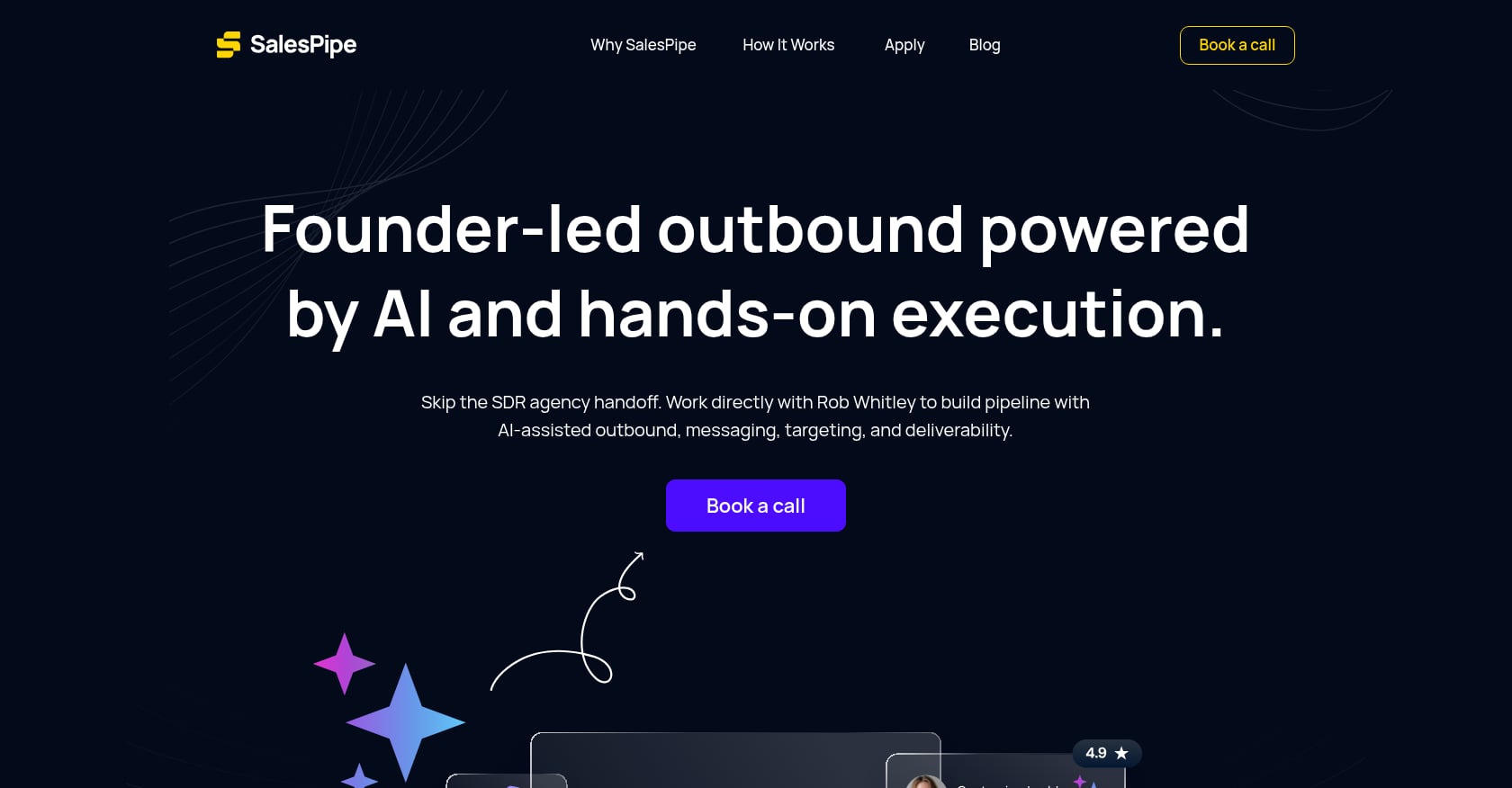
SalesPipe takes a different approach. Instead of selling software, founder Rob Whitley works directly with clients on the full outbound motion: ICP definition, messaging, outbound infrastructure, cold email, LinkedIn outreach, deliverability, and qualified meeting generation. AI is used as infrastructure to increase scale and efficiency, not as a standalone replacement for human judgment.
Why this model exists:
74% of companies achieve positive ROI within the first year of AI sales tool deployment, but only with proper implementation. The gap between buying a tool and generating pipeline from it is where most teams stall.
Stacking tools requires someone who knows how they fit together. Practitioners describe using Clay for enrichment, Apollo for database access, Instantly for sending, and sometimes additional tools for intent data. Making that stack work demands ongoing attention to data hygiene, domain health, and messaging iteration.
Deliverability is the invisible bottleneck. Multiple practitioners emphasize that tools fail not because of the tool itself, but because of infrastructure problems upstream: domain setup, warming protocols, list quality, and CRM alignment.
The tradeoff: Working with a founder-led operator means capacity is more limited than a large agency. But the flip side is direct access to senior expertise, faster iteration, and clearer accountability. No handoff to junior staff, no black-box execution.
If tools alone aren’t generating the pipeline you need, apply to work with SalesPipe .
How to Choose: A Decision Framework
The best AI tools for outbound prospecting depend entirely on your situation. These five questions will narrow the field fast.
1. What’s your budget, really?
Remember the real-cost gap. Apollo’s $49/month often becomes $120+. Instantly’s $30 becomes $150-400. Clay’s $149 can hit $800 in a week of experimentation. Budget for 2-3x the sticker price and you’ll avoid ugly surprises.
2. What channel does your ICP respond to?
If your buyers live in email, Instantly or Apollo will serve you well. If they’re on LinkedIn, Lemlist is the strongest integrated option. If they need phone calls, Outreach is likely the right fit. If you’re not sure, that’s a strategy problem, not a tool problem.
3. How many reps are you supporting?
Solo founder or 1-2 reps: Apollo (free tier) or Instantly (flat rate). Teams of 3-10: Lemlist or Apollo Professional. Teams of 50+: Outreach. The per-seat vs. flat-rate pricing model matters more than features at this stage.
4. Do you have someone to operate the stack?
Clay, Outreach, and multi-tool stacks all require a dedicated operator. If you don’t have a RevOps person or growth operator on staff, these tools will underperform. This is where working with an experienced outbound partner makes the difference between buying tools and building pipeline.
5. Are you solving a tool problem or a strategy problem?
If your messaging is generic, your ICP is vague, or your deliverability is shot, a new tool won’t fix it. Consider whether you need sales enablement tools or a fundamentally different approach to your outbound motion.
By 2028, projections suggest 60% of the total sales process will be handled by AI-driven activities. But the teams winning today aren’t the ones with the most tools. They’re the ones with the clearest strategy, the cleanest data, and the right operator behind the controls.
Ready to stop stacking tools and start generating pipeline? Talk to SalesPipe .