10 Best AI Tools for Outbound Sales in 2026 (Real Costs)
Compare the 10 best AI tools for outbound sales in 2026—real pricing, pros/cons, use cases, and stack tips. See what works and avoid hidden costs.
TL;DR
AI tools for outbound sales have matured well beyond GPT wrappers and mail merge. But no single tool covers the full workflow, and the real cost of most platforms runs 2-5x the sticker price once you add credits, domains, and complementary tools. This guide covers 10 tools across data enrichment, email sequencing, coaching, and autonomous AI SDRs, with honest pricing, real user feedback, and clear tradeoffs. The biggest takeaway: tools handle mechanics, but pipeline generation requires strategy, ICP clarity, and operational discipline to actually work.
The best AI tools for outbound sales in 2026 depend on your goals: Apollo.io is the strongest all-in-one platform, Clay leads in enrichment, Instantly.ai is best for cold email, Smartlead works well for agencies, Outreach and Salesloft dominate enterprise sales engagement, Lavender improves email quality, Cognism excels in EU data, HubSpot Sales Hub fits CRM-centric teams, and Artisan represents the latest AI SDR category. For most startups, the highest-ROI outbound stack is Apollo + Instantly + Clay, but long-term success still depends more on targeting, messaging, and deliverability strategy than the tools themselves.
Quick Comparison Table
| Tool | Starting Price (Real) | Best For | Primary Function | Channels | G2 Rating | Key Limitation |
|---|---|---|---|---|---|---|
| Apollo.io | Free; $150-400/user/mo fully loaded | All-in-one for startups | Data + Sequencing | Email, LinkedIn, Phone | 4.7/5 (9,400+ reviews) | Data accuracy ~65-70% |
| Clay | $134/mo (Starter) | Data enrichment and research | Enrichment | Feeds other tools | 4.8/5 (162 reviews) | Not a CRM or sending tool |
| Instantly.ai | $37.60/mo; $180-241/mo real | Cold email at scale | Email sending | Email only | 4.9/5 (3,300+ reviews) | No LinkedIn or calling |
| Smartlead.ai | $39/mo (Base) | Agency cold email | Email sending | Email only | Mixed | Reliability issues at scale |
| Outreach | Custom (enterprise) | Enterprise SDR teams | Sales engagement | Email, Phone | Declining | No data, no deliverability |
| Salesloft | Custom + $200/user/yr dialer | Conversation intelligence | Sales engagement + Revenue intel | Email, Phone | Mixed | Zero deliverability tools |
| Lavender | Free; $27/user/mo paid | Email coaching | AI writing assistant | Email (coaching only) | Strong | Doesn’t send or sequence |
| Cognism | Custom (premium) | EU-focused B2B data | Data provider | Email, Phone | Strong | Expensive; limited US depth |
| HubSpot Sales Hub | Free CRM; paid scales | CRM-native outbound | CRM + Sequences | Email, LinkedIn (manual) | Strong | Limited for high-volume cold |
| Artisan (Ava) | ~$1,500-2,000+/mo | Autonomous AI SDR | Full automation | Email, LinkedIn | 3.5/5 | 50-70% churn within a year |
Best AI Outbound Tools by Use Case
| Use Case | Best Tool | Why It Wins |
|---|---|---|
| Best overall for startups | Apollo.io | Combines data, sequencing, and prospecting in one platform |
| Best for enrichment | Clay | Most advanced enrichment and workflow automation |
| Best for cold email deliverability | Instantly.ai | Strong warmup and sending infrastructure |
| Best for agencies | Smartlead.ai | Multi-client management and white-label support |
| Best for enterprise SDR teams | Outreach | Governance, reporting, and workflow standardization |
| Best for revenue intelligence | Salesloft | Strong forecasting and conversation analysis |
| Best for email coaching | Lavender | Real-time writing optimization |
| Best for GDPR-compliant data | Cognism | Strong EU contact accuracy and compliance |
| Best CRM-native outbound | HubSpot Sales Hub | Simplifies workflows for HubSpot users |
| Best AI SDR automation | Artisan | Most ambitious autonomous workflow |
Who This Guide Is For
This guide is designed for:
Founders building outbound from scratch
SDR leaders evaluating new sales tech
Agencies running outbound for clients
RevOps teams consolidating tool stacks
B2B SaaS companies scaling cold outreach
Teams replacing manual prospecting workflows with AI automation
If you only need a CRM or basic email automation, many of these tools will be overkill. This guide focuses specifically on outbound pipeline generation at scale.
How We Evaluated These Tools
Every tool in this list was assessed across five dimensions: real-world pricing (not just the number on the pricing page), channel coverage, user sentiment from G2 and practitioner communities like Reddit’s r/coldemail and r/sales, workflow fit, and honest limitations.
The tools fall into distinct categories. Data and enrichment tools (Apollo, Clay, Cognism) sit at the top of the funnel. Sending and sequencing platforms (Instantly, Smartlead, Outreach, Salesloft) handle execution. Coaching tools (Lavender) improve rep-level writing. CRM-native tools (HubSpot) keep everything in one system. And autonomous AI SDRs (Artisan) attempt to do it all. Most teams need 3-5 tools minimum, and the best stack is the one that covers the fewest gaps with the least overlap.
If you’d rather skip the stack-building entirely and work with someone who already has the tools and the strategy in place, apply to work with SalesPipe.
The 10 Best AI Tools for Outbound Sales in 2026
1. Apollo.io
Best for: All-in-one outbound for startups and early-stage teams
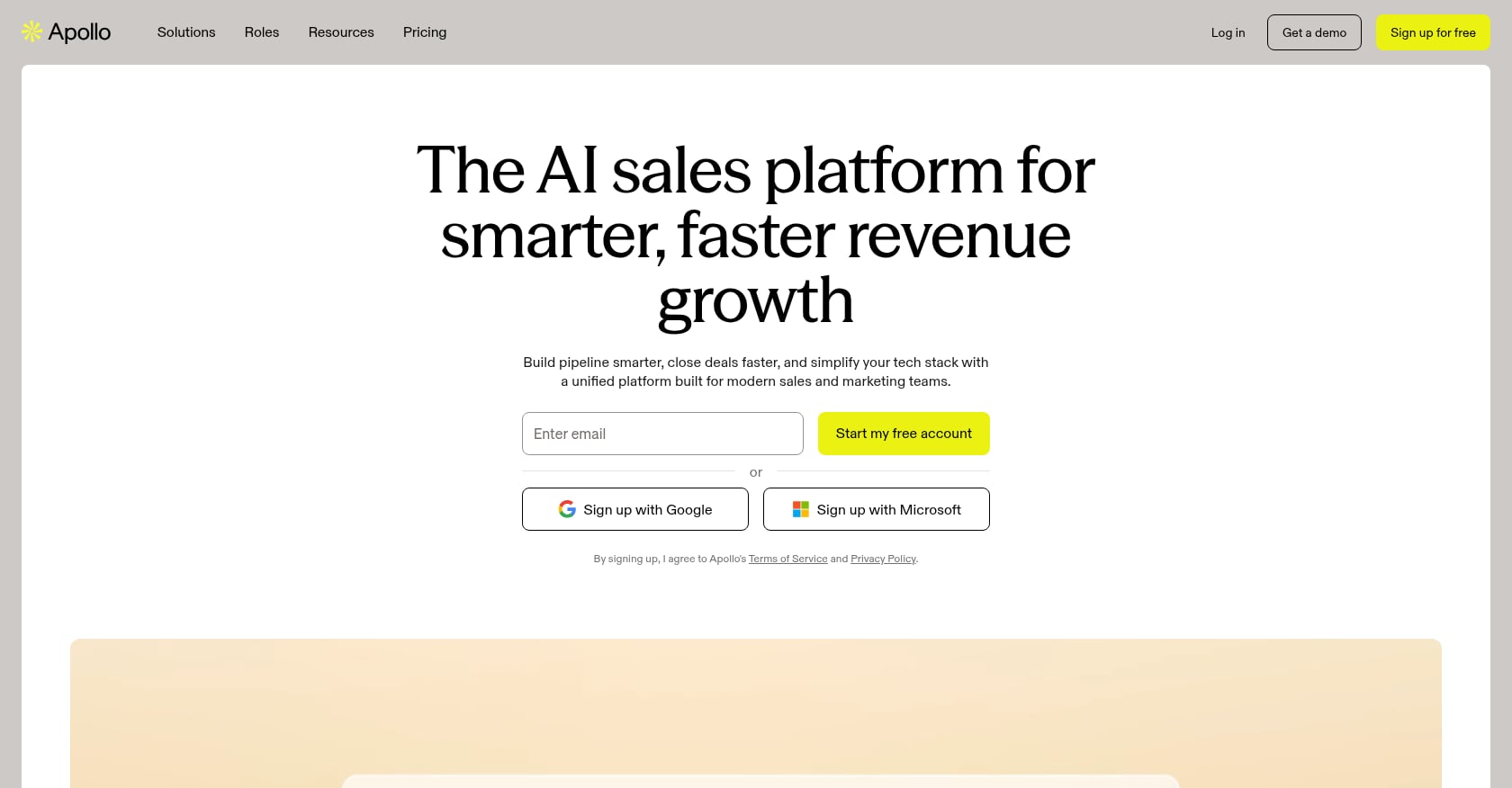
Apollo is the default starting point for most teams building their first AI-powered outbound motion. It combines a 210M+ contact database, email sequencing, and basic CRM functionality in a single platform. The free tier is genuinely useful, offering enough credits and features to run real campaigns before committing a dollar.
Pricing:
Free tier available
Basic: $49/user/month (annual)
Professional: $79/user/month (annual)
Organization: $119/user/month (annual)
Real-world cost: $150-400/user/month once credit usage ramps up
Key features:
Access to 210M+ contact database
Built-in email sequencing and dialer
Chrome extension for LinkedIn prospecting
AI-assisted email writing
Intent data and job change signals
Limitations:
Real-world data accuracy hovers around 65-70% according to user reviews, with email bounce rates of 15-25% reported across G2 and Trustpilot
Credit costs are the hidden expense; active outbound teams burn through the base allocation fast
Enrichment is primarily firmographic, which limits personalization for teams doing signal-based outreach
Real user perspective: Practitioners consistently note that Apollo’s strength is breadth, not depth. For teams exploring best lead prospecting tools, it’s a solid starting point. But teams needing high-accuracy data for targeted campaigns often supplement Apollo with a dedicated enrichment layer.
2. Clay
Best for: Data enrichment and pre-outreach research
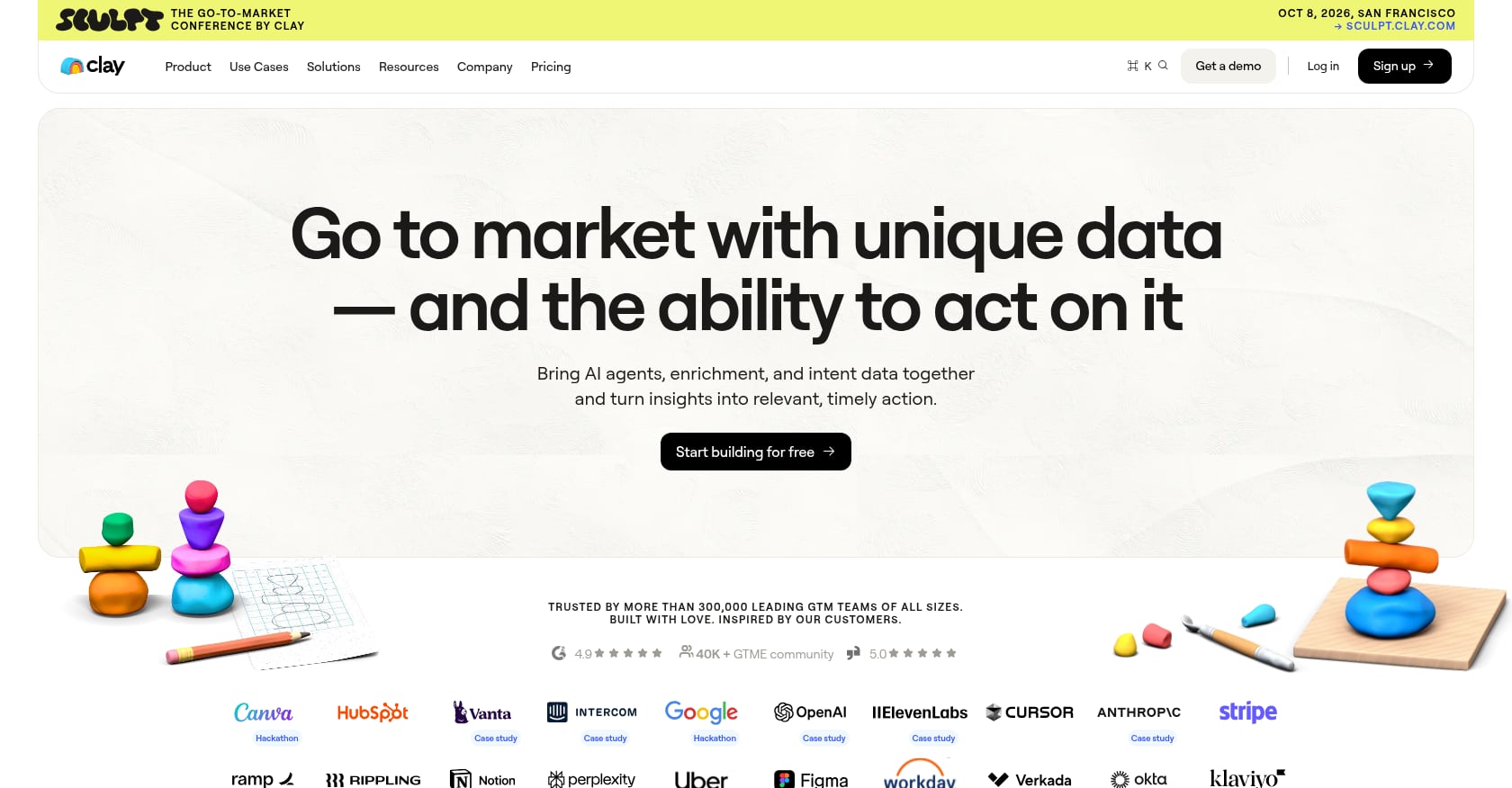
Clay is the tool that changed how growth teams think about prospect data. Rather than relying on a single database, Clay aggregates information from 150+ sources and runs AI agents to research, enrich, and clean leads before they ever hit your outreach tool or CRM.
Pricing:
Starter: $134/month (annual) or $149/month (monthly)
Growth: $495/month (the sweet spot for complex workflows)
Credit-based pricing makes costs unpredictable at scale
Key features:
Aggregates data from 150+ enrichment sources
AI agents that research prospects automatically
Waterfall enrichment (tries multiple sources sequentially)
Custom workflow builder for multi-step data operations
Integrates with most CRMs and outreach platforms
Limitations:
Steep learning curve; building effective workflows takes real time
Clay is not a CRM and does not send emails, warm up mailboxes, or manage deliverability
Credits can disappear fast if you run large lists with too many enrichment steps
Real user perspective: Clay earns a 4.8/5 on G2, but practitioners on Reddit’s r/coldemail frequently note that the tool’s power scales directly with operator skill. Teams that track metrics like meetings per 1,000 credits and enforce enrichment rules extract strong value. Teams that don’t tend to burn credits without clear ROI. This is a theme that applies broadly: AI tools for outbound sales reward discipline and punish carelessness.
3. Instantly.ai
Best for: High-volume cold email without burning sender reputation
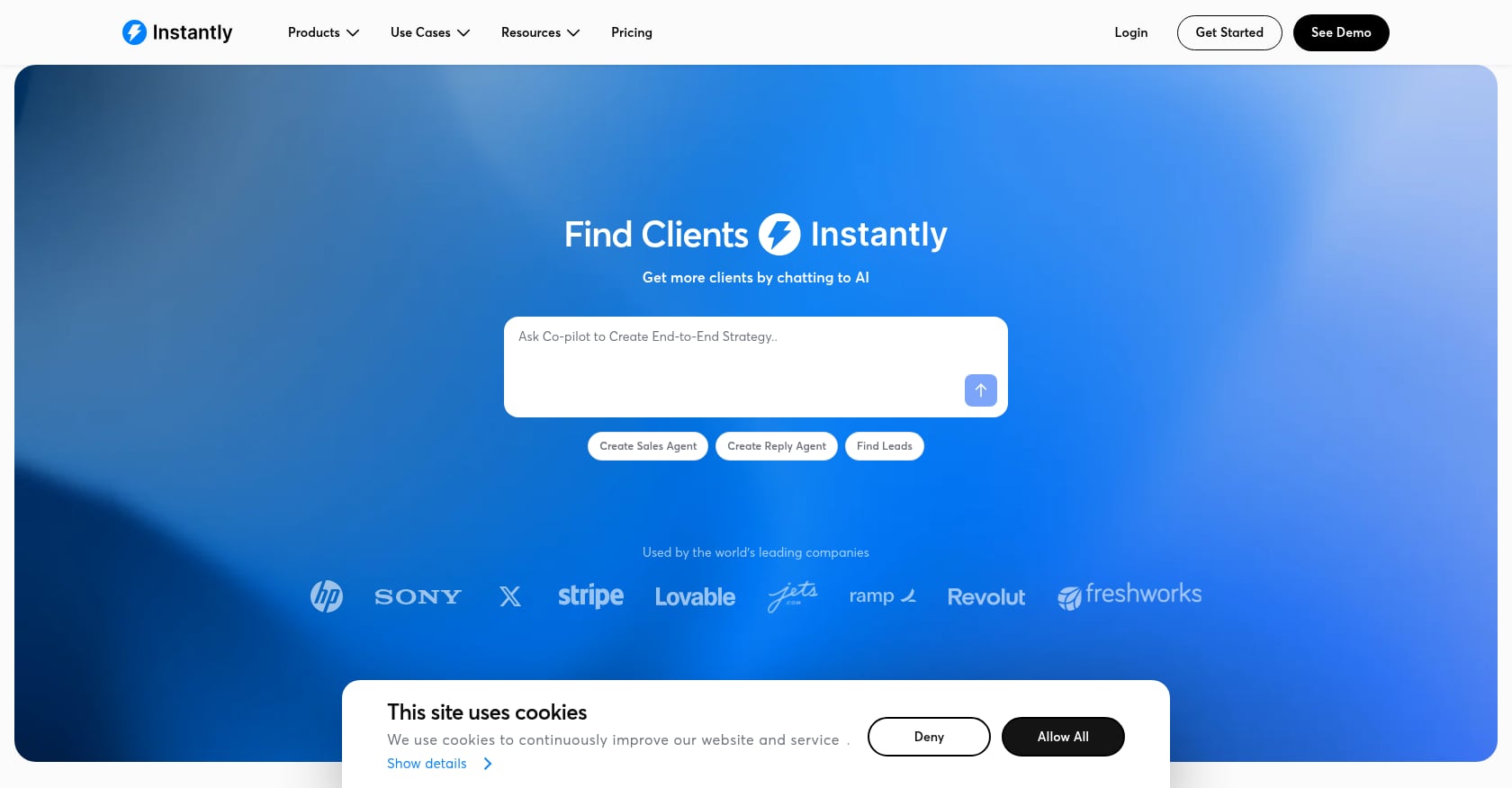
Instantly has become the go-to platform for teams and agencies running cold email at scale. Its core proposition is simple: unlimited email accounts, built-in warmup, and AI-powered reply classification, all at a price point that undercuts enterprise platforms by a wide margin.
Pricing:
Growth plan: $37.60/month (annual)
Scales to $358/month on the Light Speed tier
Real-world cost: $180-241/month minimum for a functional setup (outreach + credits + CRM)
Key features:
Unlimited email sending accounts
Built-in email warmup
AI reply classification and lead management
Campaign analytics and A/B testing
Lead database (separate add-on)
Limitations:
Email-only channel; no LinkedIn automation or calling natively
The base price is deceptive, since true monthly cost is 3-4x higher once you add leads, CRM, and verification
Warmup scores inside the platform don’t always reflect real inbox placement
Real user perspective: With a 4.9/5 G2 rating from 3,300+ reviews, Instantly is clearly doing something right. But experienced cold emailers warn that the tool works best when paired with proper cold email structure and deliverability hygiene. The platform handles mechanics well. The strategy and messaging still need to come from you.
4. Smartlead.ai
Best for: Agencies managing multiple client outbound campaigns
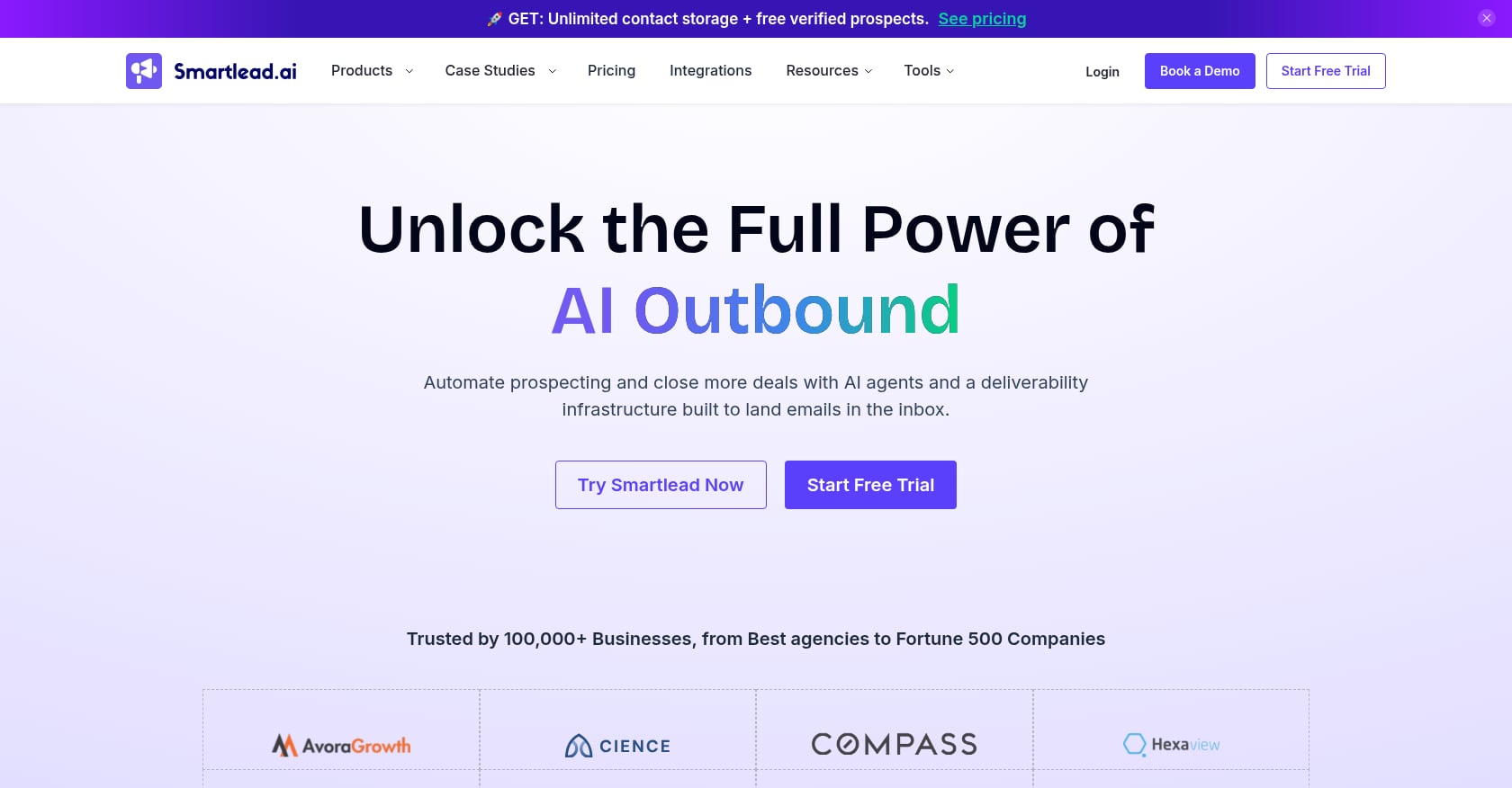
Smartlead competes directly with Instantly but differentiates with its white-label agency dashboard. If you’re running outbound campaigns for multiple clients simultaneously, Smartlead’s architecture was built for that use case from day one.
Pricing:
Base: $39/month
Pro: $94/month
Unlimited Prime: $379/month
Key features:
Unlimited email accounts and inbox rotation
White-label portal for agency clients
Auto-rotating sending infrastructure
Unified inbox for managing replies across campaigns
Webhook and API integrations
Limitations:
Email-only at every price point; no LinkedIn outreach, social selling, or multichannel sequence management
User reviews across G2 and Reddit’s r/coldemail consistently flag reliability issues at scale: emails stuck in sending queues and random mailbox disconnections
No native data or enrichment capabilities
Real user perspective: Smartlead is purpose-built for agencies, and that’s both its strength and its ceiling. Teams that need multiple sales channels will need to layer additional tools on top. For pure cold email volume management, it does the job.
5. Outreach
Best for: Enterprise SDR teams needing workflow standardization
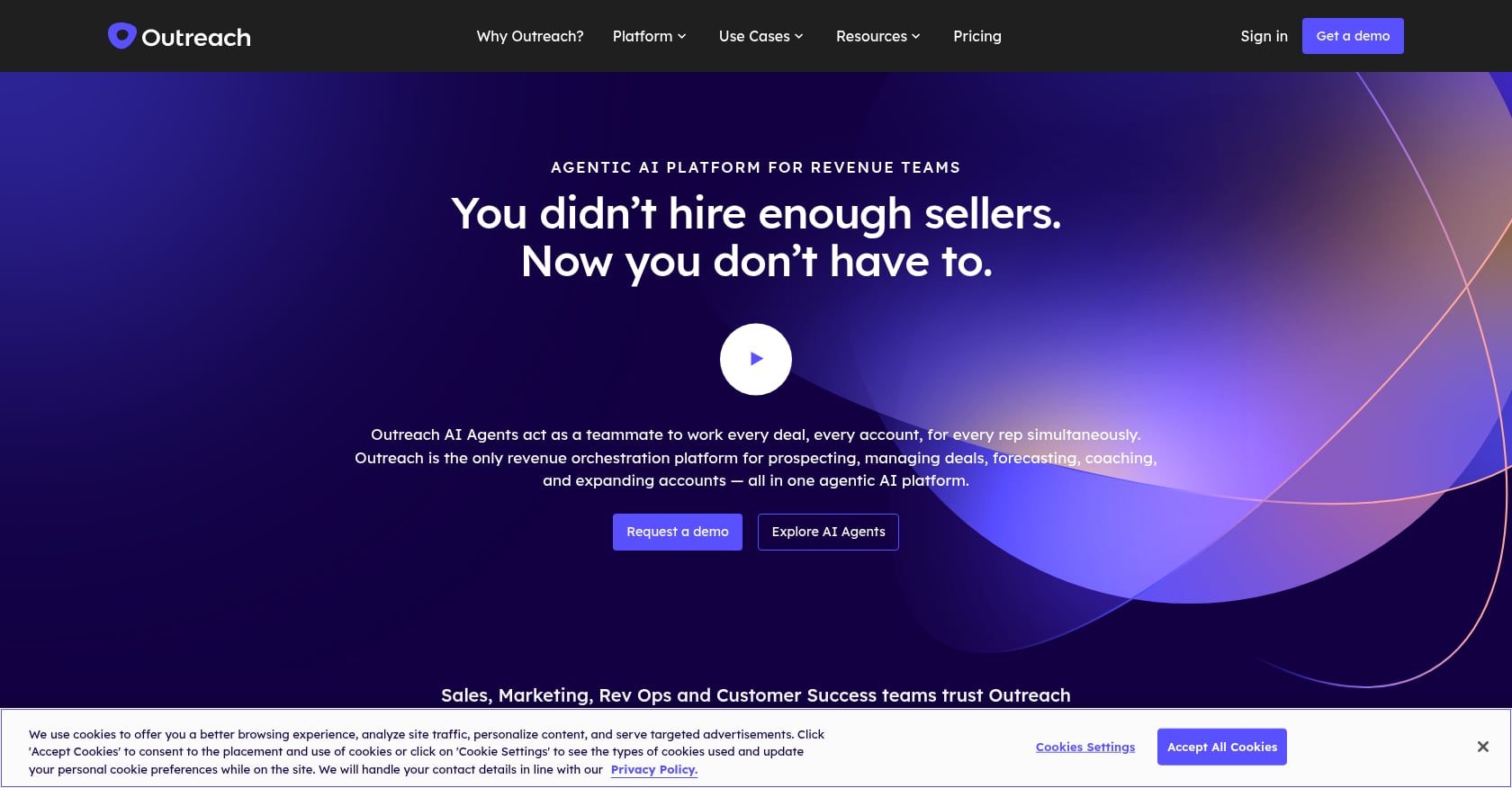
Outreach is the legacy leader in sales engagement. For large teams with 50+ reps that need structured sequences, governance, and reporting depth, it remains a common choice. But “common” and “best” aren’t the same thing.
Pricing:
Custom quotes only; enterprise-oriented
Not publicly listed, which itself tells you something about the target buyer
Key features:
Multi-step sequence builder (email, phone, tasks)
Advanced analytics and rep performance tracking
AI-powered deal insights
CRM integrations with Salesforce, Microsoft Dynamics
Admin controls and team governance features
Limitations:
Scored zero in four entire evaluation categories in recent analyses: data, signals, social prospecting, and deliverability
No native data provider, no deliverability tools, no LinkedIn automation
Multiple deal reviews cite “3 years with no real innovation” as a switching trigger
Real user perspective: Outreach still works for organizations that already have it deeply embedded in their workflows. But for teams evaluating AI tools for outbound sales today, its gaps are significant. You’ll need separate solutions for data, deliverability, and social selling, which means additional cost and integration complexity.
6. Salesloft
Best for: Conversation intelligence and revenue forecasting
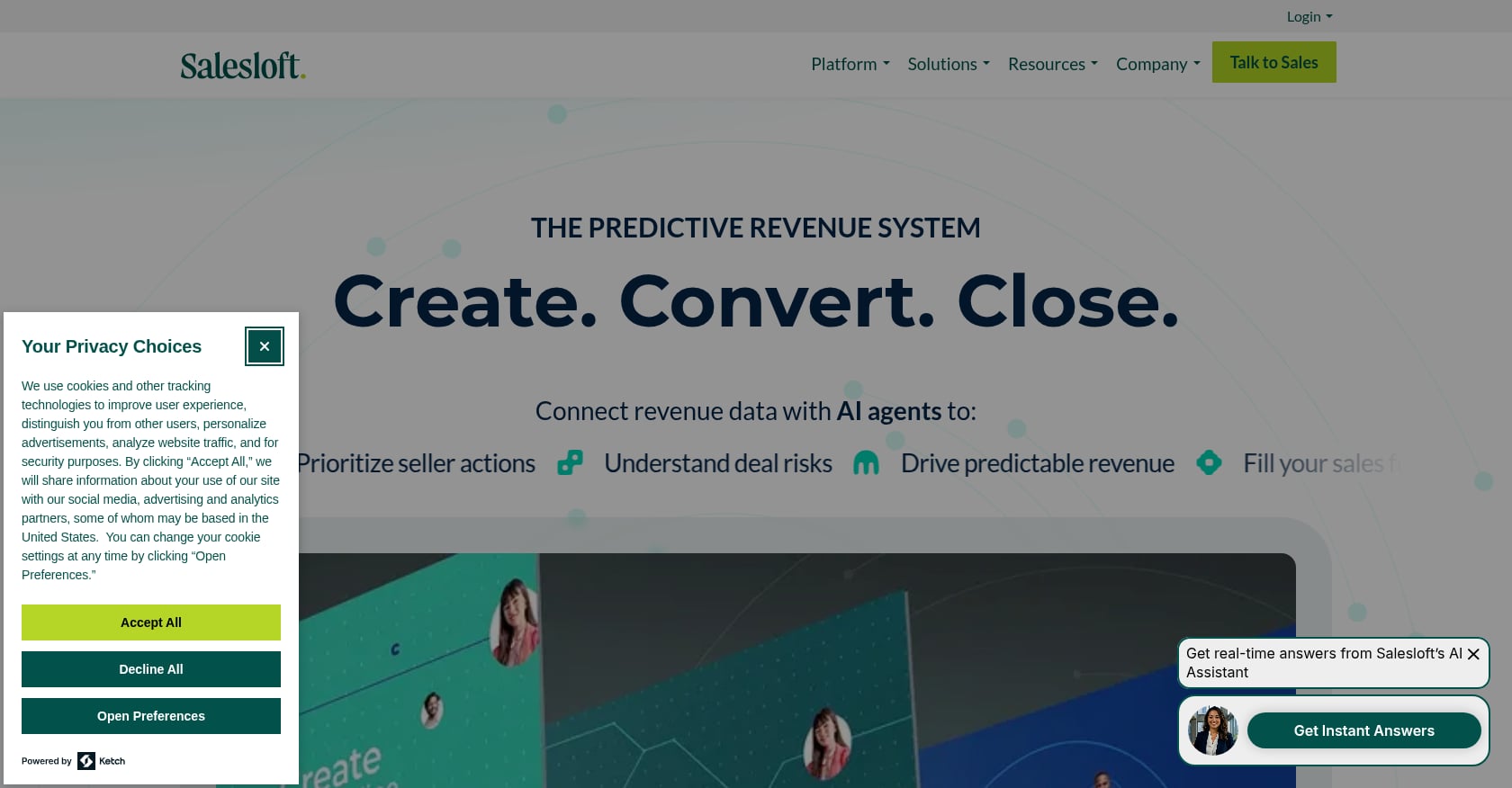
Salesloft’s December 2025 merger with Clari gave it arguably the best revenue intelligence capabilities in the category. Its Rhythm AI engine prioritizes seller actions based on engagement signals and deal context. For teams that care about conversation recording, deal framework tracking (MEDDPICC, SPIN, BANT), and AI-powered forecasting, Salesloft is strong.
Pricing:
Custom pricing
Dialer is a $200/user/year add-on
Key features:
Rhythm AI engine for action prioritization
Best-in-category revenue intelligence (post-Clari merger)
Conversation recording and analysis
Deal framework scoring
Multi-step cadence builder
Limitations:
Zero deliverability tools: no warmup, no spam checker, no inbox testing
LinkedIn is entirely manual. Connection requests, messages, and profile views are all task reminders with zero automation
Adding the dialer at $200/user/year on top of custom pricing pushes total cost higher than most teams expect
Real user perspective: A comment on Reddit’s r/sales puts it bluntly: “Salesloft has no understanding of modern email deliverability.” That’s a damning limitation for any tool in the outbound stack. If your team does significant LinkedIn prospecting, Salesloft won’t automate any of it.
7. Lavender
Best for: Coaching individual reps to write better cold emails
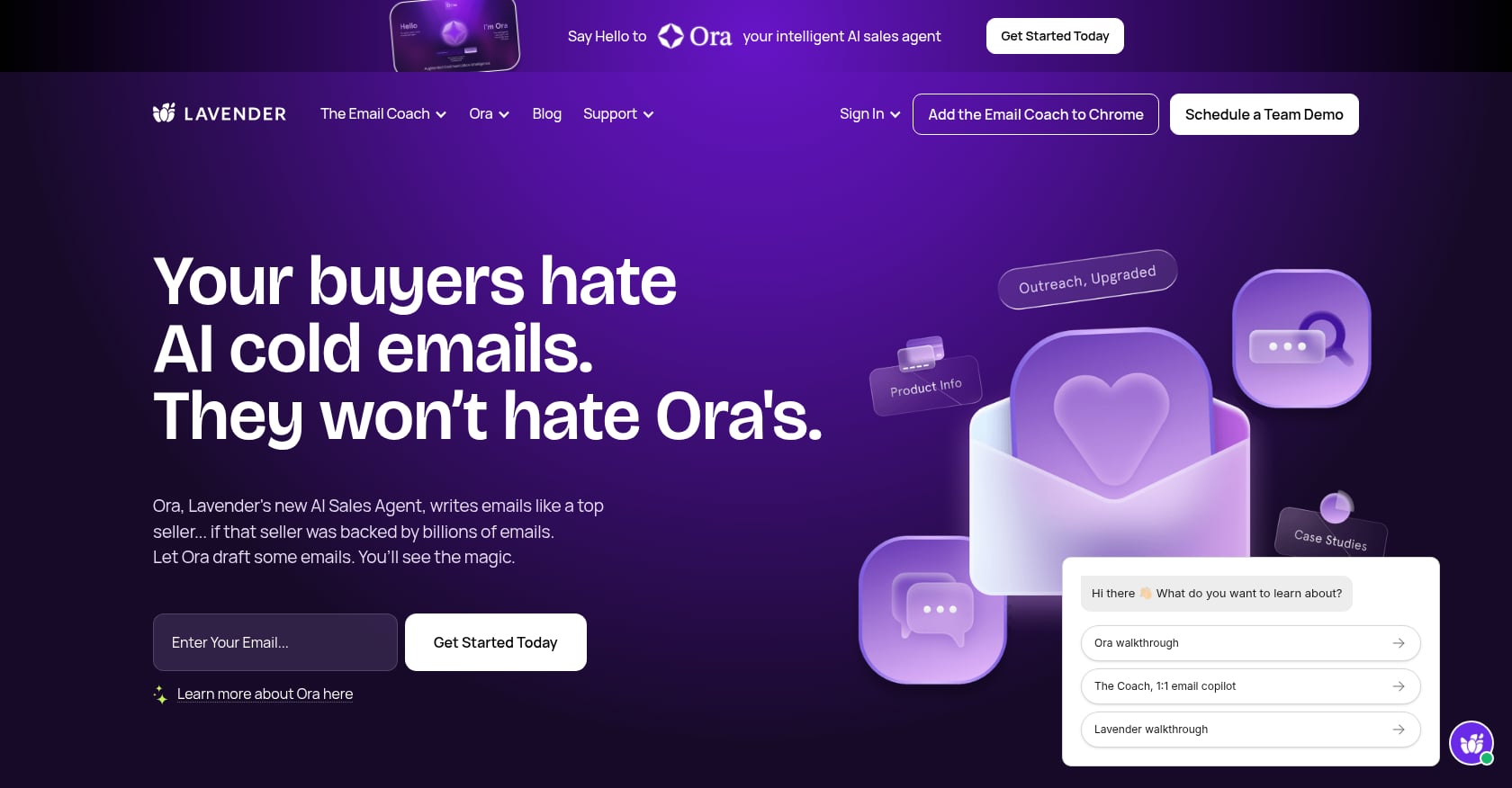
Lavender occupies a unique niche. It’s not a sequencer, not a data provider, not a sending platform. It’s an AI email coach that analyzes outbound emails as reps write them, scores each message for reply likelihood, and suggests specific improvements in real time.
Pricing:
Free tier available
Paid plans from $27/user/month
Key features:
Real-time email scoring and feedback
AI-powered writing suggestions
Personalization recommendations based on prospect data
Team-level analytics on email quality
Integrations with Gmail, Outlook, Outreach, Salesloft
Limitations:
Coaching layer only; does not send emails or manage sequences
Value diminishes for reps who are already strong writers
Requires pairing with a separate sending tool for any actual outreach
Real user perspective: Lavender works best as a training accelerant. New SDRs improve faster when they get instant feedback on every email. But the tool is only as valuable as the messaging strategy behind it. If your ICP targeting is off, a well-scored email to the wrong person still generates nothing. For a deeper look at messaging fundamentals, see our cold outreach guide.
8. Cognism
Best for: GDPR-compliant B2B data, especially for European markets
If your outbound motion targets prospects in Europe, Cognism is the data provider that takes GDPR compliance seriously. Its phone-verified “Diamond Data” offers direct dials that are genuinely checked by humans, which makes a real difference for teams running phone-heavy outbound.
Pricing:
Custom pricing; known for premium positioning
Expect significantly higher per-contact costs than Apollo or similar database tools
Key features:
GDPR-compliant contact and company data
Diamond Data: phone-verified direct dials
Intent data and buying signals
Browser extension for LinkedIn prospecting
CRM integrations with Salesforce, HubSpot, and others
Limitations:
Expensive relative to alternatives, especially for teams focused purely on North America
Database depth in some US verticals doesn’t match EU coverage
Like all data providers, accuracy decays over time without regular refresh
Real user perspective: Cognism fills a specific need well. Teams targeting European markets and running phone-based outbound consistently rate the data quality above competitors. For US-only teams, the premium pricing is harder to justify.
9. HubSpot Sales Hub
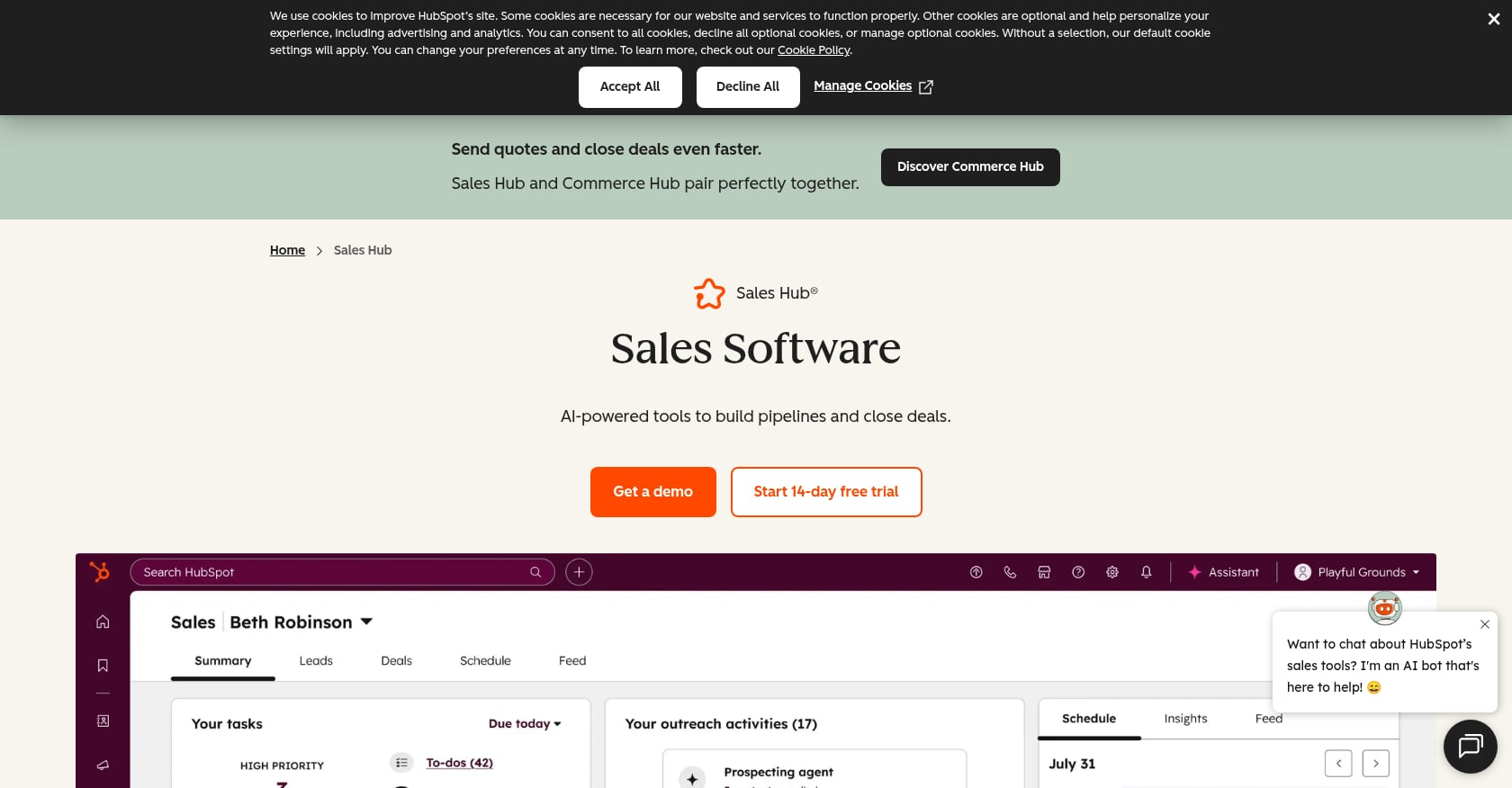
Best for: Teams already on HubSpot who want outbound inside their CRM
HubSpot Sales Hub brings outbound sequencing, AI-assisted email writing, and lead scoring into the CRM. For teams that already live in HubSpot, this eliminates the friction of syncing data between separate tools. Everything happens in one system.
Pricing:
Free CRM tier available
Paid Sales Hub plans scale by features and seat count
Starter, Professional, and Enterprise tiers
Key features:
Sequence automation within the CRM
AI-assisted email composition
Lead scoring and prioritization
Meeting scheduling and pipeline management
Native integration with HubSpot Marketing and Service Hubs
Limitations:
Not built for high-volume cold outbound; sending limits and deliverability controls are basic compared to dedicated platforms
Sequences lack the sophistication of tools like Instantly or Outreach
Best value comes when you’re already paying for other HubSpot hubs
Real user perspective: HubSpot Sales Hub is the right answer for a specific situation: you’re already a HubSpot shop, your outbound volume is moderate, and you want to reduce tool sprawl. It’s not the right answer if cold email at scale is your primary motion.
10. Artisan (Ava)
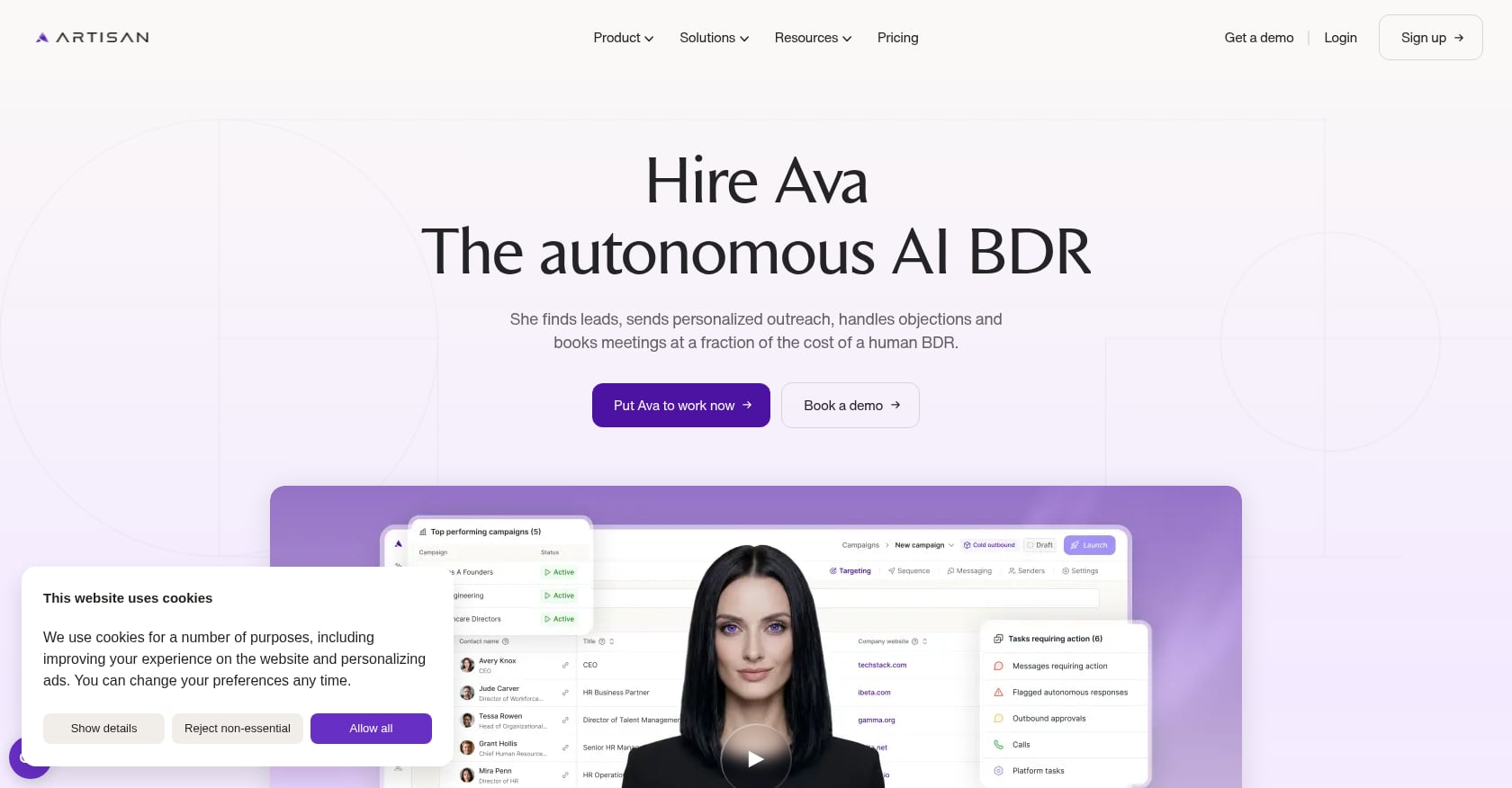
Best for: Understanding why autonomous AI SDRs aren’t ready yet
Artisan’s AI BDR, Ava, represents the most ambitious vision in the category: a fully autonomous AI that prospects, enriches, writes personalized emails, and follows up without human involvement. The promise is compelling. The reality is different.
Pricing:
Custom; third-party estimates suggest ~$1,500-2,000+/month
At those numbers, compare against a fully loaded human SDR cost of $75K-$110K/year
Key features:
Automated prospecting and lead enrichment
AI-generated personalized outreach
Automated follow-up sequences
Self-contained workflow (no other tools needed, in theory)
Limitations:
G2 rating sits at 3.5, with users describing early excitement that fades within 30-60 days
Artisan’s LinkedIn automation was exposed to a vulnerability in January 2026, resulting in loss of access to its primary social channel
The autonomous AI SDR model is struggling across the board; 50-70% of these tools churn within a year
Real user perspective: By early 2026, the verdict is clear. Fully autonomous AI SDRs have not replaced human sales teams at any meaningful scale. Companies that deployed Artisan, 11x.ai, and similar tools as full SDR replacements have largely reverted to hybrid models. A practitioner who ran 1,626+ campaigns summarized it well: “AI SDRs are great for follow-up automation and research. They’re bad for initial outreach strategy. The strategist uses AI. The AI doesn’t replace the strategist.”
For a deeper look at what an outbound SDR actually does and why the human element remains critical, that context matters when evaluating tools like Artisan.
Common Mistakes Teams Make With AI Outbound Tools
Most outbound failures in 2026 are not caused by bad software. They come from implementation mistakes.
Using AI tools before validating messaging
Many teams automate outbound before proving their offer and messaging resonate with the market. AI scales bad messaging just as efficiently as good messaging.
Buying too many overlapping tools
It’s common for teams to pay for Apollo, ZoomInfo, Clay, Outreach, Smartlead, and HubSpot simultaneously while using only 30% of each platform’s capabilities.
Ignoring deliverability infrastructure
Domains, SPF/DKIM/DMARC setup, inbox rotation, and warmup determine whether emails reach the inbox at all. Many teams underestimate the technical side of outbound.
Treating AI personalization as strategy
Adding {{company_name}} and AI-generated first lines is not real personalization. Strong outbound still depends on relevance, timing, and positioning.
Optimizing for activity instead of meetings
High send volume means nothing without qualified pipeline generation. The best outbound teams optimize for meetings booked, pipeline created, and revenue generated.
What AI Tools Can’t Do (And What Actually Drives Outbound Results)
Here’s the uncomfortable truth that most “best AI tools for outbound sales” articles skip: the difference between a well-implemented outbound stack and a poorly implemented one is the difference between 3% reply rates and 0.3% reply rates with deliverability problems.
Tools handle mechanics. Results come from somewhere else entirely.
ICP clarity. Signal-driven outreach achieves 15-25% reply rates compared to the 3-5% cold email industry average. The gap isn’t about which sending tool you use. It’s about whether you’re reaching the right people at the right time with the right message.
Messaging quality. AI can generate email copy at scale. But without a clear understanding of the prospect’s pain, the value proposition, and the specific angle that resonates, AI-generated messages blend into the noise. The best outbound teams spend more time on messaging strategy than on tool configuration.
Deliverability infrastructure. Domains, warmup, authentication records, sending patterns, inbox rotation. These technical foundations determine whether your emails reach the inbox at all. No amount of AI personalization matters if your messages land in spam.
Operational discipline. Professionals using AI tools effectively reclaim 7.5 hours per week. But that efficiency only translates to pipeline when someone is reviewing performance data, iterating on sequences, adjusting targeting, and making strategic decisions about what’s working and what isn’t.
The 50-70% churn rate among AI SDR tools isn’t a technology failure. It’s an expectations failure. Teams buy tools hoping to solve a pipeline problem, then discover that the problem was always about strategy and execution, not software.
Gartner projects that 40%+ of agentic AI projects will be abandoned by end of 2027. The pattern is consistent: automation without strategy produces activity without results.
This is exactly why some teams choose to work with an experienced outbound operator instead of assembling and managing a stack themselves. If that’s where you are, apply to work with SalesPipe, where founder-led execution means you get strategy and implementation in one engagement.
Outbound Benchmarks in 2026
| Metric | Average Teams | High-Performing Teams |
|---|---|---|
| Cold email reply rates | 3-5% | 15-25% |
| Positive reply rates | 0.5-2% | 5-10% |
| Qualified meeting cost | $250-400 | $80-180 |
| Domains per rep | 1-2 | 5-15 |
| Daily sends per inbox | 50-100 | 20-40 |
| Personalization depth | Basic merge tags | Signal-based messaging |
How to Build Your Outbound AI Stack
Not every team needs the same tools. Here’s how to think about AI tools for outbound sales based on your stage and budget.
Tier 1: Bootstrap ($100-200/month)
For early-stage teams testing outbound for the first time:
Apollo.io (free tier) for data and basic sequencing
Instantly.ai (Growth plan) for cold email sending and warmup
Lavender (free tier) for email coaching
Total real cost: ~$100-200/month. This gets you a functional outbound motion with enough data, sending capacity, and writing feedback to learn what works.
Tier 2: Scaling ($500-1,500/month)
For growth-stage teams that have validated outbound and need better data and higher volume:
Clay (Starter or Growth) for enrichment and research
Instantly or Smartlead for sending
Lavender (paid) for team-wide email coaching
Dedicated domains and warmup infrastructure
This is where signal-based outreach becomes feasible. Clay’s enrichment capabilities let you move beyond basic firmographic targeting toward the intent signals that drive higher reply rates.
Tier 3: Enterprise ($3,000+/month)
For larger teams with 20+ reps:
Outreach or Salesloft for sequence management and governance
Cognism for premium data (especially EU markets)
Revenue intelligence tools for deal tracking and forecasting
Dedicated deliverability monitoring
At this level, the challenge shifts from “which tools” to “how do we operate them well.” For an overview of tools beyond outbound, check our guide to sales enablement tools.
The Alternative: Work With an Outbound Operator
There’s a fourth path that more teams are choosing. Instead of assembling, integrating, and managing 3-5 tools yourself, work with someone who already has the stack, the strategy, and the operational knowledge. This is especially relevant for founders and lean teams who need pipeline now, not three months from now after they’ve figured out Clay workflows and domain warmup schedules.
The concept of SDR-as-a-service has evolved. The best version isn’t a junior rep following a script. It’s an experienced operator who combines AI-powered tools with strategic thinking to generate qualified meetings.