AI-Powered Outbound for SaaS: The 2026 Complete Guide
Learn how AI-powered outbound for SaaS works in 2026: deliverability, signals, sequencing, and measurement. Build a lean, operator-plus-AI engine.
TL;DR
AI-powered outbound for SaaS is a go-to-market approach where artificial intelligence handles prospect research, message drafting, sequence timing, and signal detection, while a human operator controls strategy, quality, and deliverability. It matters now because Gmail and Yahoo enforce strict bulk-sender rules (authentication, one-click unsubscribe, spam-rate thresholds) that punish high-volume, low-relevance sends. Apple’s Mail Privacy Protection has also made open rates unreliable, forcing teams to measure replies and meetings instead. The winning model in 2025 and 2026 is not “AI replaces the SDR” but “operator plus AI,” where a small team or single experienced operator generates qualified pipeline without a large headcount.
Quick Takeaway: What is AI-Powered Outbound?
AI-powered outbound for SaaS is a hybrid sales motion that combines Large Language Models (LLMs) with human strategic oversight to automate prospect research and message personalization. Unlike legacy "spray-and-pray" automation, it utilizes intent signals (e.g., G2 intent, job changes) and deliverability engineering to maintain high inbox placement.
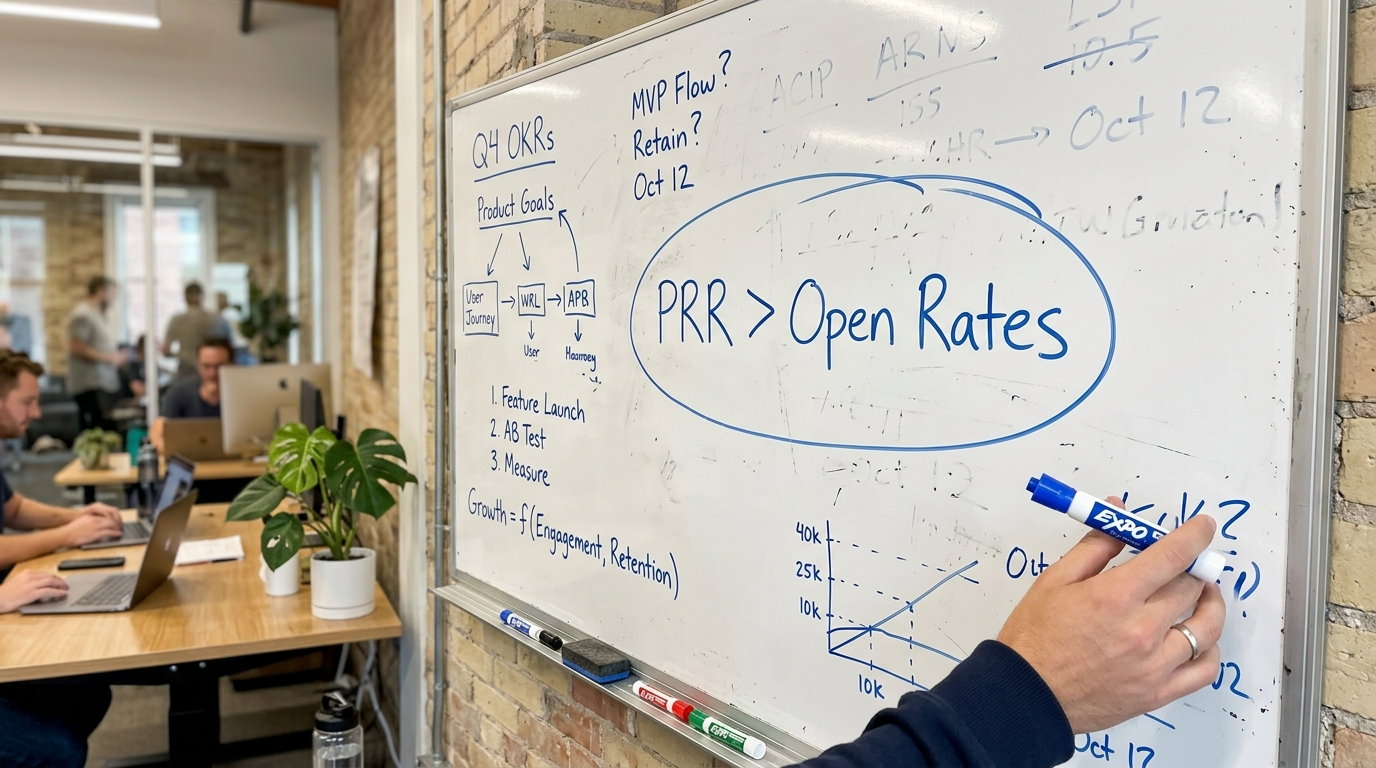
Key 2026 Pivot: Success is no longer measured by volume, but by Positive Reply Rate (PRR) and staying under the 0.3% spam threshold mandated by major mailbox providers.
What AI-Powered Outbound for SaaS Actually Means
AI-powered outbound for SaaS is a pipeline generation approach that uses artificial intelligence to research prospects, detect buying signals, personalize messaging, orchestrate multi-channel sequences across email and LinkedIn, and protect deliverability. The goal: a small team (or even one experienced operator) generates qualified meetings without needing a large SDR headcount.
The “AI-powered” part does not mean fully autonomous. It means AI handles the tasks that used to require armies of junior reps: finding the right accounts, pulling relevant research, drafting first-pass messages, and deciding when to send. Humans still set the ideal customer profile, craft the offer, quality-check every message, and manage conversations once they start.
You will sometimes see this called “AI SDR,” “AI agents for outbound,” or “AI outbound sales system.” These terms overlap but carry different connotations. “AI SDR” implies full replacement of a human sales development rep, which overpromises what the technology reliably delivers today. The more accurate framing, supported by McKinsey’s analysis of generative AI in B2B sales, is that AI augments sellers and becomes daily infrastructure rather than a complete replacement. For a deeper look at what traditional SDRs do and how this model compares, see this breakdown of what an outbound SDR is.
What it is not: spray-and-pray at scale. The 2024 to 2026 inbox environment punishes volume without relevance. It is also not fully automated LinkedIn outreach. LinkedIn’s policies explicitly prohibit bots, scraping, and automated messaging through third-party tools, and practitioners report restrictions and bans when they violate those rules.
Why This Matters Now
Three shifts have made AI-powered outbound for SaaS companies not just useful but necessary.
Gmail and Yahoo’s Bulk-Sender Rules Changed Everything
Starting in February 2024, Google announced strict new requirements for anyone sending bulk email: full authentication (SPF, DKIM, DMARC), header-level one-click unsubscribe per RFC 8058, and staying under a spam-complaint threshold. Yahoo followed a similar timeline, enforcing one-click unsubscribe from June 2024.
While Google’s official blog post does not publish a specific complaint-rate number, reputable email infrastructure providers like Mailgun widely cite 0.3% as the practical ceiling. Cross that line and your emails stop reaching inboxes.
This means cold outbound can no longer be engineered around volume alone. Every domain, every message, every follow-up cadence must be designed to stay under that threshold.
The Shift in SaaS Outbound Requirements
| Feature | Legacy Outbound (Pre-2024) | AI-Powered Outbound (2026) |
| Primary Metric | Open Rates | Positive Reply Rate (PRR) |
| Volume Strategy | High Volume (100+ daily/inbox) | Low Volume (20-30 daily/inbox) |
| Personalization | Name/Company tags | Signal-based (e.g., "Congrats on X hire") |
| Spam Control | Reactive (wait for bounces) | Proactive (RFC 8058 & Postmaster) |
| Tech Stack | CRM + Basic Sequencer | AI Research Agents + Clay/Apollo + Warmers |
Apple Mail Privacy Protection Broke Open Tracking
Apple’s Mail Privacy Protection (MPP) auto-loads tracking pixels, which means open rates are now inflated and unreliable for anyone whose prospects use Apple Mail. Litmus documents this extensively, separating Apple-impacted opens in their analytics to show just how distorted the numbers are.
If your outbound team still optimizes around open rates, they are optimizing around noise.
Inbox Placement Is the Hard Part
According to Validity’s 2025 deliverability benchmark, global inbox placement sits around 84%. That means roughly one in six legitimate emails never reaches the primary inbox. For cold outbound, where sender reputation is thinner, the number is likely worse.
These three forces together mean that AI-powered outbound for SaaS teams must treat deliverability as infrastructure, not an afterthought. The teams that win are engineering relevance inside stricter rules, not just sending more.
Core Components of an AI-Powered Outbound System
A working system has five layers. Each one matters, and skipping any of them creates problems downstream.
1. ICP and Signal Definition
Everything starts with knowing who to contact and why now. AI can assist with research, data clustering, and pattern recognition, but the operator decides the ideal customer profile (ICP) and the offer.
The “why now” part increasingly depends on intent signals: behavioral indicators that suggest a company is actively researching solutions in your category. 6sense defines intent data as signals derived from content consumption, search behavior, and review-site activity. G2 offers similar buyer-intent insights showing which companies are comparing products in your space.
A caveat: practitioners frequently challenge the value of purchased intent lists. Stacking multiple signal types (intent data plus first-party signals like website visits, plus public cues like job postings or funding announcements) tends to produce more reliable targeting than any single source alone.
How AI Converts Signals into Pipeline
To win in 2026, your AI shouldn't just "personalize"; it must "contextualize." Here is the logic flow for a high-performing agent:
The Signal: AI detects a target account just hired a VP of Engineering (via LinkedIn/GitHub).
The Research: Agent scrapes the VP’s past interviews or "About" section for their specific philosophy on [Your Category].
The Hook: AI drafts a 1-sentence opener: "Saw your recent interview on the X podcast where you mentioned scaling [Pain Point]—I built a tool that automates exactly that for [Competitor]."
The Human Check: The operator ensures the tone isn't "creepy" or overly robotic before hitting send.
2. Research and Personalization
This is where AI earns its keep. Large language models can pull recent prospect and company artifacts (press releases, LinkedIn posts, job listings, funding news) and draft openers or talking points using structured inputs like title, recent activity, and relevant use case.
But there is a clear line between what works and what doesn’t.
Practitioners on Reddit report that “AI writes the whole email” consistently underperforms compared to a model where AI handles research and drafts, then a human edits for accuracy and tone. Long AI-generated paragraphs, generic “noticed your post about…” openers, and over-personalization that reads synthetic all reduce reply rates.
The pattern that works: AI generates a research brief and a one-to-two sentence draft opener. The operator trims, rewrites for a human voice, and aligns the message to a specific offer. For more on crafting these messages effectively, this guide on cold email structure covers the mechanics in detail.
3. Sequencing and Channel Orchestration
A sequence (sometimes called a cadence) is a multi-step, multi-channel touch plan. Apollo’s documentation defines sequences as structured series of emails, LinkedIn tasks, calls, and other touchpoints spaced over time.
AI increasingly proposes next steps based on buyer behavior: suggesting when to follow up, which angle to try, or when to stop contacting someone who shows no engagement.
The key principle for AI-powered outbound in SaaS: keep sequences minimal and well-spaced. Practitioners on Reddit consistently recommend spacing follow-ups 5 to 7 business days apart rather than the 2-to-3-day cadence that was common before 2024. Aggressive follow-ups compress complaint rates and can trigger filtering.
A minimal viable sequence might look like: email one, wait five business days, email two with a different angle, LinkedIn connection request (sent manually), wait five more days, final email. Stop early on contacts who show zero engagement. To understand the full mechanics of how sequences work, see this explanation of what an email sequence is.
4. Deliverability and Infrastructure
This is the component most listicles and vendor roundups skip, and it’s the one that determines whether your messages actually get seen.
Authentication: SPF, DKIM, and DMARC must be properly configured on every sending domain. This is table stakes under Google’s bulk-sender requirements.
One-click unsubscribe: RFC 8058 defines a header-based mechanism (List-Unsubscribe-Post) that lets recipients opt out with a single click. Gmail and Yahoo require this for bulk senders.
Sending infrastructure: Use dedicated subdomains for outbound (not your primary domain). Verify every email address on your list before sending. Monitor your spam rate through Gmail Postmaster Tools.
Tracking decisions: Many experienced operators now disable open tracking (pixel-based) entirely. Practitioners on Reddit report that tracking pixels can contribute to spam classification, and since MPP makes open data unreliable anyway, the risk-reward calculation favors turning them off.
Mailbox provider routing: One insight that surfaces repeatedly in practitioner forums: Microsoft filtering behaves differently than Gmail. Teams with Outlook-heavy audiences report better placement when they route through Microsoft 365-based sending infrastructure rather than Google Workspace.
Expert Implementation Note: > If you are sending over 5,000 emails a day across your subdomains, your DMARC policy should move from
p=nonetop=quarantineorp=reject. This signals to Google that you are a sophisticated sender, improving your "sender score" significantly.
5. Measurement
With MPP undermining opens and bot prefetching further distorting the signal, effective measurement for AI-powered outbound in SaaS requires different KPIs:
Reply rate: The percentage of contacted prospects who respond.
Positive reply rate: The percentage who respond with interest (not just “remove me”).
Qualified meetings booked: The metric that actually connects to revenue.
Spam complaint rate: Monitored through Gmail Postmaster. Stay well under 0.3%.
Open rate is now a weak proxy at best. Practitioner consensus across multiple forums supports abandoning opens as a primary KPI and shifting attention entirely to replies and outcomes.
How a Modern Operator-Plus-AI Workflow Runs
Here is what AI-powered outbound for SaaS looks like in practice, week to week.
Layer 1: Signal-Triggered List Generation

Each week, the operator (or their AI tooling) generates a fresh account list based on ICP fit plus active signals. Examples: a target account viewed your G2 category page, a company posted a job for a role your product replaces, a prospect’s company just raised a round.
AI clusters these accounts by likely pain points. The operator reviews the list, removes poor fits, and approves it for outreach. G2’s buyer intent data is one source for these signals, but always validate with additional context.
Layer 2: AI Research and Draft Generation
For each approved account, AI agents pull recent artifacts: press mentions, LinkedIn posts, company blog updates, hiring patterns. They generate draft openers using structured prompts.
The operator’s job: trim each draft to one or two human-sounding sentences and align it to the specific offer. Kill anything that reads like a template. Clay’s examples of AI email personalization show how this process works in practice.
Layer 3: Conservative Sequencing
Prospects are enrolled into a minimal sequence: two to three emails over 10 to 14 days, plus a manual LinkedIn connection request where appropriate. Follow-ups vary the angle (different pain point, different proof point) rather than just “bumping” the same message.
Stop early on contacts who show no signal of engagement. Every message to an uninterested recipient is complaint risk with no upside.
Layer 4: Deliverability Monitoring
The operator checks Gmail Postmaster daily during active sends. If the spam rate creeps toward 0.3%, they slow volume immediately. Practitioners consistently advise that once a domain crosses that threshold, it’s better to retire and restart than to try to rehabilitate a poisoned reputation.
Layer 5: Feedback and Iteration
AI summarizes replies and updates the CRM. The operator reviews every positive reply, identifies patterns in what’s working (which signals, which angles, which ICPs), and adjusts prompts, targeting, and offers accordingly. This feedback loop is where the system gets smarter over time.
Tool Categories in Plain English
The tooling for AI-powered outbound for SaaS companies falls into four categories.
Sales Engagement Platforms (SEPs)
These automate and track multi-channel sequences. Examples include Apollo, Outreach, and Salesloft. Most now include AI assistants for drafting and next-best-action suggestions. They are the orchestration layer, where sequences live and send.
Data and Intent Providers
These identify in-market accounts and surface behavioral signals. 6sense and G2 are prominent examples. They answer the question “who should we contact right now?” but their data quality varies. Validate intent signals against first-party evidence before treating them as gospel.
Research and Personalization Assistants
AI-driven workflows that extract prospect and company data, then generate personalized draft messages. Clay is a well-known example. These tools are most valuable when their output is treated as a first draft, not a final product.
Deliverability Tooling
DMARC monitoring services, list verification tools, Gmail Postmaster, and tools that help implement RFC 8058 one-click unsubscribe headers. Less exciting than AI-generated messages, but arguably more important to outcomes.
Pitfalls, Myths, and Platform Rules
Myth: “AI Can Write the Whole Email”
It can, but it shouldn’t. Testing across practitioner communities consistently shows that fully AI-written cold emails underperform the hybrid approach (AI research plus human editing). The telltale signs of a fully AI-generated email, such as overly smooth prose, generic compliments, and formulaic structure, are increasingly recognized by recipients. They delete without reading or, worse, report as spam.
Myth: “Open Rates Are a Reliable Metric”
They were. They aren’t anymore. Between Apple MPP auto-loading pixels and various bot prefetching behaviors, open rate data is unreliable. Continuing to optimize around opens is like navigating with a broken compass.
Myth: “LinkedIn DMs Can Be Automated Safely at Scale”
LinkedIn’s policies prohibit third-party automation tools for connection requests and messages. Practitioners report account restrictions and outright bans from automation-like behavior. The safe approach: use AI to research prospects and draft messages, then send everything manually through the LinkedIn interface. For a complete guide to doing LinkedIn outreach the right way, this resource on LinkedIn prospecting covers the territory.
Myth: “Seed Tests Prove Deliverability”
Seed-based inbox placement tests (sending to a panel of test addresses) can be useful for diagnosing gross problems, but they do not reflect real-world deliverability. Gmail’s filtering is personalized and contextual. A 95% seed test result does not mean 95% of your actual cold emails reach inboxes.
CAN-SPAM Compliance (US Context)
Cold B2B email is legal in the United States under CAN-SPAM, provided you follow the rules: truthful headers and subject lines, a physical mailing address, and an opt-out mechanism that you honor promptly. CAN-SPAM is the legal floor, not the performance ceiling. Mailbox-provider rules (Gmail, Yahoo, Microsoft) are stricter and matter more for actually reaching inboxes.
Quick-Start Checklist for SaaS Teams
For teams ready to build an AI-powered outbound system for SaaS, here is a practical first-30-days plan.
Week 1: Infrastructure
Set up SPF, DKIM, and DMARC on all sending domains
Configure dedicated subdomains for outbound (do not send from your primary domain)
Implement header-level one-click unsubscribe per RFC 8058
Register for Gmail Postmaster Tools and set up monitoring
Turn off pixel-based open tracking
Week 2: Targeting
Define one high-fit ICP segment with clear criteria (industry, company size, buyer role, geography)
Choose one or two signal triggers (e.g., G2 category visits, recent funding, job postings)
Build an initial list of 50 to 100 accounts that match both ICP and active signals
Verify every email address before loading into your sequencer
Week 3: Messaging and Sequencing
Write one core email angle tied to a specific pain point and your offer
Use AI to generate personalized openers for each prospect, then edit every one manually
Build a minimal sequence: two to three touches over 10 to 14 days
Add one manual LinkedIn connection request with a personalized note
Pre-define what counts as a “positive reply” so measurement is consistent
Week 4: Launch, Monitor, and Iterate
Begin sending at conservative volume (20 to 30 per day per mailbox)
Check Postmaster spam rate daily
Track replies, positive replies, and meetings booked
Review all positive replies to identify patterns in targeting and messaging
Adjust prompts, targeting, and sequence structure based on what you learn
For a broader foundation on cold outreach principles, this cold outreach guide covers the fundamentals that underpin everything above. And if you want more tactical advice on writing messages that get replies, see this guide on how to write a cold email.
Mini-Glossary: Key Technical Terms
SPF (Sender Policy Framework): A DNS record that specifies which mail servers are authorized to send email on behalf of your domain.
DKIM (DomainKeys Identified Mail): A cryptographic signature added to outgoing emails that lets receiving servers verify the message was not altered in transit.
DMARC (Domain-based Message Authentication, Reporting, and Conformance): A policy built on SPF and DKIM that tells receiving servers what to do with unauthenticated email and provides reporting.
RFC 8058: The IETF standard for one-click unsubscribe via email headers. Uses a List-Unsubscribe-Post header that lets recipients opt out without visiting a webpage.
Gmail Postmaster Tools: Google’s dashboard for monitoring your domain’s spam rate, authentication status, and delivery errors with Gmail recipients.
MPP (Mail Privacy Protection): Apple’s feature that auto-loads email content (including tracking pixels) regardless of whether the recipient actually opens the email, making open-rate data unreliable.
Sequence/Cadence: A structured series of outreach touchpoints (emails, LinkedIn messages, calls) spaced over a defined period, managed through a sales engagement platform.
Intent Data: Behavioral signals (content consumption, search activity, review-site visits) that suggest a company is actively researching solutions in a given category.
When to Consider a Founder-Led AI-Powered Outbound Partner
Building and operating an AI-powered outbound system for SaaS requires overlapping skill sets: ICP strategy, messaging, technical infrastructure, deliverability engineering, AI tooling, and ongoing optimization. Many SaaS teams, especially those between seed and Series B, don’t have someone who can do all of that well.
That is where working with an experienced outbound operator makes sense. Instead of hiring a full SDR team or engaging a traditional agency where strategy gets sold by a senior person and executed by juniors, some teams work directly with a single experienced operator who handles strategy and execution together.
SalesPipe offers exactly this model. Clients work directly with founder Rob Whitley on ICP definition, messaging, outbound infrastructure, cold email, LinkedIn outreach, deliverability, and qualified meeting generation. AI increases the scale and efficiency of research, personalization, and operations, but the strategic thinking and quality control come from someone with deep outbound experience.
This sits between consulting and agency work: you get both the advisory layer and hands-on implementation, without the ramp time and overhead of building an in-house team. For teams comparing this approach to traditional outsourced SDR models, this analysis of how outsourced SDR is evolving provides useful context.
If you want a founder-led partner who builds the infrastructure, protects deliverability, and runs outbound with AI, apply to work with SalesPipe.