Founder-Led Outbound With AI in 2026: 7-Step GTM Playbook
Learn founder-led outbound with AI to build pipeline fast. 7-step 2026 playbook, 2024 deliverability rules, and tools to book meetings—start now.

TL;DR
Founder-led outbound with AI is a go-to-market motion where the founder personally runs early prospecting and sales conversations, using AI tools to handle research, personalization drafts, and operations at scale. It works because founders carry unmatched credibility and product context, while AI compresses the busy work that normally requires a full SDR team. The key is treating AI as a prep engine (not your voice), keeping lists small and precise, and following deliverability rules that changed significantly in 2024. Expect 3 to 6% reply rates on cold email when done well, and plan to run this motion for at least 90 days before deciding whether to hire.
Quick Answer: What is Founder-Led AI Outbound?
Founder-Led Outbound with AI is a go-to-market strategy where a founder uses Artificial Intelligence to automate prospect research, data enrichment, and initial drafting while maintaining personal control over the sales narrative. In 2026, this motion is defined by three pillars:
AI-Powered Intelligence: Using tools like Clay or Apollo to identify "buying triggers" (e.g., new hires, tech stack changes).
Human-in-the-Loop Personalization: Using AI to find the insight, but a human to write the final hook.
Strict Deliverability: Adhering to 2024+ sender requirements (SPF, DKIM, DMARC) to maintain a <0.3% spam rate.
What “Founder-Led Outbound with AI” Actually Means
Founder-led outbound with AI is a pipeline generation approach where the founder personally drives prospecting, outreach, and early sales conversations while using AI to accelerate the surrounding work: research, targeting, personalization, sequencing, and measurement.
The goal is not to automate yourself out of the sales process. It is to validate your ideal customer profile, generate qualified meetings, and build a repeatable playbook before (or instead of) hiring SDRs or outsourcing to an agency. Predictable Revenue’s AI Outbound Playbook frames this well: “AI assists. You direct.”
This distinction matters. A founder-led outbound motion powered by AI is fundamentally different from buying an “AI SDR” tool and hoping it replaces human judgment. It is also different from the traditional outsourced SDR model where strategy is sold by a senior person and execution is handed to juniors. In this model, the founder stays in the loop on every conversation that matters.
Why This Motion Works in 2026
Three forces make founder-led outbound with AI the most practical early-stage GTM approach right now.
Founders close early deals faster
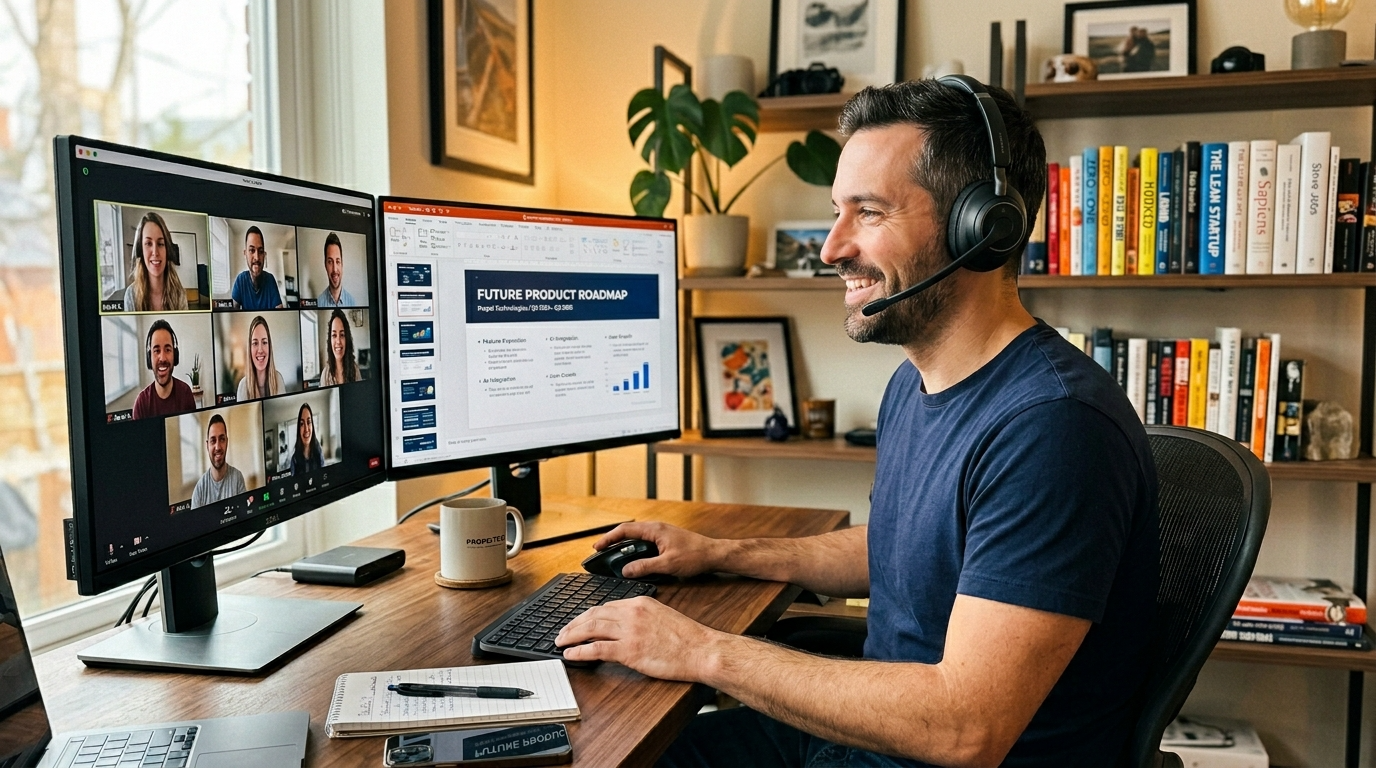 kets are not buying a product. They are buying a belief: that this company understands their problem, that the solution will work, and that leadership will stick around to iterate. A founder can address all three in a single conversation because they carry the full context of the product, the roadmap, and the company’s direction.
As GTMnow’s founder-led sales playbook puts it, modern sales is consultative, and founders are uniquely equipped for it. They can change scope, adjust pricing, or commit to a feature in real time. No SDR or agency rep can do that.
AI turns founder time into output
Before AI tooling matured, founder-led outbound meant spending hours on LinkedIn stalking prospects, manually writing every email, and maintaining spreadsheets. The math did not work past 20 or 30 prospects per week.
Now, AI compresses the research and prep cycle dramatically. Tools like Clay can pull hiring signals, funding rounds, tech stack changes, and recent LinkedIn activity into a structured view in minutes. LLMs can draft first-line personalization from public sources. The founder’s job shifts from data gathering to editing, reviewing, and having real conversations.
| Task | Traditional Outbound (Manual) | Founder-Led AI Outbound (2026) | Time Saved |
| Prospect Research | 15 mins/prospect (LinkedIn/Google) | 10 seconds (Clay/Enrichment APIs) | ~98% |
| Email Personalization | Manual drafting (5-10 mins) | AI-drafted hooks based on triggers | ~80% |
| List Cleaning | Manual spreadsheet deduplication | Automated CRM & intent-data syncing | ~100% |
| Deliverability | Guesswork & "Warm-up" tools | Technical DNS monitoring & sub-domains | High Risk Reduction |
The inbox rules changed everything
Beginning in February 2024, Gmail and Yahoo began enforcing new requirements for bulk senders: SPF, DKIM, and DMARC authentication; one-click unsubscribe headers; and a hard cap of 0.3% on user-reported spam complaint rates. Senders who exceed that threshold become ineligible for mitigation and risk having their emails rejected outright.
This killed spray-and-pray outbound. The founders and teams still blasting 500 emails a day from poorly configured domains are landing in spam folders. But for founders running tight, well-targeted campaigns from properly authenticated infrastructure, the playing field actually improved. Less noise in the inbox means better signals get through.
Expert Tip: In 2026, the "AI SDR" is a commodity. The "Founder Voice" is the scarcity. Use AI to buy back your time, not to hide your personality.
When to Use Founder-Led Outbound (vs. Hiring SDRs or an Agency)
The decision is simpler than most people make it.
Use founder-led outbound with AI when:
You are pre-product-market-fit or early post-PMF and your ICP is still evolving
You need qualified meetings in the next 30 to 90 days without a 3-month SDR ramp
You want to build a repeatable playbook before hiring anyone into a sales role
Your budget cannot absorb the cost of a full-time SDR (salary, tools, ramp time, management overhead)
Consider hiring or outsourcing when:
You have closed 10+ deals through a documented, repeatable process
Your ICP, messaging, and objection handling are codified
You need more volume than one person can handle, even with AI
Practitioners on Reddit are blunt about the math. One thread on r/B2BSaaS breaking down the cost of hiring a first SDR showed that months one through three often produce a brutal cost-per-meeting because of ramp time, training, and partial output. Several founders reported spending $15,000 to $25,000 before seeing consistent pipeline from a new hire. A founder-led AI motion during that same period, using existing tools and 5 to 10 hours per week, typically produces meetings at a fraction of that cost.
For context on how the outbound SDR role traditionally works and where it breaks down, that comparison is worth understanding before committing to a hire.
The 2026 Founder-Led AI Tech Stack
To execute this playbook, you don't need a massive budget. You need an integrated stack:
Data & Signals: Sales Navigator (Intent) + Clay (Aggregation).
Execution: Instantly.ai or Smartlead (for multi-inbox scaling).
Writing: Claude 3.5 Sonnet or GPT-4o (via API for better "human-sounding" drafts).
Deliverability: GlockApps or DeBounce (to ensure 99%+ inbox placement).
The Operating Framework: 7 Steps to Run This Week
This framework is drawn from PMGuru’s outbound method for founder-led companies and adapted with current AI tooling and deliverability requirements. It is designed for a founder spending 5 to 10 hours per week on outbound.
Step 1: Define a crisp ICP in one sentence
Pick 3 to 5 attributes that describe your best-fit buyer, plus one clear disqualifier. Write it as a single sentence you could say out loud.
Example: “Series A to B B2B SaaS companies with 50 to 200 employees, selling to enterprise, with no dedicated outbound function, excluding companies with an existing outsourced SDR contract.”
This sentence becomes the filter for every account you add to your list. If a prospect does not match, they do not go on the list. Period.
Step 2: Build a finite, founder-workable list
Start with 300 to 500 accounts total. Not 5,000. Not “as many as we can find.”
Tier them:
Tier 1 (roughly 50 accounts): Your dream prospects. These get the most manual research and personalization.
Tier 2 (roughly 150 accounts): Strong fit, AI-assisted personalization with founder review.
Tier 3 (roughly 200 to 300 accounts): Good fit, templated with one personalized variable.
Use LinkedIn Sales Navigator for identification and one enrichment tool (Apollo, Clay, or similar) for contact data and signals. The constraint is intentional. A finite list forces precision over volume, which is where founder-led outbound wins.
Step 3: Design a short, multi-channel sequence
Three email touches over roughly 10 days, with LinkedIn woven in between.
A common winning pattern practitioners report on r/coldemail: send the first email, then send a LinkedIn connection request (without a note) two to three days later, then a second email, then a short LinkedIn DM if they accepted, then a final email. This creates familiarity across channels without being aggressive.
Why three touches instead of five or seven? Operator data shared on r/b2bmarketing shows that 3-step sequences outperformed 5-email sequences by roughly 50% on reply rate in one practitioner test. Most positive replies come in the first two touches anyway. Longer sequences often just generate unsubscribes.
For a deeper look at how to structure an email sequence that balances persistence with restraint, that foundational knowledge is worth building.
Step 4: Make AI your prep engine, not your voice
This is where most founders go wrong. They hand the entire email to an AI tool and send whatever comes back.
Here is what AI should do:
Surface one real, specific hook per prospect (a recent hire, a funding round, a product launch, a LinkedIn post)
Draft a first line that references that hook naturally
Enrich contact data and verify email addresses
De-duplicate across lists
Triage replies into buckets (interested, objection, not now, wrong person)
Here is what the founder should do:
Edit every Tier 1 email personally for tone and accuracy
Review Tier 2 drafts for anything that sounds fake or generic
Write all replies to interested prospects
Handle every live conversation
Practitioners on r/salesdevelopment are increasingly vocal that AI-generated personalization lines are being recognized and ignored by recipients. The phrase “I noticed you recently…” followed by something scraped from LinkedIn has become a signal that the email is automated. The fix is simple: use AI to find the insight, then write the line yourself in 10 seconds. Your voice is the whole point of founder-led outbound.
For practical templates on how to write a cold email that sounds human, those fundamentals apply directly here.
Step 5: Protect deliverability before you send a single email
None of this works if your emails land in spam. Set up infrastructure before you write a word of copy.
Domain strategy:
Use a dedicated sending domain or subdomain for outbound (something like outreach.yourbrand.com). This isolates your outbound reputation from your primary domain. Postmark’s sending best practices recommend this separation explicitly.
Authentication:
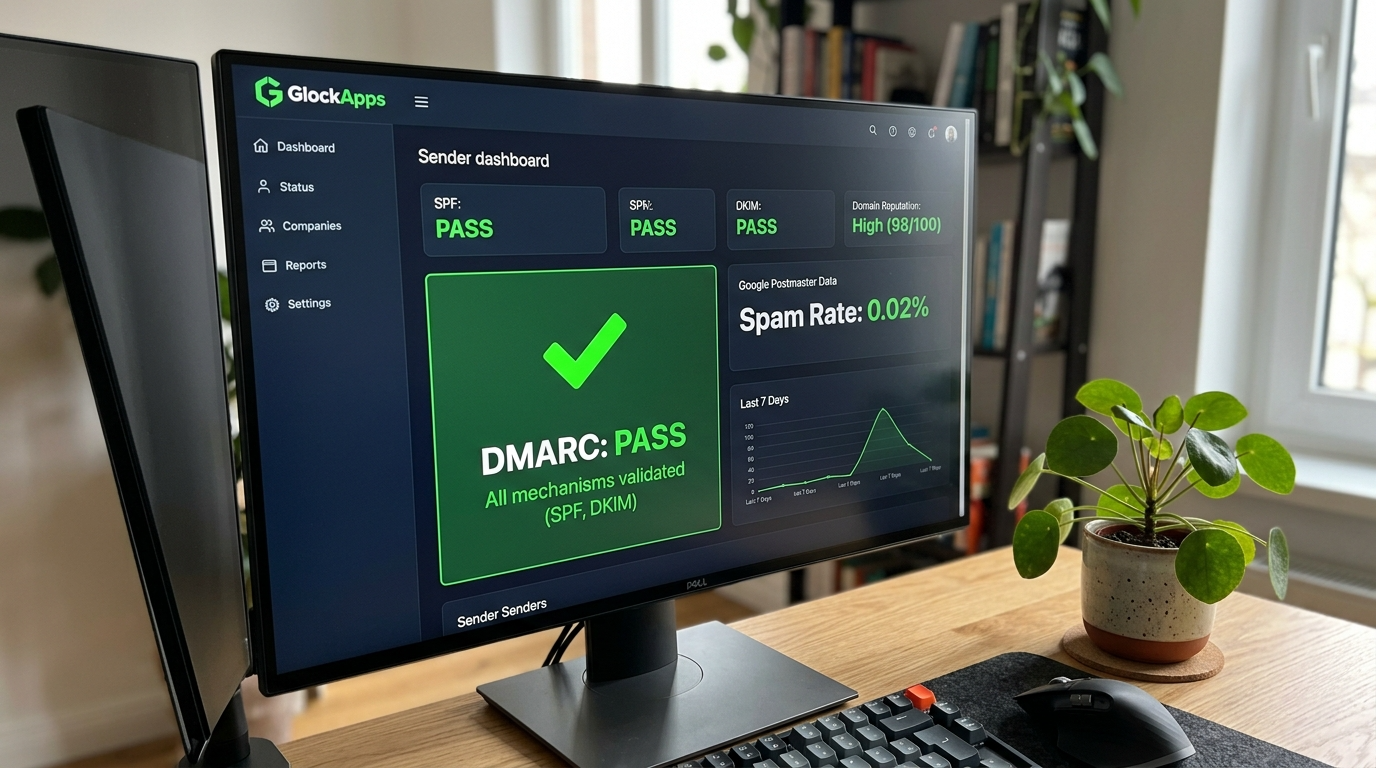
Configure SPF, DKIM, and DMARC for every sending domain. This is not optional. Gmail’s sender guidelines make authentication a baseline requirement, and unauthenticated mail is increasingly rejected outright.
One-click unsubscribe:
Add a List-Unsubscribe header (per RFC 8058) to every outbound email. Some founders resist this because “it’s cold email, not a newsletter.” It does not matter. Under the 2024 bulk sender rules, lacking one-click unsubscribe hurts deliverability and makes you ineligible for mitigation if issues arise.
Volume and warming:
Start with 10 to 15 emails per day per inbox and ramp gradually over two to three weeks. Monitor your spam complaint rate in Gmail Postmaster Tools weekly. If it approaches 0.3%, stop and diagnose before sending more.
Step 6: Instrument and iterate weekly
Track four numbers every week:
Reply rate (total replies / emails delivered)
Positive reply rate (interested or meeting-booked replies / emails delivered)
Meetings booked
Cost per meeting (your time valued at an honest hourly rate, plus tool costs)
Prospeo’s 2026 cold email dataset shows reply rates clustering between 3.4% and 5.8%, with a North American average around 4.1%. Treat anything above 8% as exceptional, not expected. If someone shows you a screenshot claiming 15% reply rates, that is either a tiny sample, a warm list, or cherry-picked data.
When reply rates are below 3%, the problem is usually one of three things: wrong ICP (you are emailing people who do not have the problem), weak hook (the first line does not earn the second line), or bad timing (no trigger event). Tighten the list before rewriting copy.
Step 7: Decide when to stop being the sole seller
The founder-led phase should last at least 90 days. During that time, document everything: which ICP segments respond, which messaging angles work, what objections come up, and how deals close.
PMGuru’s framework suggests transitioning after you have closed at least 10 deals through a documented process. At that point, you have a playbook someone else can follow. Before that point, hiring an SDR means paying someone to figure out what you should have figured out yourself.
For a complete look at cold outreach strategy and execution, the tactical details build on everything in this framework.
What AI Does Well, and What Must Stay Human
The honest breakdown for 2026:
AI handles reliably:
Compiling intent signals (hiring pages, job postings, funding announcements, tech stack changes)
Drafting first-line personalization from public data
Enriching and verifying contact information
De-duplicating across lists and CRMs
Summarizing prospect profiles and company backgrounds
Triaging inbound replies by sentiment
Standardizing follow-up scheduling
AI handles poorly or dangerously:
Running fully autonomous conversations with complex B2B buyers
Making qualification judgments that require context
Handling objections that require flexibility or creativity
Building trust through genuine dialogue
Practitioners on r/B2BSaaS discussing the math on building outbound in 2026 consistently report that “AI SDR” tools positioned as full replacements underperform human-in-the-loop approaches for anything beyond simple, transactional sales. The teams getting the best results use AI for everything leading up to and following the conversation, but keep a human (ideally the founder) in the conversation itself.
This is the core principle of founder-led outbound with AI: the AI does the work around the conversation so the founder can focus entirely on the conversation.
Deliverability Checklist You Cannot Skip
This deserves its own section because it is the single most common failure point. Founders build great lists, write sharp copy, and then watch their emails disappear into spam because they skipped infrastructure.
Before sending any outbound email:
[ ] Dedicated sending domain or subdomain configured (not your primary company domain)
[ ] SPF record published and passing
[ ] DKIM signing enabled and verified
[ ] DMARC policy published (start with p=none, move to p=quarantine after monitoring)
[ ] One-click unsubscribe header (List-Unsubscribe) included in every email
[ ] Gmail Postmaster Tools configured and monitored
[ ] Sending volume ramped gradually (10 to 15 emails per day per inbox, increasing over 2 to 3 weeks)
[ ] Email verification run on every list before sending (bounce rate under 2%)
[ ] Spam complaint rate monitored weekly (hard line: under 0.3%)
Google’s sender guidelines FAQ is the primary reference here. These are not suggestions. They are requirements, and the consequences for ignoring them are immediate and measurable.
For founders who want this infrastructure handled for them, SalesPipe builds and manages the entire technical stack (domains, inboxes, warming, authentication, and monitoring) as part of its founder-led outbound service.
Benchmarks to Calibrate Your Expectations
Realistic numbers matter because unrealistic expectations cause founders to abandon working systems too early.
Reply rates:
2026 cold email data from Prospeo shows average reply rates between 3.4% and 5.8% across B2B campaigns. The North American average sits around 4.1%. Getting above 8% typically requires exceptional ICP fit, strong timing signals, and genuinely personalized messaging. It is possible but not the baseline.
Email length:
Shorter emails consistently outperform longer ones. Large-sample operator data shared across practitioner threads shows reply rates declining as word count rises past 100 to 150 words. The best cold emails are 50 to 80 words. Say one thing. Ask one question. For guidance on structuring a cold email for maximum clarity and reply potential, brevity is the through-line.
Sequence length:
Three-step sequences outperform five-step sequences in most founder-led contexts. One practitioner test showed roughly 50% higher reply rates from the shorter sequence. More touches do not mean more replies when the list is small and targeted.
Multi-channel lift:
Email-first sequences with LinkedIn follow-up outperform email-only. The pattern that works: email on day one, LinkedIn connection (no note) on day three, second email on day five, LinkedIn DM on day seven (if connected), final email on day ten. For a full breakdown of LinkedIn prospecting tactics, the channel-specific details matter.
| Metric | Industry Average (2026) | Target for Founders | Optimization Trigger |
| Open Rate | 40% - 50% | 70%+ | Check DNS/Authentication |
| Reply Rate | 4.1% | 5% - 8% | Tighten ICP / Better Hook |
| Spam Rate | <0.3% | <0.1% | Reduce volume/Increase quality |
| Sequence Length | 5-7 Touches | 3 Touches | High Unsubscribe = Too long |
Quick-Start Example: 50 Accounts in 2 Weeks
Here is what founder-led outbound with AI looks like in practice for a Tier 1 campaign.
Setup (Day 1 to 2):
Select 50 accounts from your ICP list. Use Clay or a similar tool to pull recent signals: new hires, funding, product launches, LinkedIn posts. Have your AI tool draft a one-line hook for each account based on the strongest signal. Review and edit every hook personally.
Sequence (Day 3 to 14):
Day 3: Send Email 1. Subject line: 5 words or fewer. Body: one personalized line referencing their signal, one sentence about the problem you solve, one clear question as a CTA. Total: 60 to 80 words.
Day 5: Send LinkedIn connection request. No note.
Day 7: Send Email 2. Different angle, same brevity. Reference something new if possible.
Day 9: If they accepted on LinkedIn, send a short DM (2 to 3 sentences max). If not, skip.
Day 12: Send Email 3. Final touch. Direct and simple: “Should I close the loop on this?”
Expected results with tight ICP:
At a 5 to 8% reply rate on 50 prospects, expect 3 to 4 replies. Of those, 1 to 2 should be meetings. That may not sound like much, but these are high-quality conversations with decision-makers who match your ICP exactly. Two meetings per two-week sprint, sustained over 90 days, gives you 12 to 15 qualified conversations. That is enough pipeline to close early deals and validate your playbook.
When Founder-Led Outbound with AI Needs a Partner
Some founders thrive running this motion alone. Others hit a wall at the infrastructure, tooling, or time commitment. The framework above works, but executing it well requires competence in ICP research, list building, email copywriting, domain configuration, deliverability monitoring, sequence design, and LinkedIn outreach, simultaneously.
If you want a senior outbound operator who handles the technical setup, AI-powered research, messaging, and multi-channel execution while you stay focused on the conversations that close deals, SalesPipe works directly with founders to run exactly this kind of motion. It is not an agency handing you off to junior reps. You work directly with the founder, Rob Whitley, on ICP, infrastructure, and ongoing optimization.