7 Best Cold Email Tools for Startups 2026 – Tested
See the best cold email tools for startups in 2026 — tested for deliverability, pricing, and data. Learn what to buy, what to skip, total costs.
TL;DR
The best cold email tools for startups in 2026 are Instantly (cheapest volume sending), Saleshandy (best budget all-in-one), Smartlead (best infrastructure control), Lemlist (best multichannel), Apollo.io (best prospecting data), Woodpecker (best deliverability), and Snov.io (best pre-revenue option). But the tool is only the third most important variable in cold email success. Deliverability infrastructure and data quality matter far more. Expect to spend 2-3x the advertised tool price once you factor in domains, inboxes, warm-up, and data verification.
Best Cold Email Tools for Startups (Quick Answer)
If you're looking for the best cold email software in 2026, the right choice depends on your startup stage rather than the number of features.
| Startup Need | Best Tool |
|---|---|
| Cheapest sending | Instantly |
| Best overall value | Saleshandy |
| Best deliverability control | Smartlead |
| Best multichannel outreach | Lemlist |
| Best prospect database | Apollo.io |
| Best inbox placement | Woodpecker |
| Best all-in-one for founders | Snov.io |
No cold email platform guarantees results. Success depends more on infrastructure, list quality, targeting, and messaging than the software itself. Most startups should budget 2-3× the advertised subscription price after adding domains, inboxes, and verified prospect data.
What Actually Determines Cold Email Success (It’s Not the Tool)
Here’s the uncomfortable truth that every tool vendor’s blog post conveniently skips: the sending platform is the third most important variable in whether your cold email campaigns work.
The hierarchy that actually drives results looks like this:
Deliverability infrastructure (domains, warm-up, SPF, DKIM, DMARC)
Data quality (verified emails, accurate targeting, bounce rates under 3%)
Targeting and ICP precision
Your offer and messaging
Personalization
The tool’s features
Practitioners on Reddit’s r/coldemail consistently reinforce this order. A properly warmed domain achieves 87% inbox placement and 4.1% reply rates, while the same emails from a new domain with no warm-up land in the inbox just 12% of the time. No amount of fancy tool features fixes bad infrastructure.
That said, you still need a good tool. The right one saves you hours per week, keeps your deliverability intact, and scales with your team. The wrong one bleeds money through hidden costs and credit traps.
This guide reviews the seven best cold email tools for startups honestly, then explains the parts that no software can handle for you. If you’re new to outbound entirely, start with our cold outreach guide for the full picture.
Want to skip the DIY learning curve entirely? Apply to work with SalesPipe and get founder-led outbound execution from day one.
What to Look for in a Cold Email Tool (Startup Edition)
Before comparing specific platforms, get clear on the five dimensions that actually matter for early-stage teams.
Deliverability features. At minimum, you need built-in warm-up, inbox rotation across multiple sending accounts, and automatic bounce detection. Tools that throttle sends when bounce rates spike will save your domain reputation. Without these, you’re flying blind.
Pricing model. This is where startups get burned. Three models dominate:
Flat-fee / volume-based (Instantly, Saleshandy, Smartlead): You pay based on email volume or active leads. Adding team members is usually free.
Per-seat (Lemlist, Apollo): Every new user adds $50-$150/month. Adding two SDRs can immediately add $100-$300/month before they send a single email.
Credit-based (Snov.io, Apollo): Credits get consumed by finding emails, verifying contacts, and sending. Costs become unpredictable.
For most startups, flat-fee models win. Per-seat pricing punishes growth.
Built-in data vs. bring-your-own. Some tools include contact databases. Others assume you’re importing verified lists. If you don’t have a data source, an all-in-one tool saves you from subscribing to a separate lead prospecting tool.
Multichannel capability. Email-only tools are cheaper but limit you. If your ICP responds better on LinkedIn, you’ll need a platform that supports both channels, or you’ll manage two separate tools with two separate data streams. For deeper thinking on LinkedIn outreach, see our guide on LinkedIn prospecting.
True cost beyond sticker price. Cold email platform pricing pages show only one of three cost layers. Add inbox infrastructure (domains, mailboxes, warm-up services) and prospecting data, and your real monthly spend is typically 2-3x the plan price. We’ll break this down in detail later.
Understanding what makes a strong email sequence also matters, because even the best tool can’t compensate for a poorly structured campaign.
Who This Guide Is For (And Who Should Skip It)
Cold email software isn't the right investment for every business.
This guide is best for:
SaaS startups
B2B agencies
Consultants
Recruiters
Service businesses
Seed-funded startups
Founder-led sales teams
You may not need these tools if:
You primarily sell to consumers
You rely on inbound marketing
Your market has fewer than 500 potential customers
You're sending occasional manual outreach
Most of your pipeline comes from referrals
Quick Comparison Table
| Tool | Starting Price | Best For | Pricing Model | Built-in Data | G2 Rating | |
|---|---|---|---|---|---|---|
| Instantly | $37/mo | Volume sending | Volume-based | 450M+ (add-on) | No | 4.8/5 |
| Saleshandy | $25/mo | Budget all-in-one | Volume-based | 700M+ (built-in) | No | 4.6/5 |
| Smartlead | $39/mo | Infrastructure control | Volume-based | No | No | 4.6/5 |
| Lemlist | $69/user/mo | Multichannel ABM | Per-seat | 600M+ (built-in) | Yes (native) | ~4.4/5 |
| Apollo.io | $49/user/mo | Prospecting data | Per-seat + credits | 210M+ (built-in) | Yes (native) | 4.8/5 |
| Woodpecker | $29/mo | Deliverability | Per-slot (prospects) | No | Add-on | 4.3/5 |
| Snov.io | $39/mo | Pre-revenue all-in-one | Credit-based | 500M+ (built-in) | Add-on ($62/mo) | 4.6/5 |
How We Evaluated These Cold Email Tools
We compared each platform using the criteria that matter most to startups rather than enterprise sales teams.
Our evaluation criteria
| Factor | Weight |
|---|---|
| Deliverability features | 30% |
| Pricing transparency | 20% |
| Ease of setup | 15% |
| Automation capabilities | 15% |
| Prospecting features | 10% |
| Scalability | 10% |
The 7 Best Cold Email Tools for Startups
1. Instantly
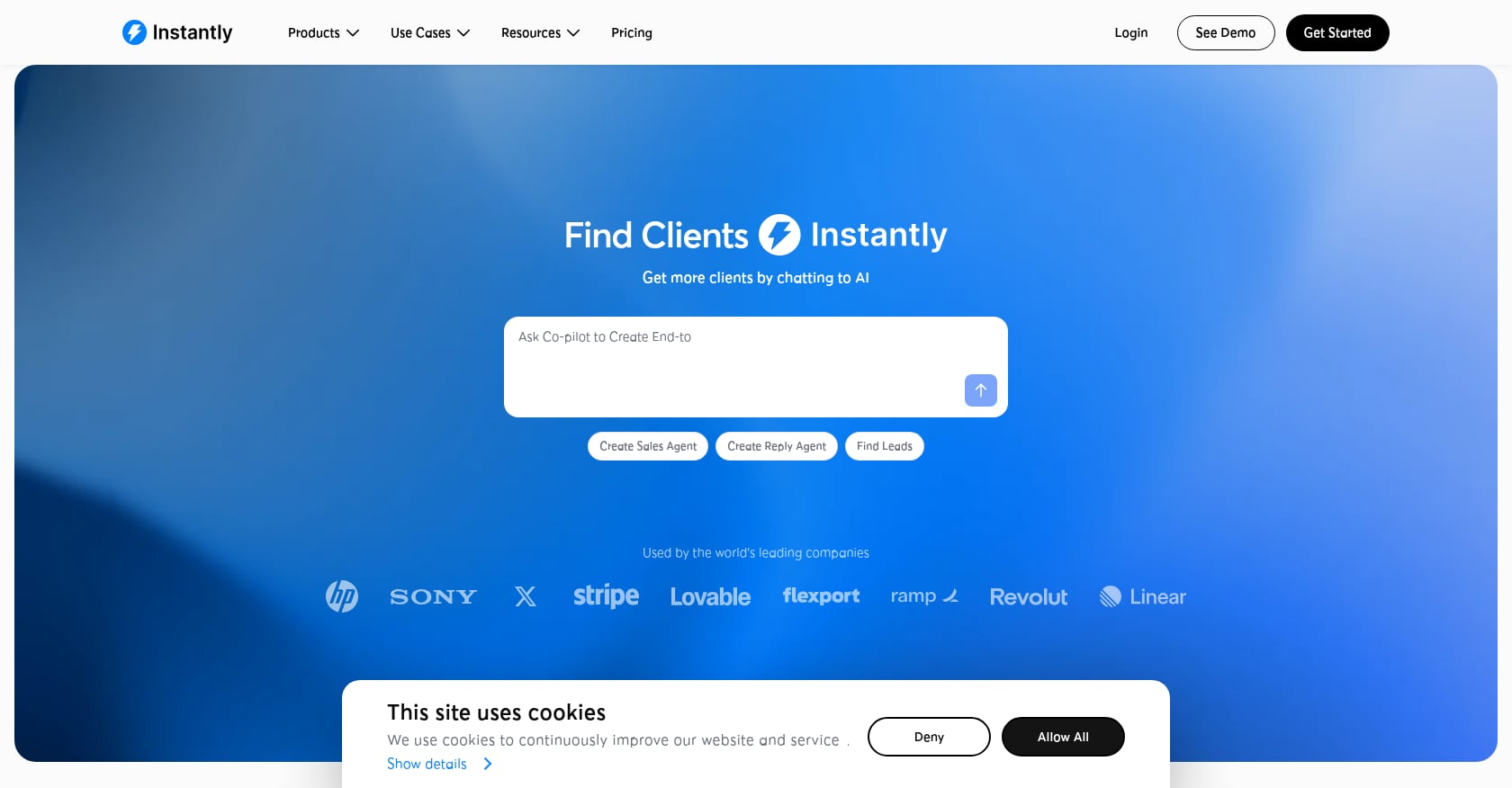
Best for: Solo founders and small teams under 1,000 prospects/month who want the simplest entry into cold email.
Instantly has become the default recommendation in startup circles, and for good reason. It does one thing extremely well: sending cold emails at volume with strong deliverability, at a price that doesn’t destroy early-stage budgets.
Pricing:
Growth plan: $37/month (annual) or $47/month (monthly). Includes unlimited email accounts, unlimited warm-up, 5,000 emails/month, and 1,000 active leads.
Hypergrowth bundle (with credits and CRM): $210/month annually.
Light Speed plan: $358/month, supporting 100,000 contacts and 500,000 emails/month.
Key features:
Unlimited connected email accounts on all plans
Built-in warm-up pool of 300,000+ real accounts
Unified inbox (Unibox) that aggregates replies across all sending addresses
Clean, beginner-friendly interface that requires almost no onboarding
Honest tradeoffs:
Email-only. No LinkedIn channel whatsoever. If you need multichannel outreach, you’re managing (and paying for) a second tool.
The $37-$47/month Growth plan provides only sending capability. No leads, no CRM, no AI features. The gap between advertised and actual cost is one of the largest in the market.
No built-in B2B database unless you pay for add-on credits. You need a separate data source.
What users say: Reddit consistently praises Instantly for its warmup infrastructure and scale. It’s the best pure sequencer if you already have clean, verified data. In head-to-head testing across communities, Instantly leads on UX and beginner friendliness. But the moment you need data, AI, multichannel, or advanced deliverability features, you start stacking subscriptions and the cost advantage disappears.
Bottom line: Instantly is the best starting point for startups whose only requirement is “send a lot of emails cheaply.” Just budget for outgrowing it.
2. Saleshandy
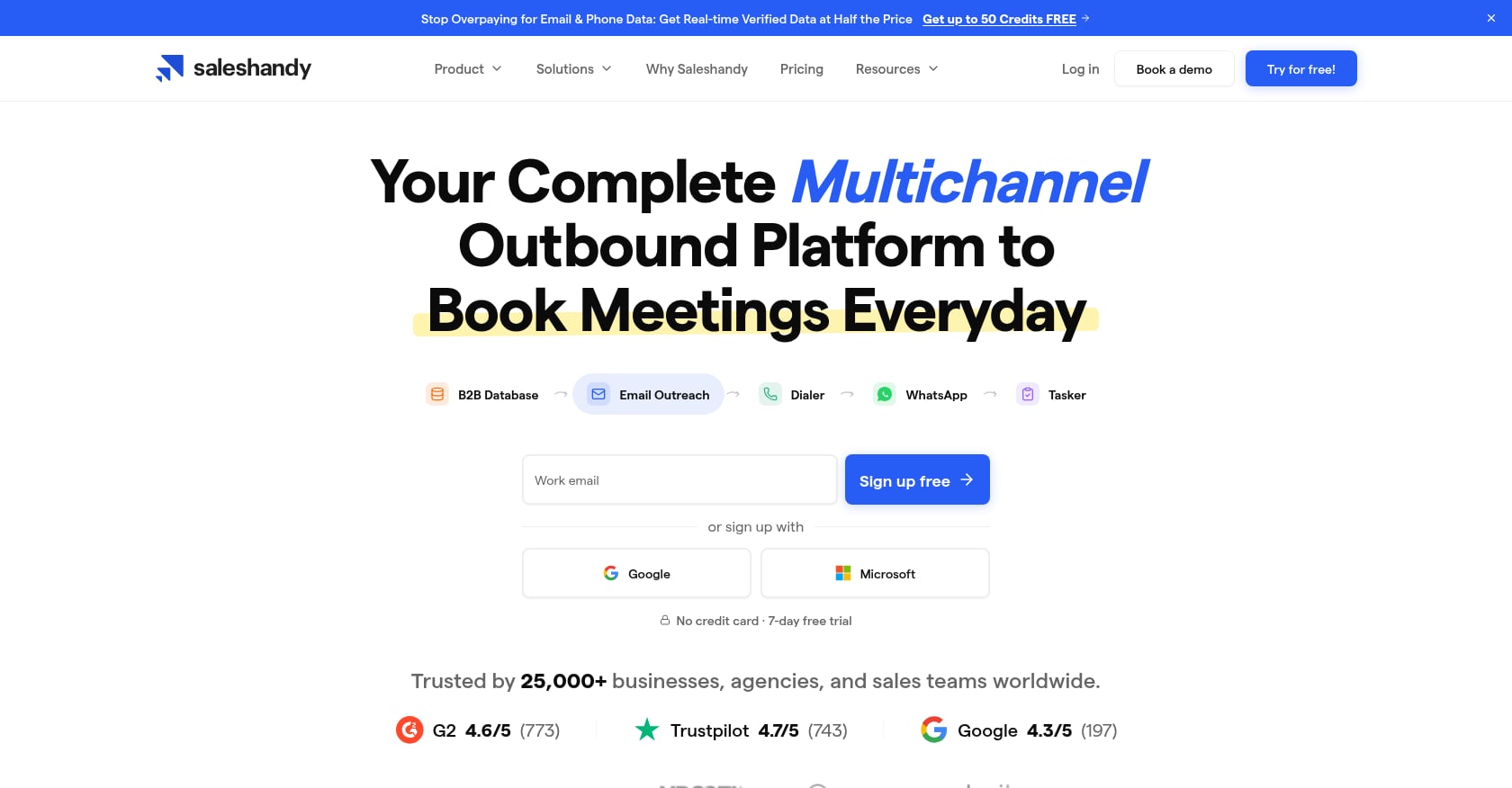
Best for: Budget-conscious startups that want prospecting data and sending in one platform under $70/month.
Saleshandy started as an email tracking tool in 2015, pivoted to cold email outreach around 2021, and has since grown into a full cold email platform. For startups watching every dollar, it offers the best price-to-feature ratio in the market.
Pricing:
Outreach Starter: $25/month (annual billing). Caps at 6,000 emails and 2,000 active prospects per month.
Pro plan: $69/month. This is where real scale begins.
Unlimited email accounts included on all plans.
Key features:
Lead Finder with 700M+ contacts and 60M+ companies built in, no separate data subscription needed
Sequences, follow-ups, and tracking included from the Starter plan
Unlimited email accounts and sender rotation
A/B testing and spintax on Pro and above
Honest tradeoffs:
Limited personalization beyond merge fields. No intent signals or buying data integrations.
The Starter plan’s 2,000-prospect cap means most teams will need to upgrade to Pro quickly.
Interface is denser than Instantly’s, with more settings and options crammed into the UI. Power users prefer this; beginners sometimes feel overwhelmed.
What users say: In practitioner comparisons, Saleshandy consistently wins on price-to-feature ratio for teams under 10 seats. The bundled data is the key differentiator. You’re not paying $25/month plus $49/month for a separate data tool.
Bottom line: The cheapest all-in-one option for startups that don’t want to stitch together multiple subscriptions.
3. Smartlead
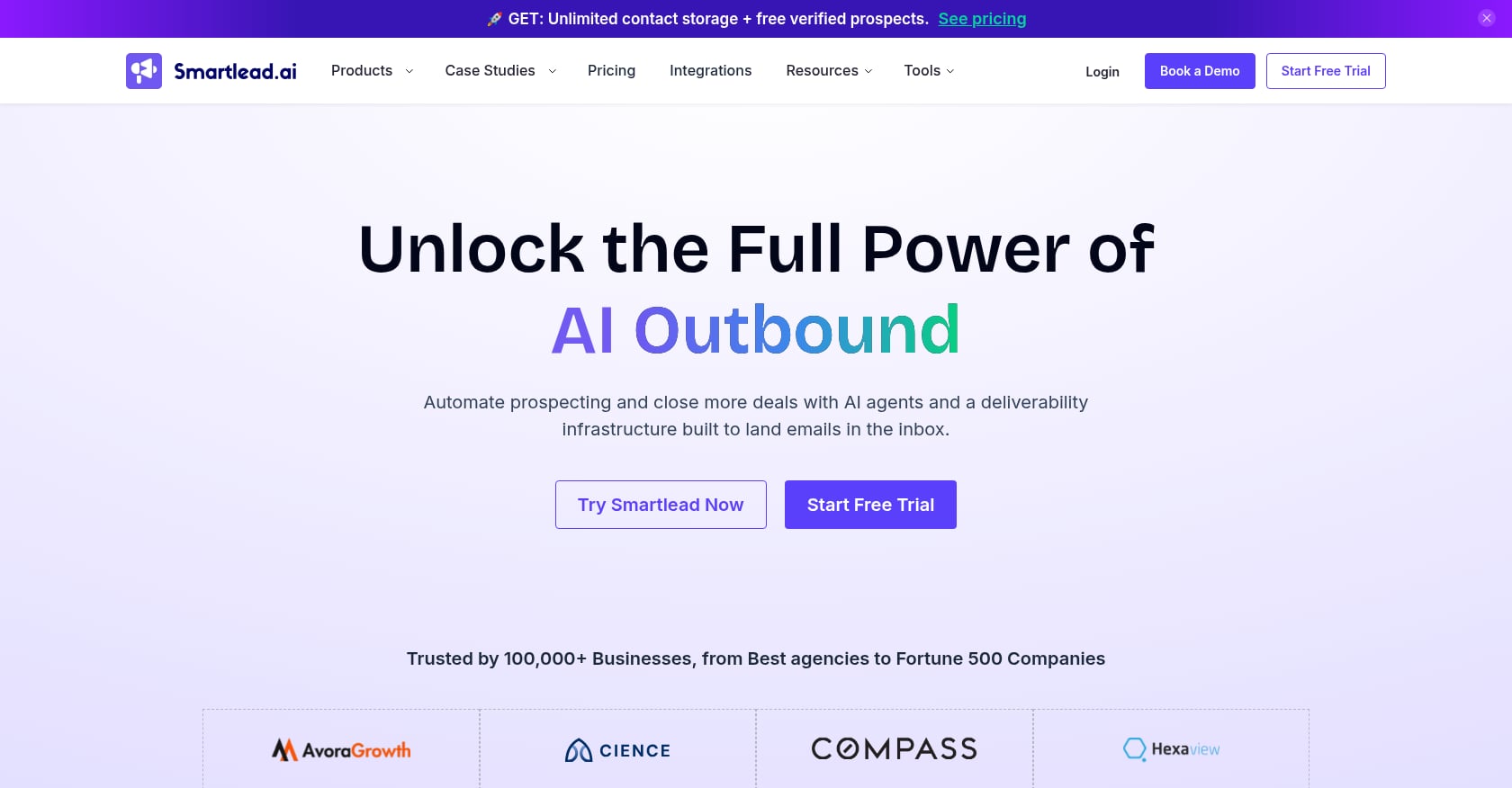
Best for: Technical founders, agencies, and teams that want deep infrastructure control and don’t mind a steeper setup curve.
Smartlead is the cold email tool for people who want to control every variable. While other platforms abstract away deliverability settings, Smartlead gives you the knobs and dials.
Pricing:
Basic: $39/month (2,000 active leads)
Pro: $94/month (30,000 active leads)
Custom: $174/month (12M active leads)
Add SmartDelivery for inbox placement testing ($49-$174/month) and a dedicated server ($39/server/month), and a properly configured setup runs $88-$250+/month.
Key features:
Dedicated server purchases directly inside the tool
Domain and mailbox purchasing via SmartSenders
Inbox placement testing through SmartDelivery
Rotating IP pools (which produced 4.8% reply rates vs. 3.2% average in one head-to-head test)
White-label portal and multi-client campaign management
Unlimited seats on all plans
Honest tradeoffs:
No built-in B2B database. You always need a separate tool (Clay, Sales Navigator, or Apollo) for lead sourcing.
The learning curve is real. Non-technical founders will struggle with the setup.
Add-on pricing means your monthly bill creeps up fast if you’re not tracking it carefully.
What users say: One Reddit user in r/coldemail put it bluntly: “If you want to control your deliverability, you need to control your infrastructure.” That captures Smartlead’s appeal perfectly. It attracts the kind of user who wants to understand what’s happening under the hood.
Bottom line: The best cold email tool for startups with technical founders who treat deliverability as an engineering problem, not a checkbox.
4. Lemlist
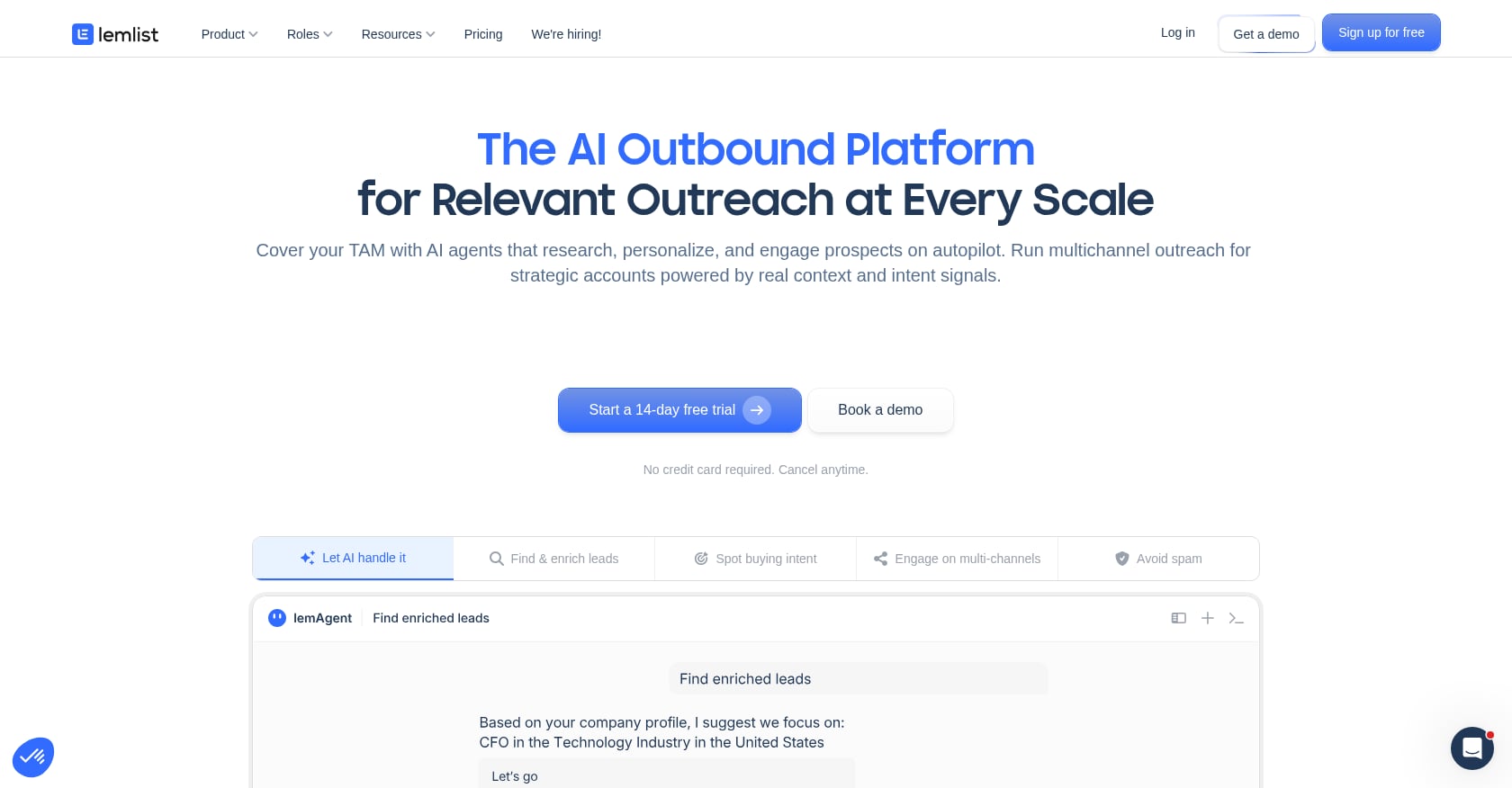
Best for: Startups running ABM-style outreach to small, high-value prospect lists who need email and LinkedIn in one tool.
Lemlist is the multichannel specialist. While most tools on this list are email-only, Lemlist natively combines email sequences with LinkedIn outreach, plus advanced personalization features that go well beyond basic merge fields.
Pricing:
Email Pro: $69/user/month (monthly) or $63/user/month (annual)
Multichannel Expert: $109/user/month (monthly) or $87/user/month (annual)
Real monthly bills typically run 30-50% above advertised base due to credit consumption
Key features:
Native LinkedIn outreach (profile visits, connection requests, messages) built into sequences
Dynamic variables, custom images, and personalized landing pages
600M+ lead database with email finder and phone finder included in every plan
Multi-step sequences combining email, LinkedIn, and manual tasks
Honest tradeoffs:
Per-seat pricing makes scaling expensive. A 3-person team on the Multichannel Expert plan pays $261-$327/month before any credits.
The credit system is the biggest hidden cost most teams don’t budget for. Finding emails, verifying contacts, and enriching data all consume credits.
The campaign builder and editor toolbar are not intuitive for beginners. Expect a real learning curve.
What users say: In practitioner testing, Lemlist consistently wins on multichannel sequence quality. The LinkedIn integration is genuinely native, not a bolted-on afterthought. But the per-seat pricing means it’s best reserved for small teams targeting high-LTV accounts where the cost per meeting justifies the spend.
Bottom line: The strongest multichannel option, but the pricing model punishes startups that try to scale headcount.
5. Apollo.io
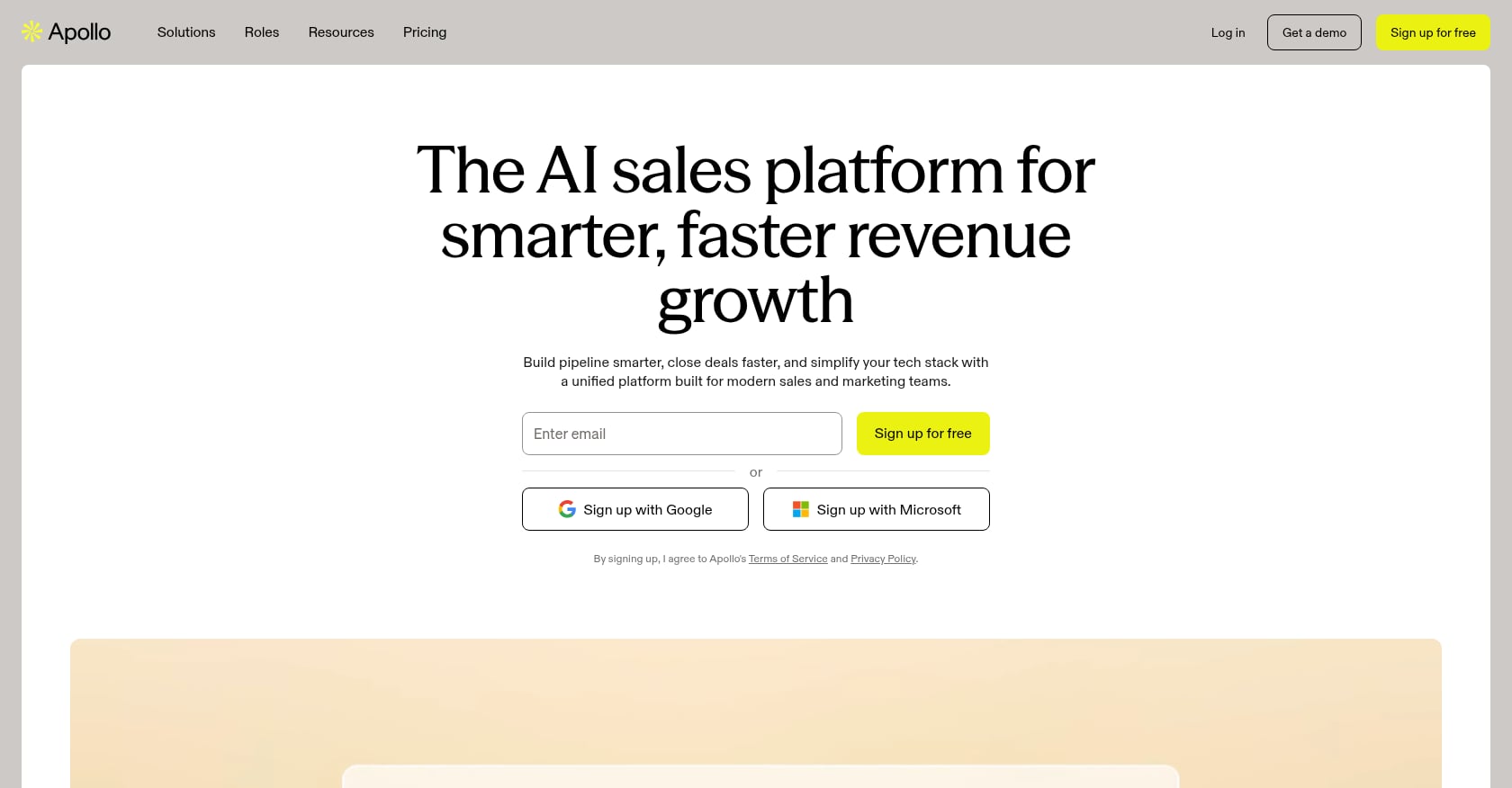
Best for: Startups that need a contact database first and will pair it with a dedicated sending tool for actual campaigns.
Apollo is primarily a B2B data platform with sequencing built on top, not the other way around. That distinction matters. It’s one of the best prospecting databases available, but its sending and deliverability capabilities lag behind dedicated cold email tools.
Pricing:
Free plan available with limited credits
Basic: $49/seat/month (annual) or $59/month (monthly)
Professional: $79/seat/month (annual) or $99/month (monthly)
Organization: $119/seat/month (annual), minimum 3 seats ($357/month minimum)
Actual costs often run 2-3x the advertised rate due to credit consumption and feature gates. Budget $150-$400/user/month for heavy outbound.
Key features:
210M+ contact database with robust filtering (industry, role, company size, technology stack, funding status)
Built-in sequencing, dialer, and task management
Intent data and job change alerts on higher tiers
Native LinkedIn integration
Honest tradeoffs:
Apollo discontinued its email warmup feature in 2024. You must use a separate warmup tool at every tier.
Deliverability is consistently weaker than dedicated sequencers. Reddit threads flag this repeatedly.
Email accuracy drops to 60-72% outside the US, which makes international prospecting risky without additional verification.
Per-seat plus credit-based pricing creates unpredictable bills.
What users say: Practitioners across forums treat Apollo as the place to build lists, not the place to send campaigns. The common workflow is to source and verify contacts in Apollo, then export to Instantly or Smartlead for actual sending.
Bottom line: Excellent as a data tool. Mediocre as a cold email sending engine. Use it for what it’s good at and pair it with a proper sequencer.
6. Woodpecker
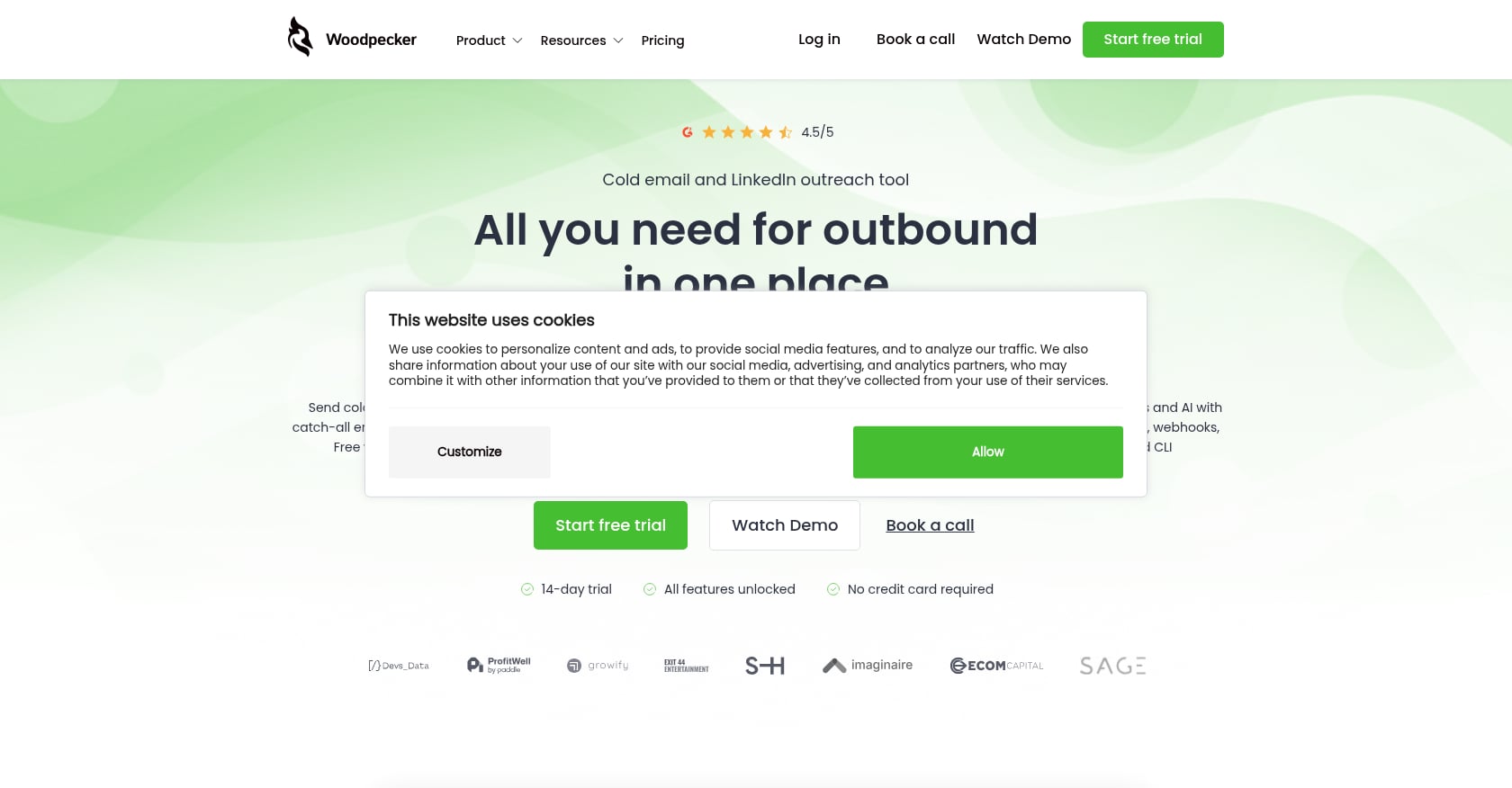
Best for: Small B2B teams (2-5 people) who prioritize inbox placement above all else and send to curated lists under 3,000 prospects/month.
Woodpecker has been a trusted name in cold email since 2015, and its singular obsession is deliverability. While flashier competitors add features, Woodpecker focuses on making sure your emails actually reach the inbox.
Pricing:
Entry plan: $29/month for 500 contacted prospects
Cold Email plan: $35/month, unlocking the full feature set
Growth Plan: $84/month per user
Key features:
Human-pattern sending: randomized intervals, personalized send times, automatic throttling when bounce rates spike
Free email warm-up included
Unlimited email accounts and team members on paid plans
Inbox rotation and condition-based campaigns
AI interest level detection
Honest tradeoffs:
The 500 contacted prospects per month limit on the entry plan is very tight for teams doing any real volume.
No built-in B2B database. You need separate tools for prospecting and verification.
Teams quickly realize they need 3-4 additional tools for a complete outbound workflow (data, verification, enrichment, LinkedIn).
Feature set is more limited than Instantly or Smartlead at comparable price points.
What users say: G2 reviewers consistently cite “inbox placement” as Woodpecker’s top strength, giving it a 4.3/5 rating. It’s the tool that deliverability purists gravitate toward.
Bottom line: If your list is small and high-quality, and inbox placement is your top priority, Woodpecker earns its reputation. For higher volume, you’ll outgrow it.
7. Snov.io
Best for: Pre-revenue startups that need find, verify, send, and CRM in one tool and send under 2,000 emails/month.
Snov.io tries to be everything for early-stage teams: email finder, verifier, sequencer, warm-up tool, and CRM. For pre-revenue startups with no budget for multiple subscriptions, it’s genuinely useful.
Pricing:
Free plan available
Starter: $39/month (limited features)
Pro: $74.25/month (annual). Includes 5,000 credits/month, 25,000 recipients, unlimited warm-ups, A/B testing.
Key features:
Email finder, verification, drip campaigns, warm-up, and CRM all in one platform
Core features available across all plans, including the Starter tier
LinkedIn automation available as an add-on ($62/month)
Reasonable credit allocations for low-volume sending
Honest tradeoffs:
The credit system bleeds money at scale. Beyond 2,000 emails/month, dedicated platforms become more cost-effective.
Starter plan locks out A/B testing, spintax, behavioral conditions, and sentiment analysis. These are table-stakes features gated behind the $74.25/month Pro plan.
Sending infrastructure can’t match dedicated platforms like Instantly or Smartlead at higher volumes.
LinkedIn automation costs an additional $62/month on top of the base plan.
What users say: Snov.io tends to attract founders who are doing everything themselves and need one login that covers the basics. The consensus is that it works well for low-volume, early-stage outreach but becomes a bottleneck as campaigns scale.
Bottom line: The best cold email tool for startups that are pre-revenue and need maximum capability per dollar at low volume. Plan to migrate once you cross 2,000-3,000 emails per month.
The True Cost of Cold Email for Startups
Every tool on this list advertises a starting price that tells only part of the story. Sending 400 emails a day requires roughly 10-12 domains. Most teams underestimate this and wonder why deliverability craters after week two.
Here’s what three realistic scenarios actually cost:
Solo founder (150 emails/day):
| Component | Monthly Cost |
|---|---|
| Sending tool (Instantly Growth or Saleshandy Starter) | $25-$47 |
| 3-4 secondary domains | $10-$15 |
| 8-10 inboxes (Google Workspace or equivalent) | $15-$30 |
| Data/verification (Apollo free tier + separate verifier) | $12-$19 |
| Total | $62-$111/month |
2-person team (300 emails/day):
| Component | Monthly Cost |
|---|---|
| Sending tool (Instantly or Smartlead Pro) | $47-$94 |
| 6-8 secondary domains | $20-$30 |
| 15-20 inboxes | $30-$50 |
| Data/verification | $40-$60 |
| Total | $137-$234/month |
5-person startup (500 emails/day):
| Component | Monthly Cost |
|---|---|
| Sending tool (Smartlead Pro or Instantly Hypergrowth) | $94-$210 |
| 10-12 secondary domains | $35-$45 |
| 25-30 inboxes | $50-$75 |
| Data/verification/enrichment | $89-$150 |
| Total | $268-$480/month |
Notice the pattern: the tool itself is typically only 30-45% of total spend. This is why comparing tools by sticker price alone is misleading. Avoiding common cold emailing mistakes around infrastructure saves more money than picking the cheapest plan.
One more warning from practitioners: Reddit users in cold email communities consistently warn against $3/inbox reseller deals. Cheap inboxes get suspended fast, and rebuilding domain reputation takes months.
Why the Tool Is Only Part of the Equation
The average cold email reply rate in 2026 sits at 3.43%, with top performers exceeding 10%. The gap between average and excellent is not explained by tool choice. It’s explained by everything surrounding the tool.
Infrastructure determines whether emails arrive. SPF, DKIM, and DMARC records must be configured correctly on every sending domain. Warm-up needs to run for 2-3 weeks before you send a single cold email. Inbox rotation across multiple accounts prevents volume spikes that trigger spam filters. One founder on Indie Hackers shared a typical system: a primary domain, 2-3 alt domains, 10-50 warmed inboxes, a sequencer, and an enrichment tool. Even with all that, they reported open rates dropping from 50% to 22% and reply rates falling from 4% to 1.2%. More inboxes didn’t help because the underlying targeting and messaging were off.
Data quality determines whether the right people see your emails. Spray-and-pray campaigns sent to over 1,000 recipients pull a 2.1% reply rate. Targeted campaigns sent to under 50 carefully selected recipients still hit 5.8%+. That’s nearly a 3x difference from list quality alone.
Messaging determines whether recipients care. Studies of 16.5M cold emails found that 6-8 sentence emails perform best at 6.9% reply rates. Understanding how to structure a cold email is worth more than any tool upgrade.
The ROI math still works, but only with the right conditions. Cold email returns $42 for every $1 spent when done correctly. But if your total addressable market is under 30,000 contacts or customer LTV is below $800, cold email probably isn’t your channel. Above those thresholds, it outperforms almost any paid channel.
When to Stop Using Tools and Hire an Outbound Expert
After reviewing the best cold email tools for startups, here’s the honest question most founders avoid: should you be managing this yourself?
The signs that you need an operator, not another tool subscription:
You’re spending 10+ hours per week managing deliverability, iterating messaging, and troubleshooting bounce rates
You’ve tried 2-3 tools and results haven’t meaningfully improved
Your open rates and reply rates are declining despite adding more inboxes
You’re a technical founder whose time is worth $200+/hour, and you’re debugging SPF records instead of building product
You’ve spent $2,000-$5,000 on tools over 6 months with fewer than 10 qualified meetings to show for it
The opportunity cost math is straightforward. A founder spending 10 hours per week on outbound operations is burning $8,000-$10,000/month in opportunity cost at typical startup equity valuations. An experienced outbound operator who handles ICP definition, infrastructure, messaging, and campaign execution frees that time entirely.
This is different from hiring a junior SDR or signing with a traditional agency. What most startups actually need is senior, hands-on outbound expertise, someone who understands the full stack from domain configuration to reply handling. For a breakdown of how SDR outsourcing compares to operator-led models, we’ve written about it separately.
See if SalesPipe is the right fit for your startup. We provide founder-led outbound execution, handling everything from infrastructure to qualified meetings.